
GIA-Certified Lab-Grown Diamonds: What the Report Means
GIA uses Premium and Standard for D-to-Z lab-grown diamond assessments. Learn the thresholds, verify older reports and check seller grade claims.
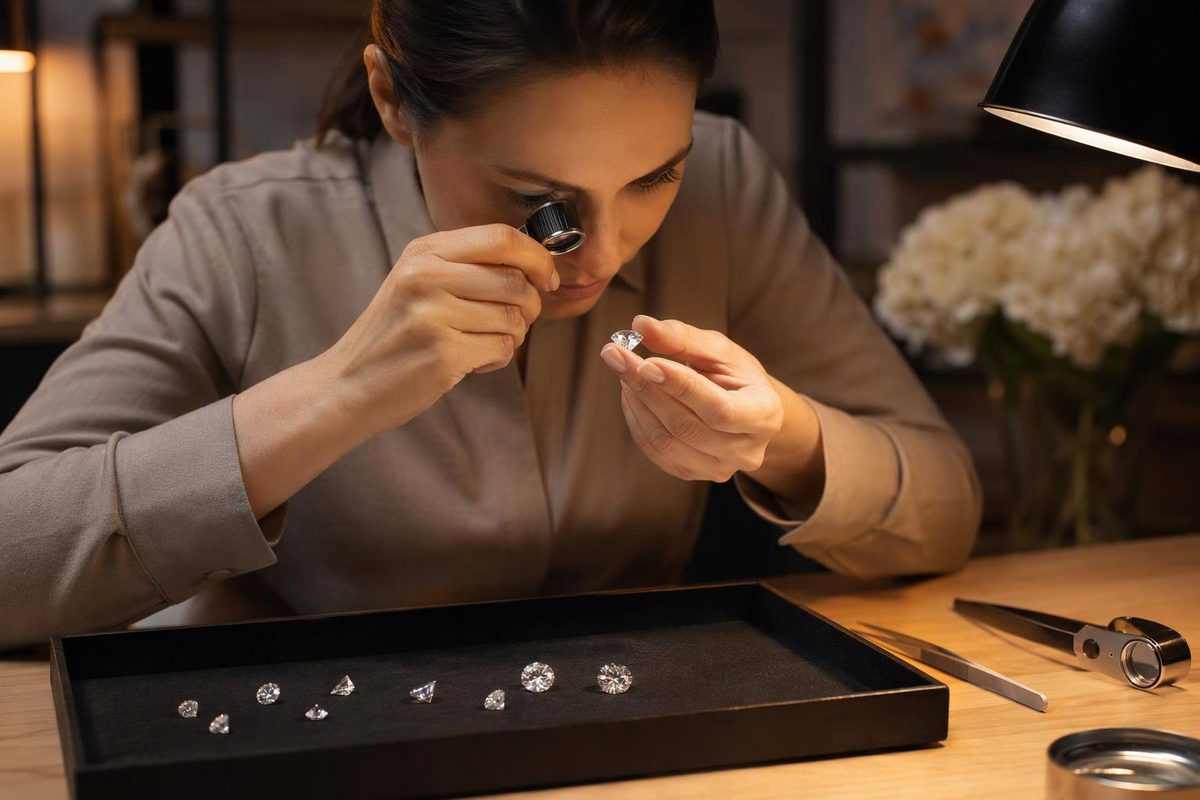
Yes—GIA evaluates lab-grown diamonds. But a seller’s phrase “GIA-certified lab-grown diamond” needs unpacking: GIA issues reports and assessments, not certificates, and does not appraise a diamond’s value. Its paperwork describes the stone; it does not establish whether the asking price is fair. GIA explains this distinction.
There is also an important date change. Since October 1, 2025, GIA’s revised service for D-to-Z laboratory-grown diamonds has used Premium or Standard overall quality descriptions instead of individual color and clarity grades, as set out in its service update. Older GIA lab-grown reports remain valid. Before comparing listings, establish which document accompanies each stone.
Older grading report or current quality assessment?
An older GIA Laboratory-Grown Diamond Report may show specific grades such as D color and VS1 clarity. GIA’s previous reporting system used the same color and clarity scales as its natural-diamond reports, while explicitly noting that those specifications did not imply the same natural rarity. GIA’s earlier report announcement describes that format.
The replacement is the GIA Laboratory-Grown Diamond Quality Assessment. GIA’s current service page lists the Premium/Standard assessment for loose, colorless-to-near-colorless lab-grown diamonds weighing at least 0.15 carats.
This does not mean an older report showing D/VS1 is automatically suspect. GIA expressly states that existing laboratory-grown reports remain valid.
Fancy-colored lab-grown diamonds are a separate case: GIA still lists Laboratory-Grown Colored Diamond Report services. Do not apply the Premium/Standard table below to a pink or blue diamond’s colored-diamond report.
What Premium and Standard actually mean
GIA’s categories combine several characteristics. A diamond must meet every Premium criterion to receive Premium. Otherwise, it can receive Standard if it meets all the minimum requirements.
| Characteristic | Premium requirement | Minimum for Standard |
|---|---|---|
| Color | D | J or better: D–J |
| Clarity | VVS2 or better | VS2 or better |
| Polish | Excellent | Very Good or better |
| Symmetry | Excellent | Very Good or better; Good permitted for fancy shapes |
| Overall cut grade—round brilliants only | Excellent | Very Good or better |
These thresholds come from GIA’s published assessment criteria. A diamond falling below any Standard minimum does not receive a GIA assessment.
Standard is therefore a broad category, not another name for a single color or clarity grade. A D/VS1 diamond could qualify as Standard because its clarity falls below the Premium threshold, even if its finish and round-brilliant cut meet the Premium requirements.
That matters when shopping. Two Standard stones need not have identical specifications. If a listing advertises “GIA Standard, E/VS1,” ask which document supports E/VS1. Do not assume those individual grades came from the new GIA assessment; they may be a seller’s description or come from a separate laboratory report.
Verify the paperwork—and the diamond
Before paying, take these steps:
- Request the complete document and its number. A listing badge saying “GIA” is not enough. Check the document title, date and lab-grown identification.
- Enter the number directly into GIA Report Check. Compare the returned information with the supplied document and listing. Report Check confirms that report information matches GIA’s database.
- Have the physical stone matched to the document. Ask a qualified jeweler or gemologist to compare the inscription, measurements and other available identifying characteristics. GIA’s current assessment service laser-inscribes “Laboratory-Grown” and the assessment number on the girdle—the diamond’s narrow perimeter.
- Keep the document and an itemized invoice. For a finished ring, have the invoice identify the center stone and state the origin of any side stones separately.
An online match alone does not authenticate the diamond in your hand. GIA has documented stones bearing counterfeit report-number inscriptions. Matching the stone is a separate safeguard, not a reason to distrust every inscription.
Should you pay more for GIA Premium?
Not solely for the label. Premium confirms a demanding combination of specifications, but the assessment does not price the diamond or choose your preferred appearance.
Compare the actual stones: face-up dimensions, visible tint or inclusions, brightness and dark areas as each stone moves. Request ordinary-light video or an in-person inspection, and obtain written return terms. For ovals, cushions and other fancy shapes, remember that the table’s overall cut-grade requirement applies only to round brilliants.
A Standard stone you prefer at a lower price can be the better purchase. A Premium stone can also be worth choosing—but make the case from its appearance, documentation and total cost, rather than treating the category as a guarantee of value. Our guide to when lab-grown diamond grades matter explains how to separate visible benefits from upgrades that mainly improve the paperwork.