
Posts
90 Guides, Newest First
The Guide Library
1 Carat Diamond Earring Size: Total Weight vs Per Ear
A 1-carat-total pair has roughly 5 mm round diamonds per ear. One carat per earring is about 6.5 mm. Learn how to check the listing and fit.
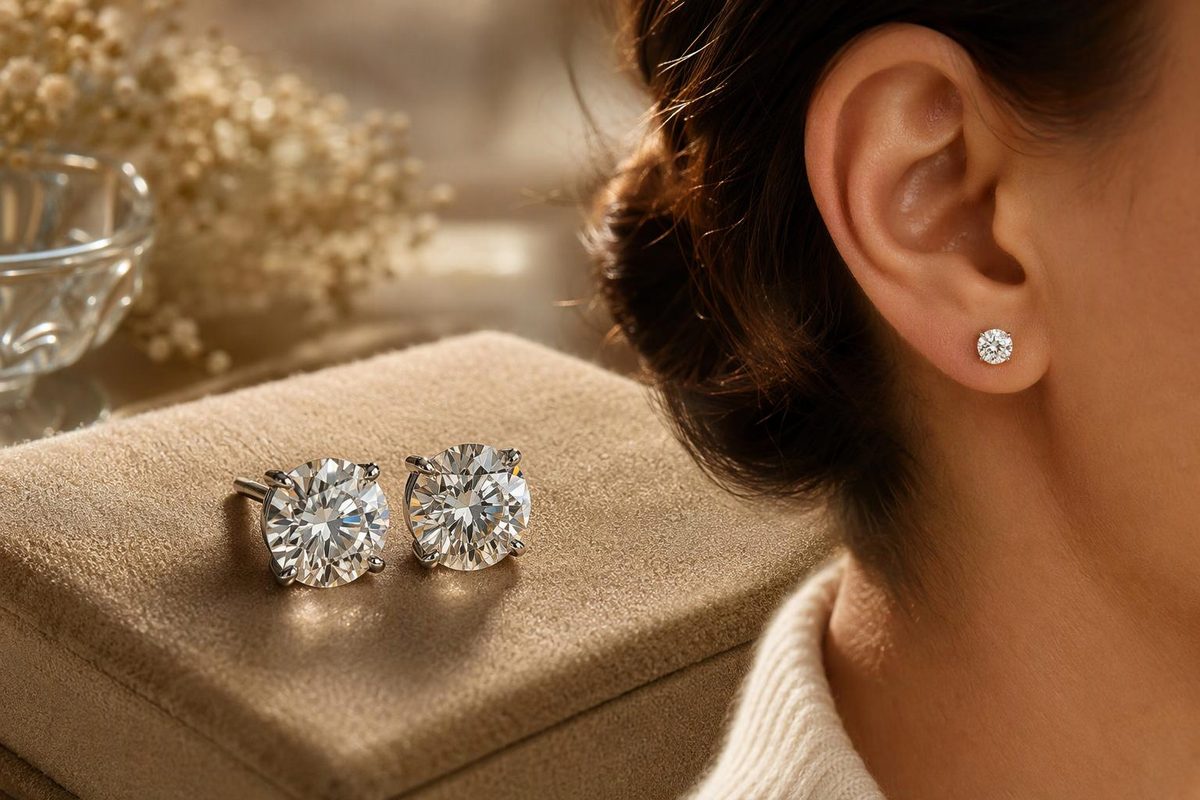
6-Carat Diamond Size: How Big Is It in Millimeters?
A 6-carat round diamond is roughly 11.75–12 mm across. Compare actual round and oval measurements, visualize the size and check ring fit.
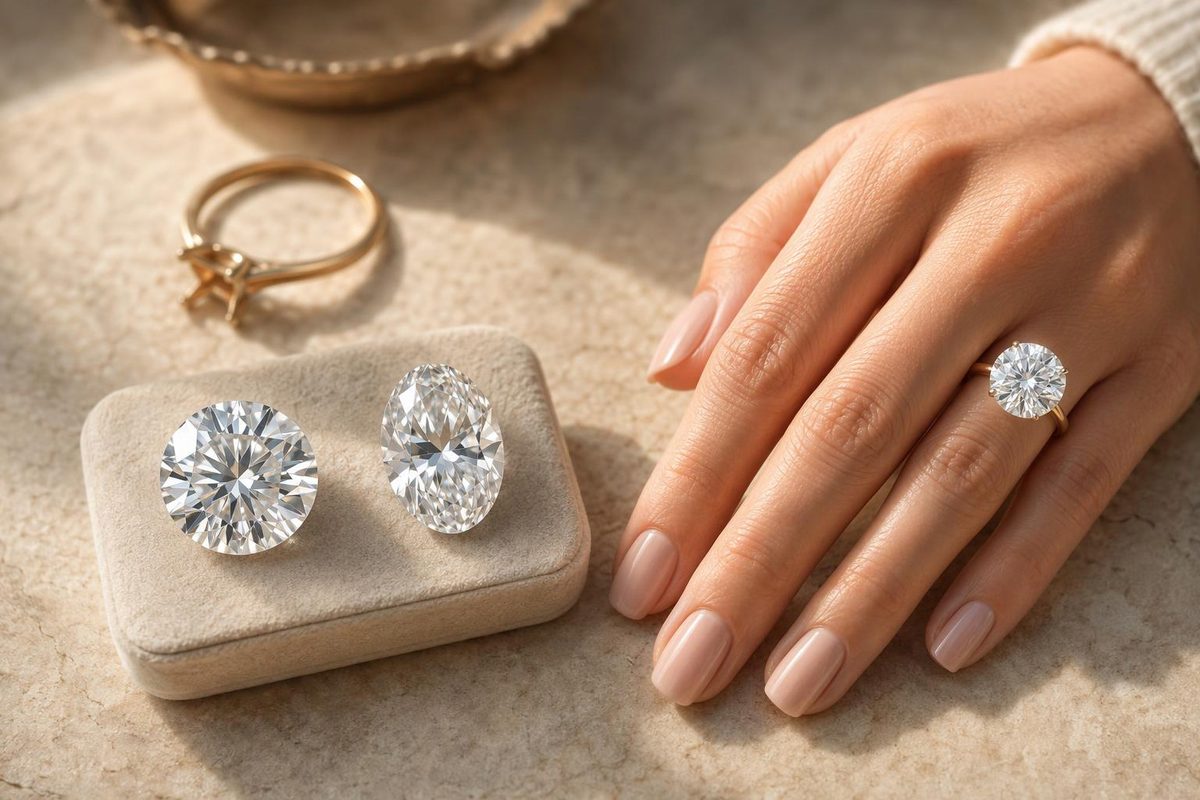
Half a Carat Diamond Size: How Big Is 0.50 ct?
A half-carat round diamond is about 5 mm across. Compare shapes, visualize it on your hand and check the measurements before buying.
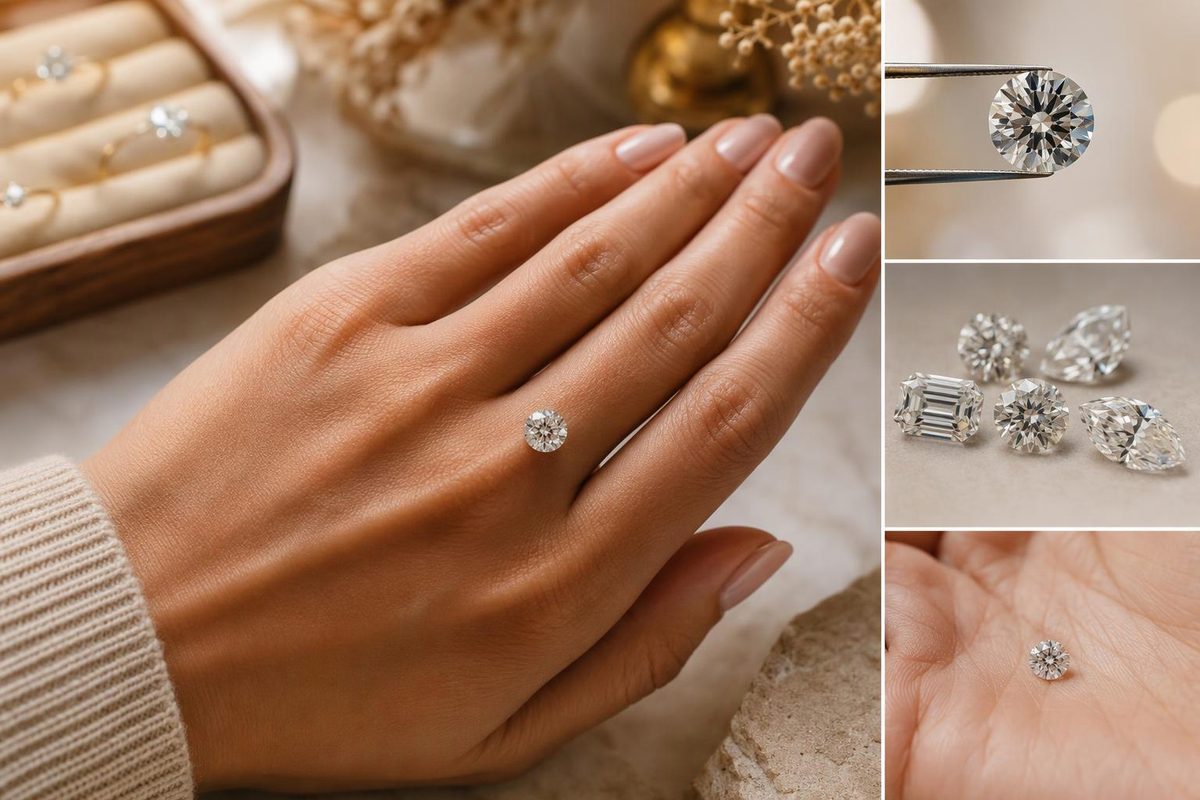
10-Carat Diamond Size: How Big Is It in Millimeters?
A 10-carat round diamond is about 14 mm across. Compare smaller rounds, see an actual oval’s dimensions and check how the size will fit your hand.
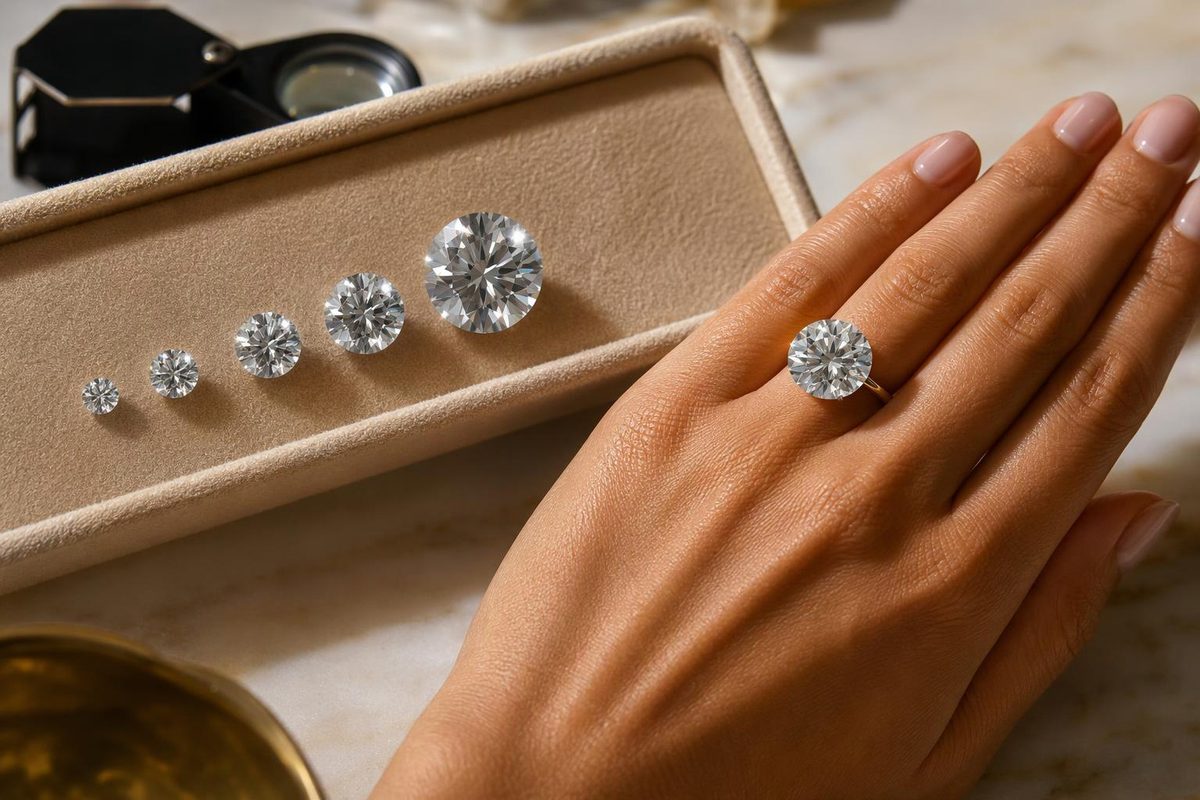
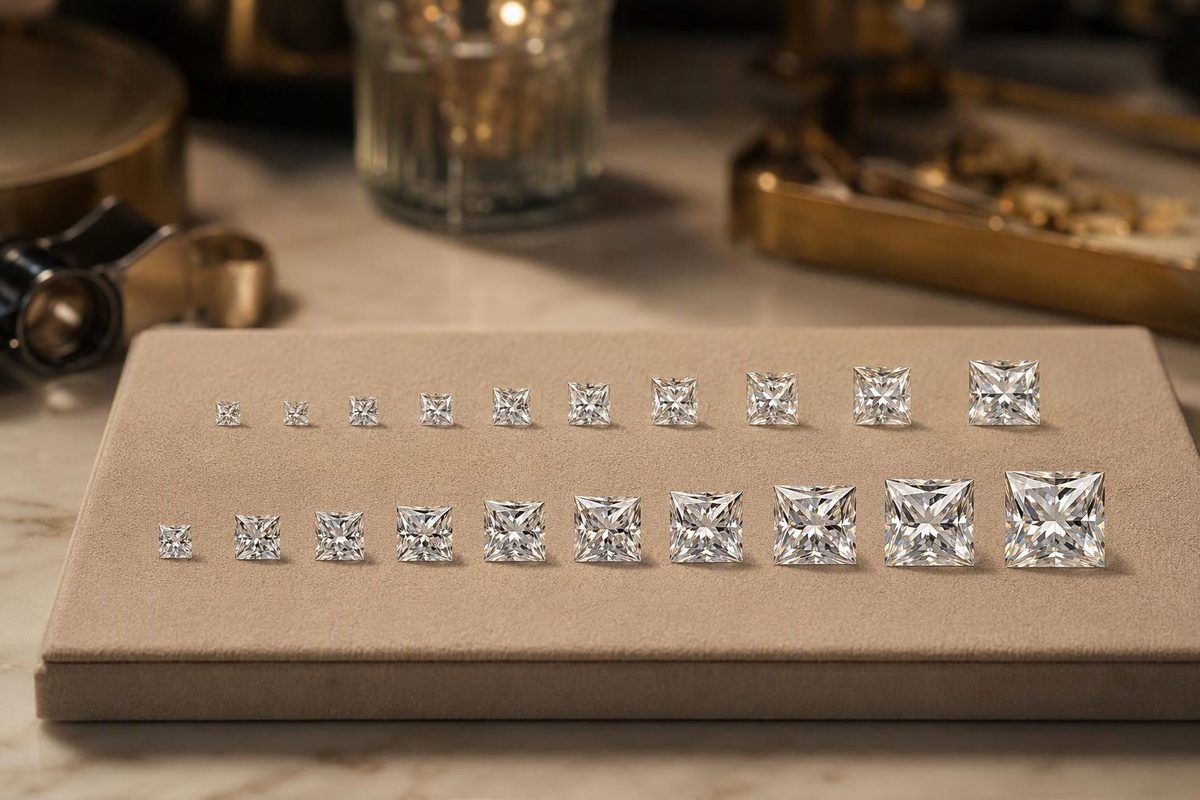
Princess Cut Carat Size Chart: Millimeter Benchmarks
Compare princess-cut diamond weights from 0.25 to 5 carats with millimeter benchmarks, then check actual measurements and face-up appearance.
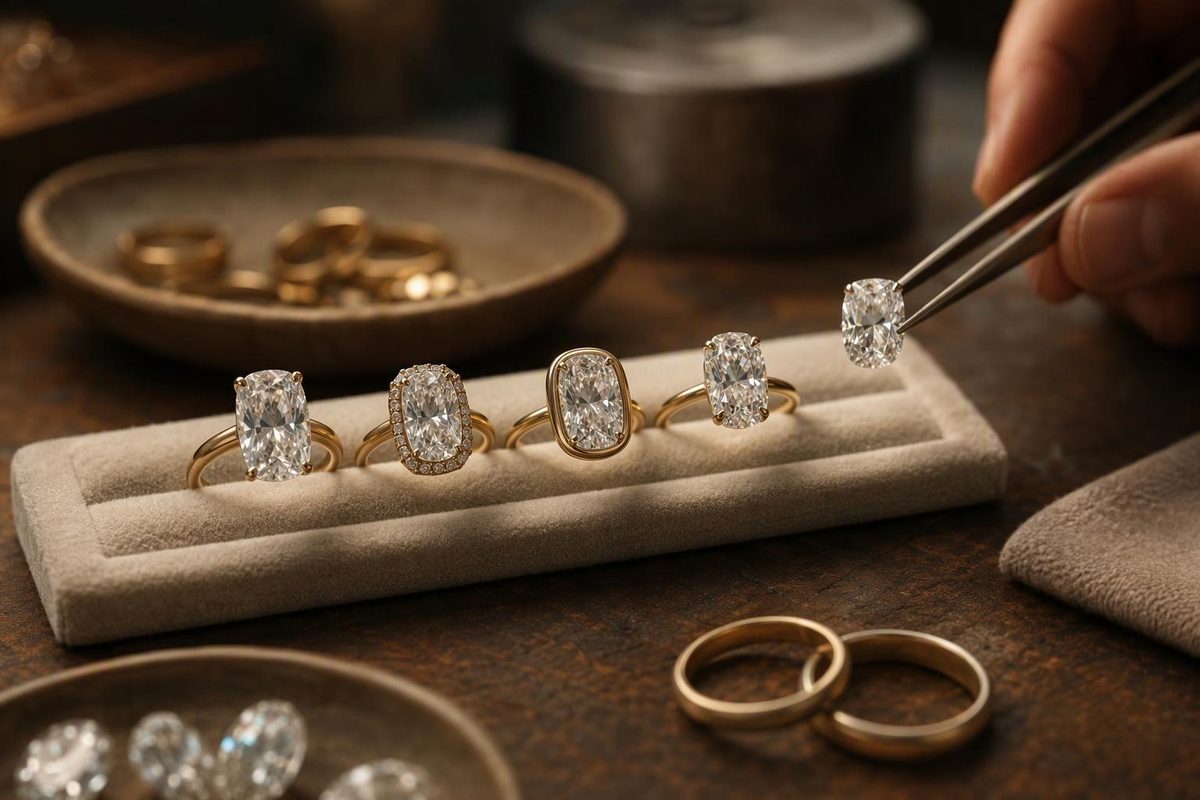
Elongated Cushion Rings: Choosing the Setting and Fit
Compare elongated cushion ring settings by protection, height, comfort and wedding-band fit—and know what to confirm before custom work begins.
1.5-Carat Diamond Size: How Big Is It in Millimeters?
A 1.5-carat round diamond is about 7.4 mm across. Compare shape benchmarks, the step up from 1 carat, and actual report measurements.
What Is a Girt? How It Differs From a Diamond Girdle
A girt is a wall-framing component. If you meant a diamond’s girdle, learn what that edge does and how its thickness affects buying decisions.
Oval Diamond Carat Size Chart: Millimeter Benchmarks
Compare oval diamond carat weights with millimeter benchmarks, calculate length-to-width ratio and check visible size without overlooking cut quality.
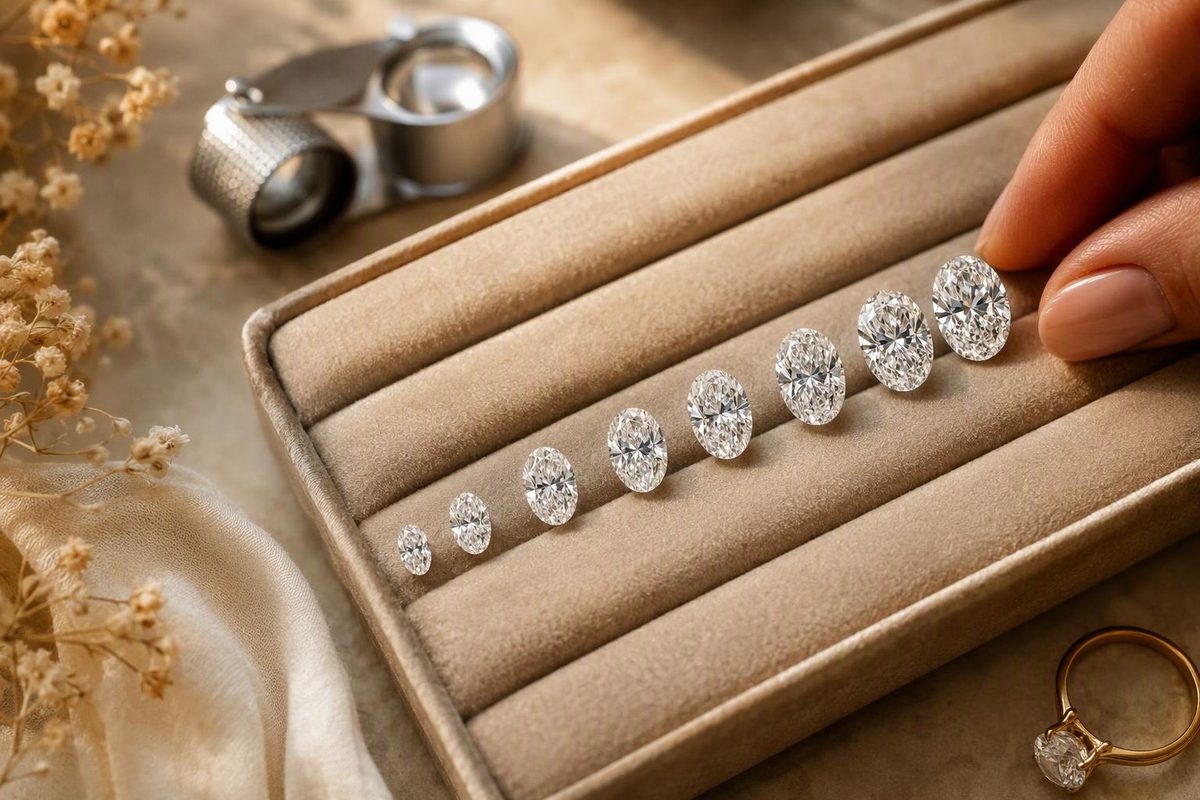
Crushed Ice Diamond: What It Means and How to Choose
Learn what crushed ice diamond sparkle looks like, how it differs from bolder facet patterns, and what to inspect beyond the grading report.
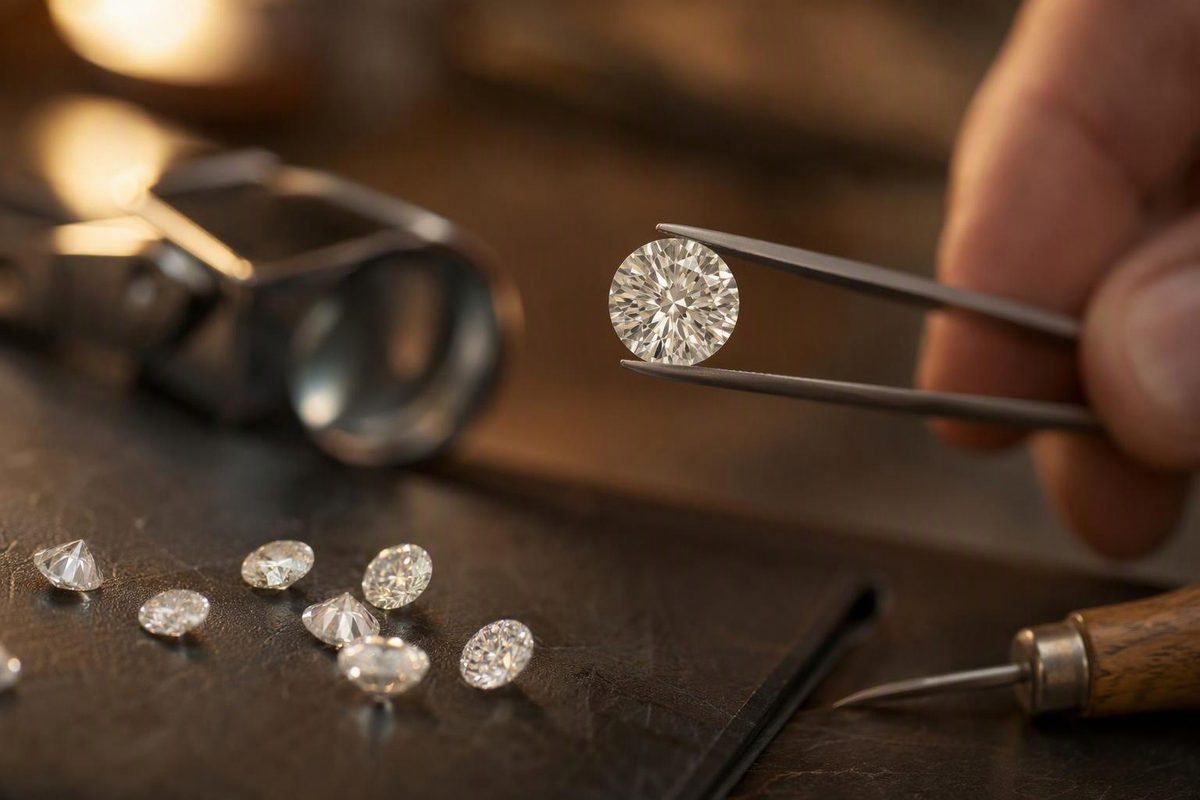
1-Carat Diamond Size in mm: Round and Shape Benchmarks
A 1-carat round diamond is about 6.5 mm across. Compare shape benchmarks, read report measurements and check size without sacrificing cut quality.
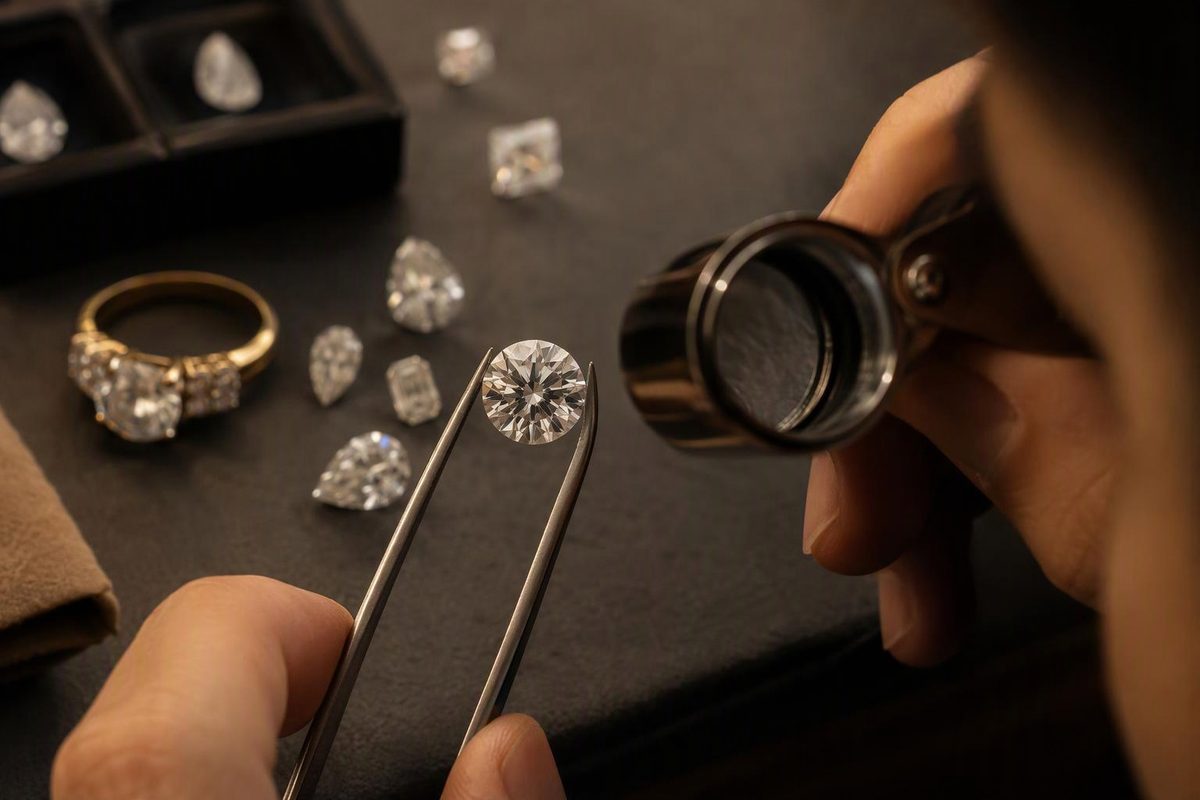
What Is a Good Carat Size for an Engagement Ring?
Start by trying 0.75–1.50 ct, then compare appearance, comfort and total ring cost. Learn why carat weight alone cannot tell you how big a diamond looks.
Emerald Cut Engagement Rings in Yellow Gold: What to Check
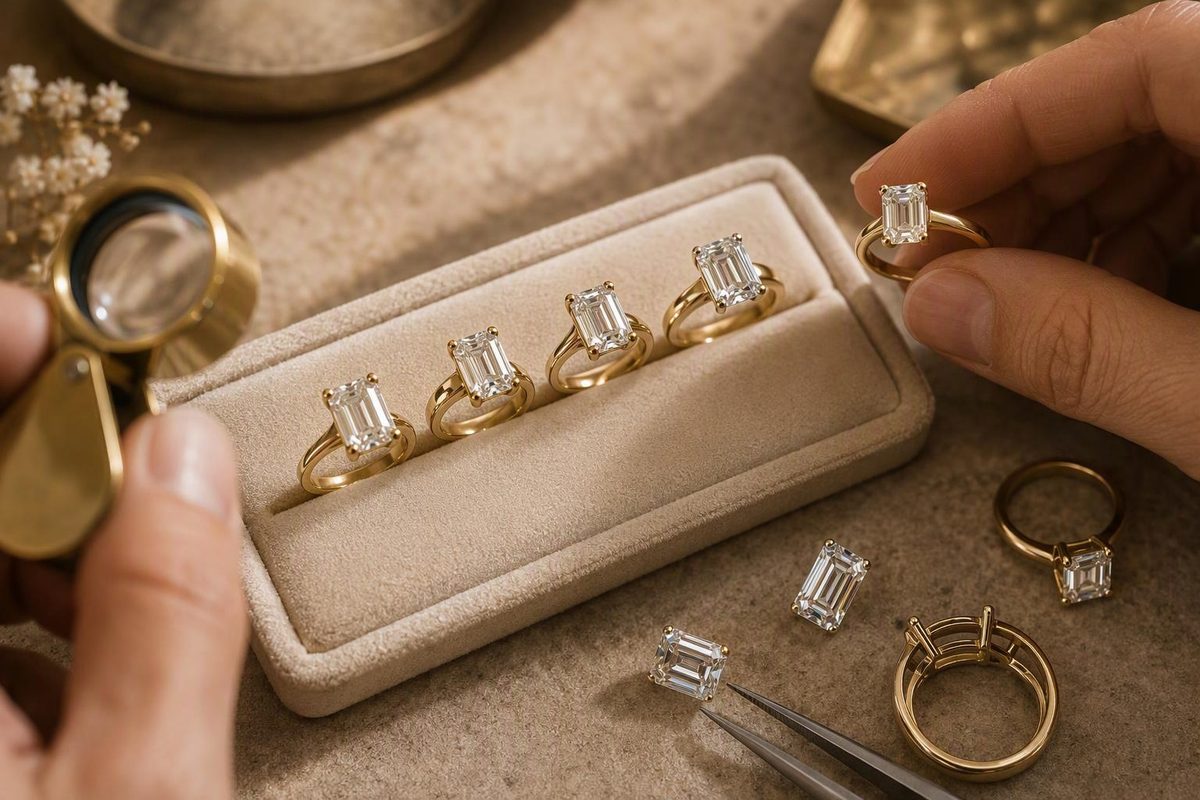
Compare emerald-cut diamonds in yellow gold by visible color, clarity, prong metal, setting style and construction—not just grades or carat weight.
Can You Scratch a Diamond? What Can Damage It
Another diamond can scratch a diamond, but impacts can chip it. Learn what a visible mark might mean, how to clean safely and when to see a jeweler.
I3 Clarity Diamond: What It Means and When to Buy
Learn what I3 diamond clarity means, how inclusions affect appearance and durability, and what to check before accepting a lower price.
Split Shank Engagement Rings: What to Check Before Buying
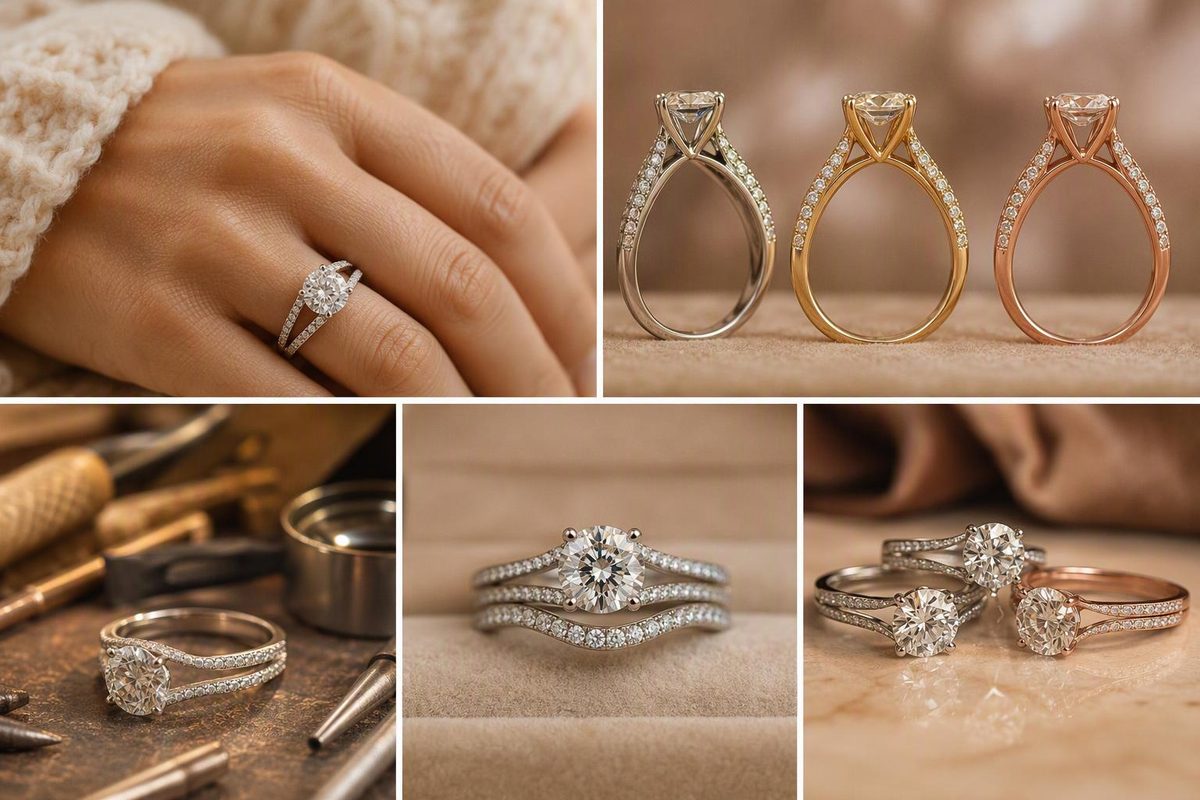
Compare split shank engagement rings by shoulder width, center-stone balance, construction, wedding-band fit, resizing options and the complete price.
CZ vs Diamond vs Moissanite: Which Should You Buy?
Compare cubic zirconia, diamond and moissanite by sparkle, scratch resistance and cost—and learn what to check before buying a ring.
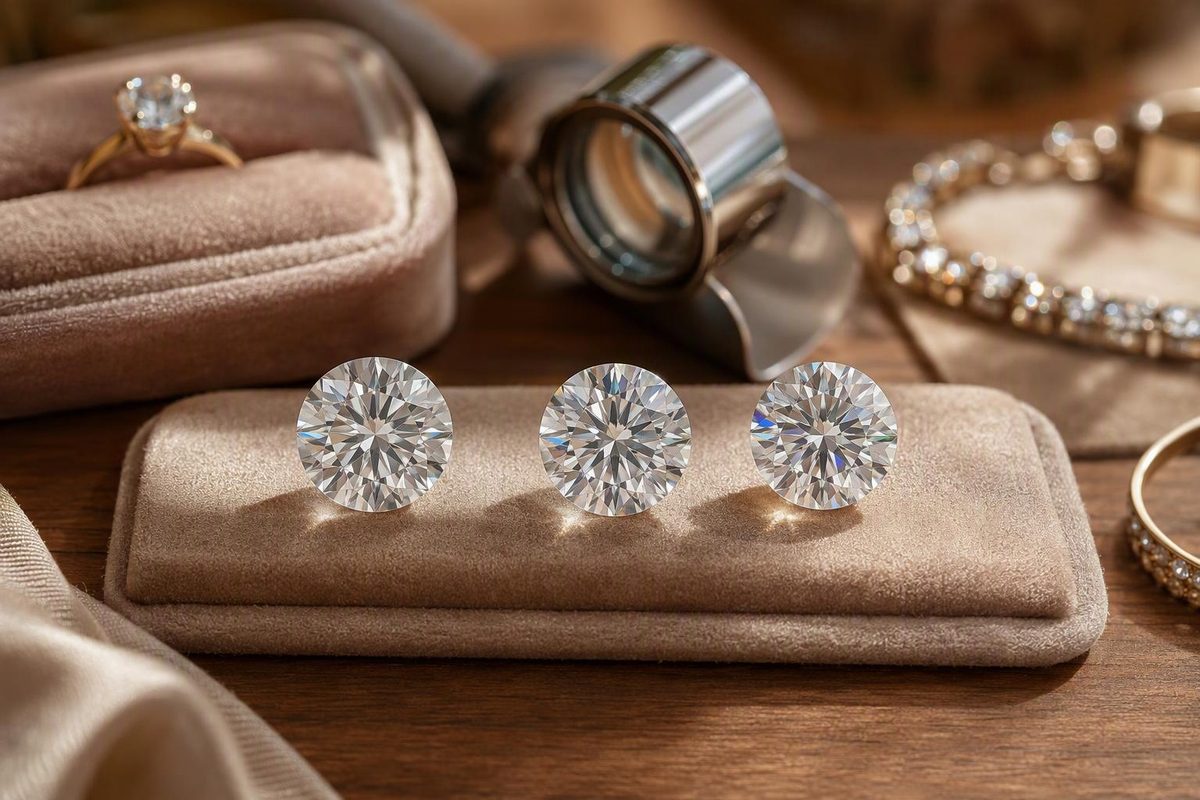
Diamond vs Moissanite in Sunlight: What to Look For
Moissanite usually shows more rainbow fire in sunlight. Compare both stones in direct sun and shade—and learn why sparkle cannot prove identity.
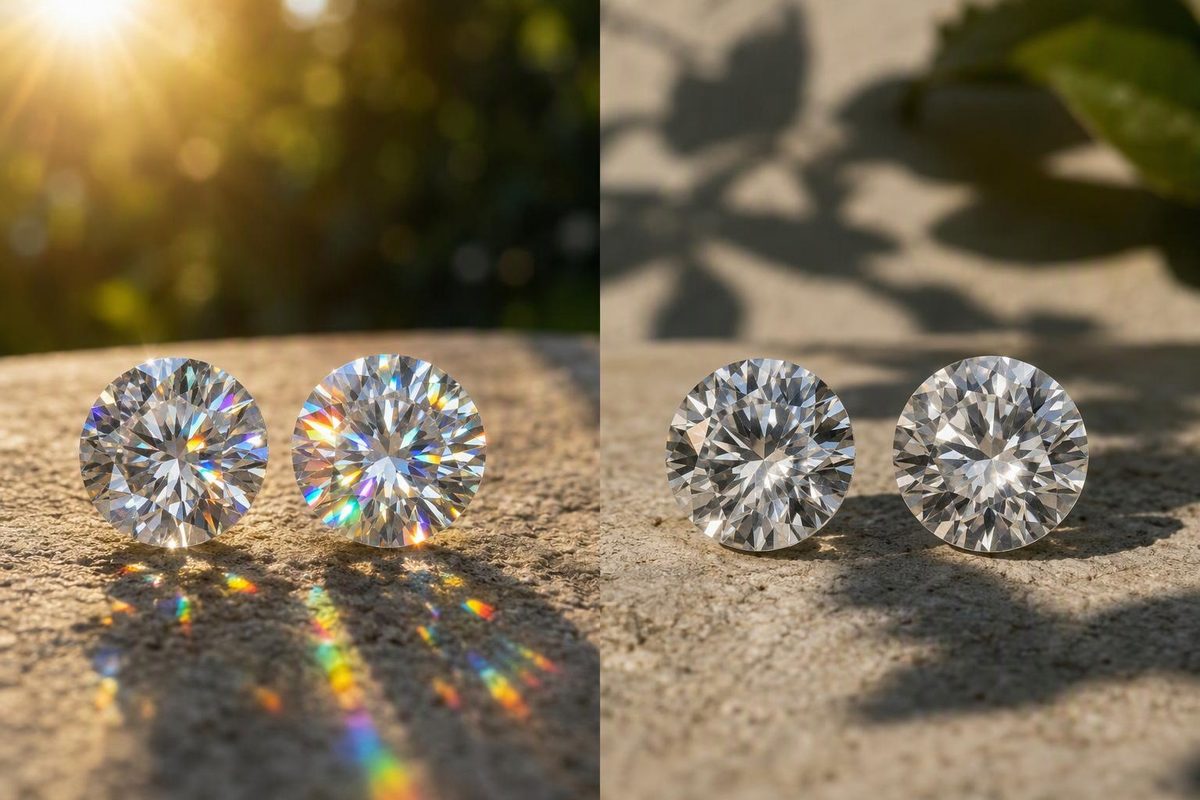
1 Carat Lab-Grown Diamond vs Natural: Price Comparison
Compare dated 1-carat lab-grown and natural diamond prices, calculate the ring-budget difference, and check what matching grades do—and don’t—prove.
SI2 Diamond Clarity: When It Is Worth Buying
Learn what SI2 diamond clarity means, whether it can be eye-clean, and how to check inclusions, transparency and value before buying.
VS2 Diamond Clarity: Meaning, Eye-Clean Checks and Value
Learn what VS2 diamond clarity means, how to verify an eye-clean claim, and when comparing VS1 or SI1 makes more sense for the stone you want to buy.
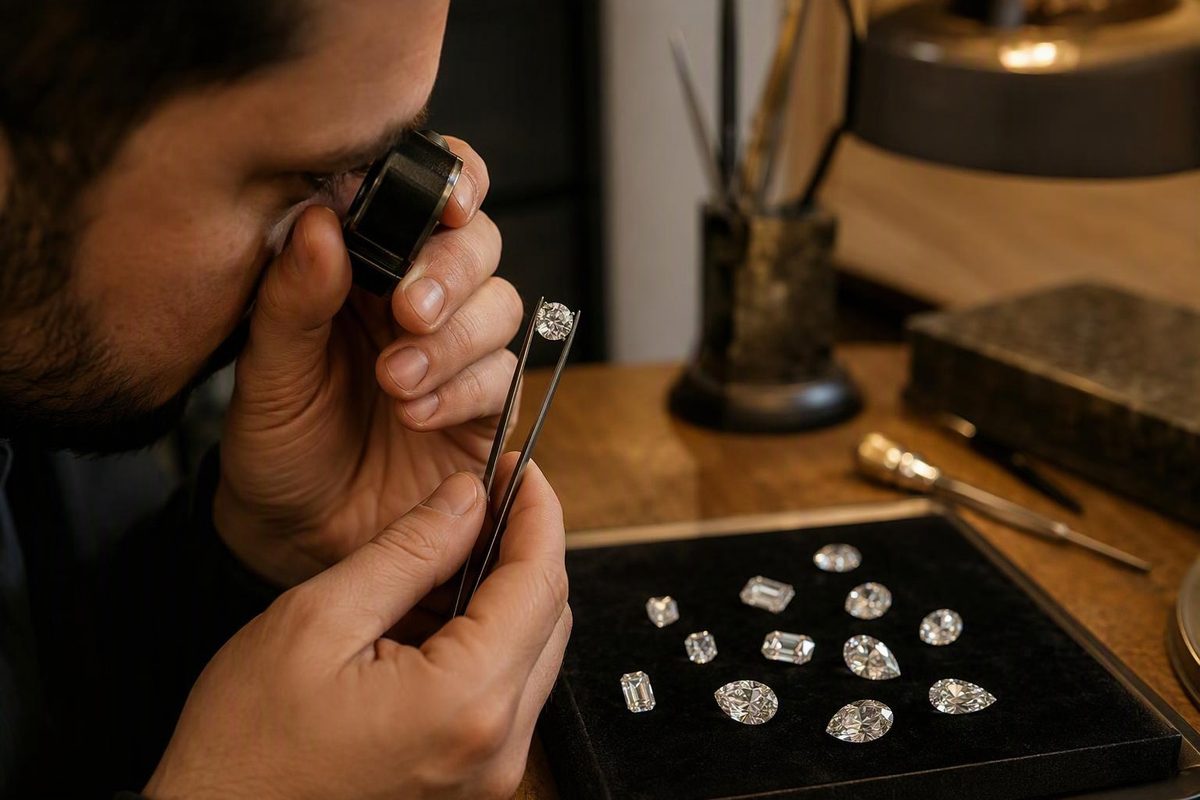
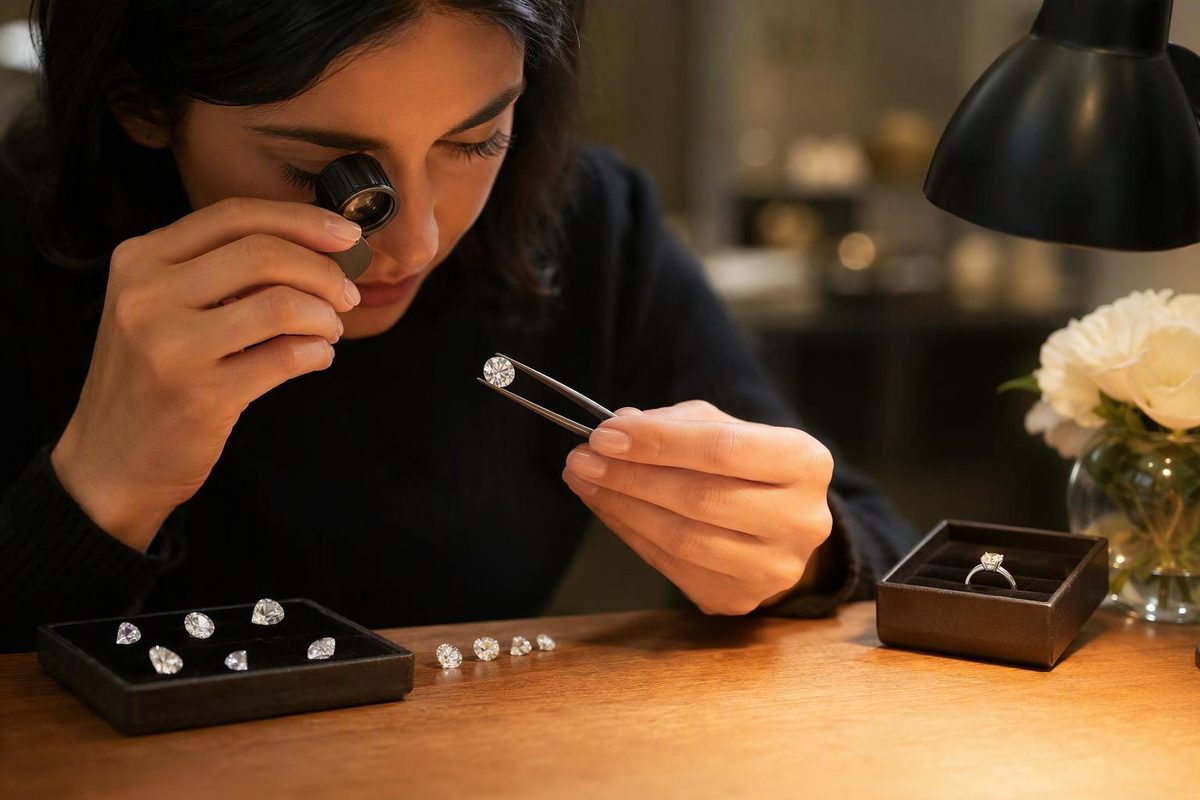
IGI-Certified Lab-Grown Diamonds: Read and Verify the Report
Learn what an IGI lab-grown diamond report covers, how to verify it, and which cut, treatment and seller claims still need checking.
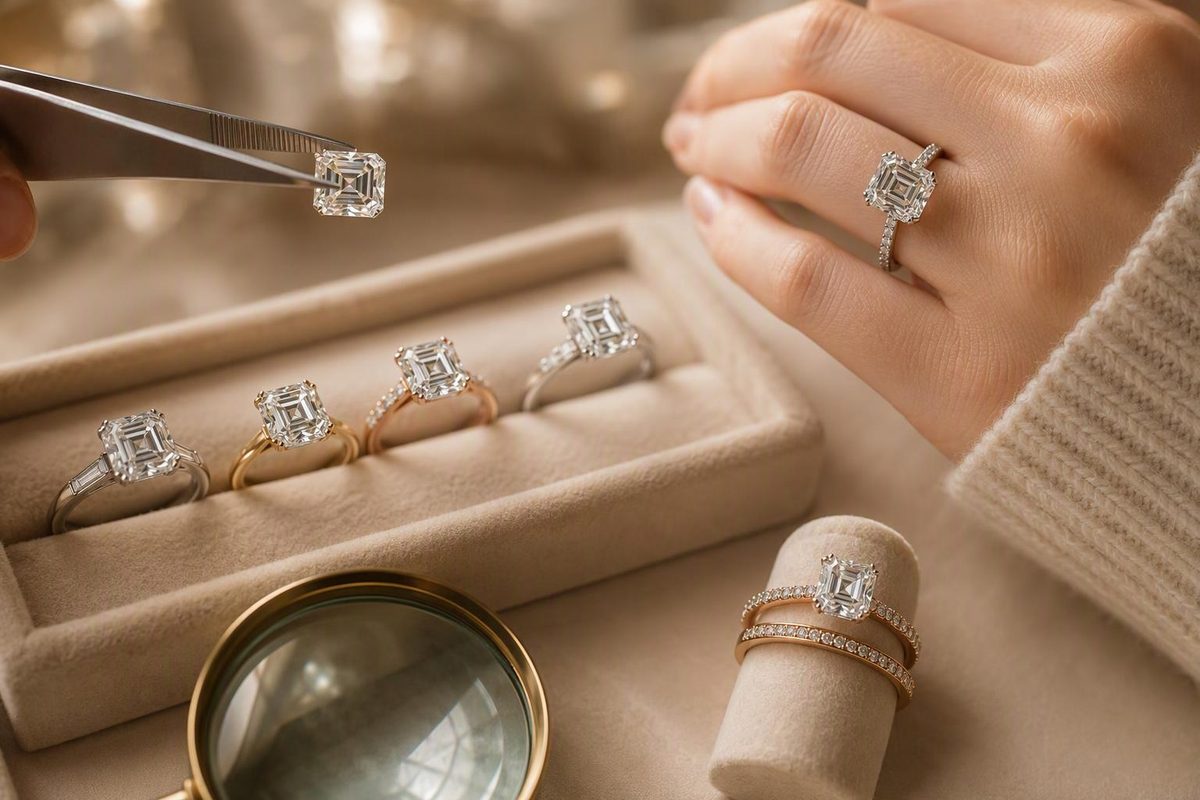
Asscher Cut Diamond Ring: How to Choose the Setting
Compare Asscher ring settings, inspect the mounted diamond, check wedding-band fit and separate center-stone weight from total carat weight.
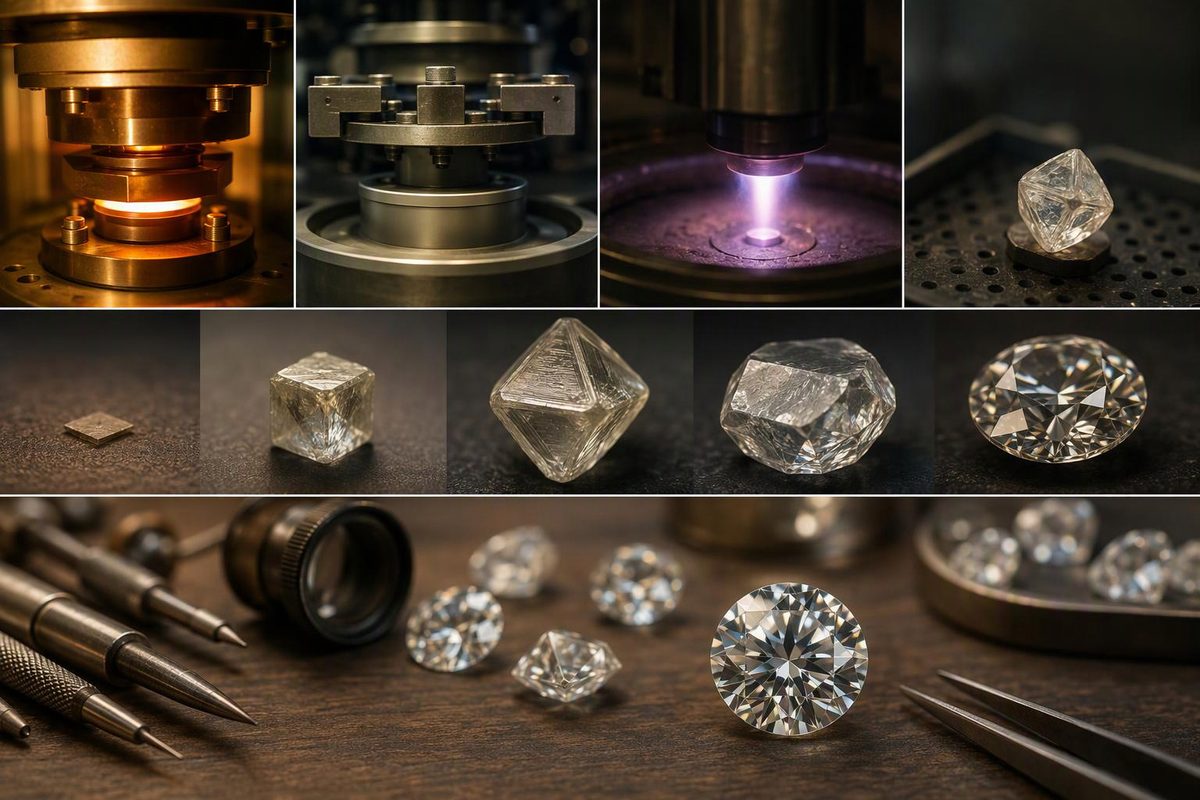
How Are Lab-Grown Diamonds Made? HPHT and CVD Explained
Follow HPHT and CVD diamond growth from seed to polished gem, compare temperatures and timelines, and learn what growth and treatment labels actually mean.
Heart Cut Diamond Engagement Ring: A Buying Checklist
Check a heart diamond’s silhouette, bow tie, report and point protection before buying. Compare dimensions and settings without relying on a cut label.
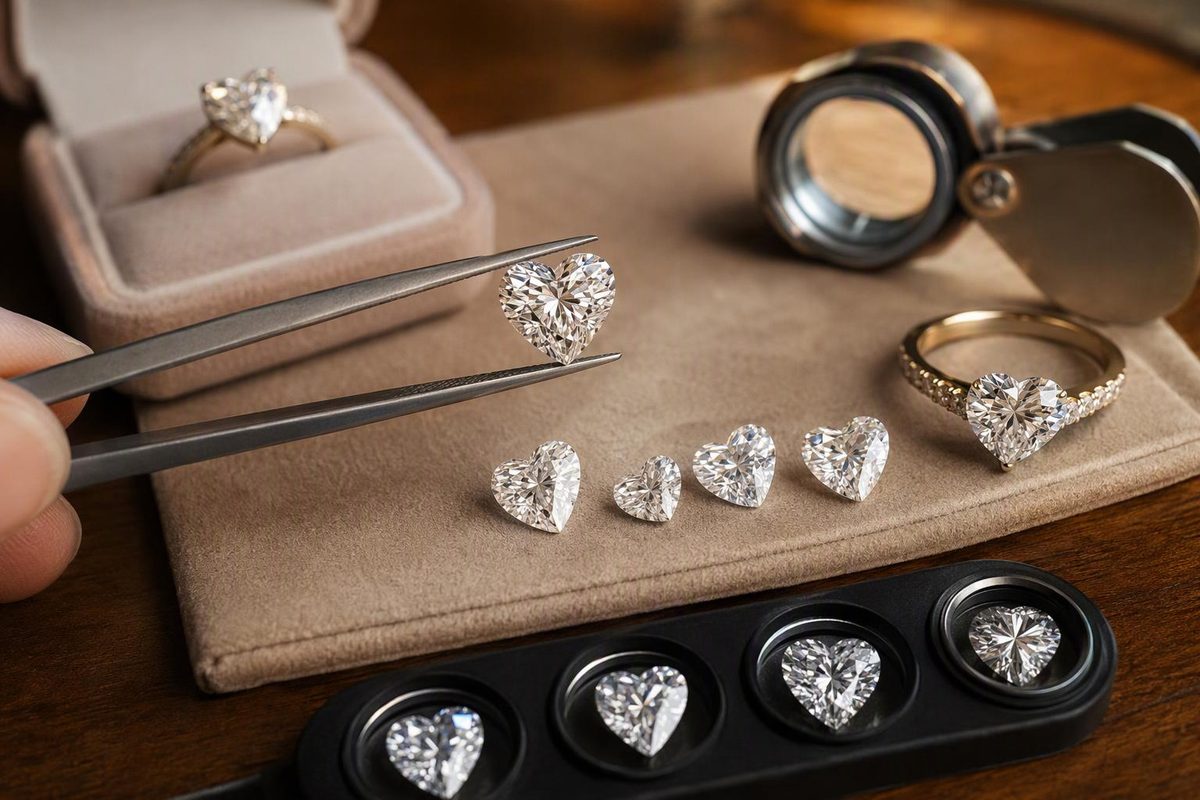
Heart Cut Diamond Ring: What to Check Before Buying
Compare heart cut diamond rings by symmetry, bow tie, millimeter size, grading report and setting—and check that the diamond’s point is protected.
GIA-Certified Lab-Grown Diamonds: What the Report Means
GIA uses Premium and Standard for D-to-Z lab-grown diamond assessments. Learn the thresholds, verify older reports and check seller grade claims.
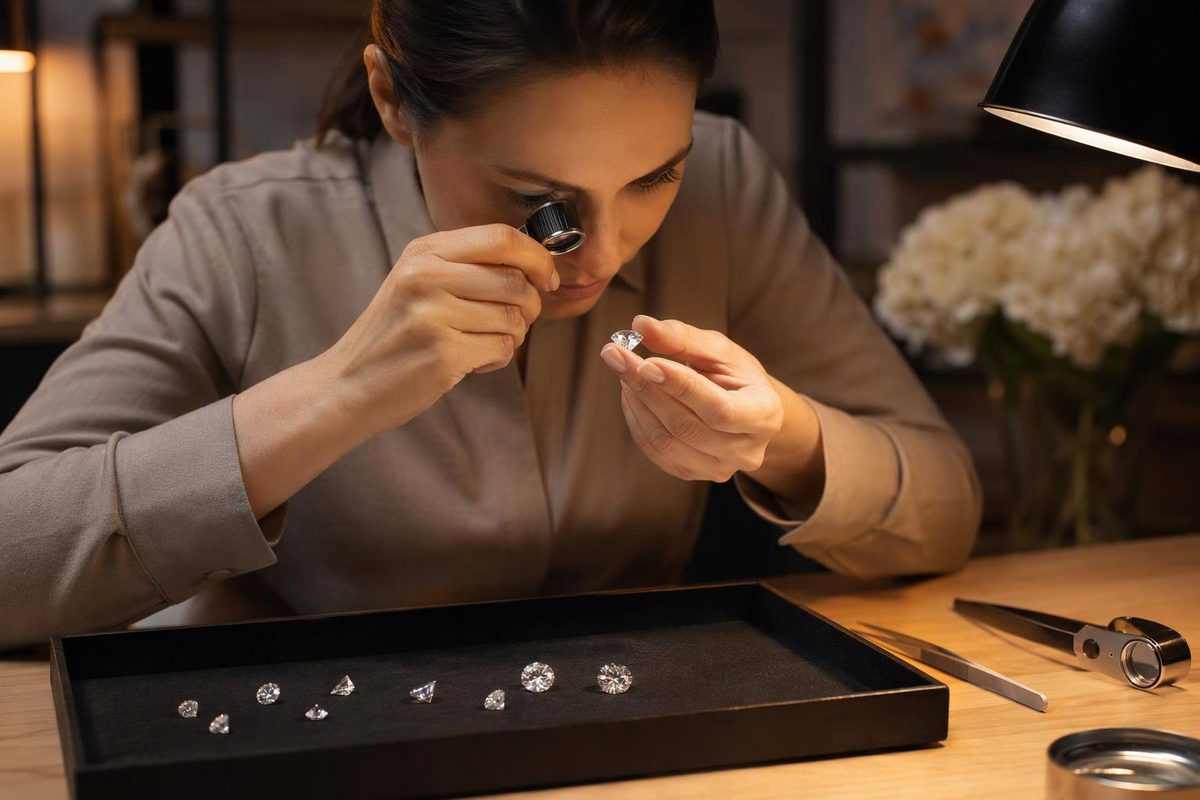
Pear Cut Diamond: How to Judge Shape, Sparkle and Safety
Learn how to compare a pear diamond’s bow tie, proportions, color and clarity, read its grading report, and choose a setting that protects the point.
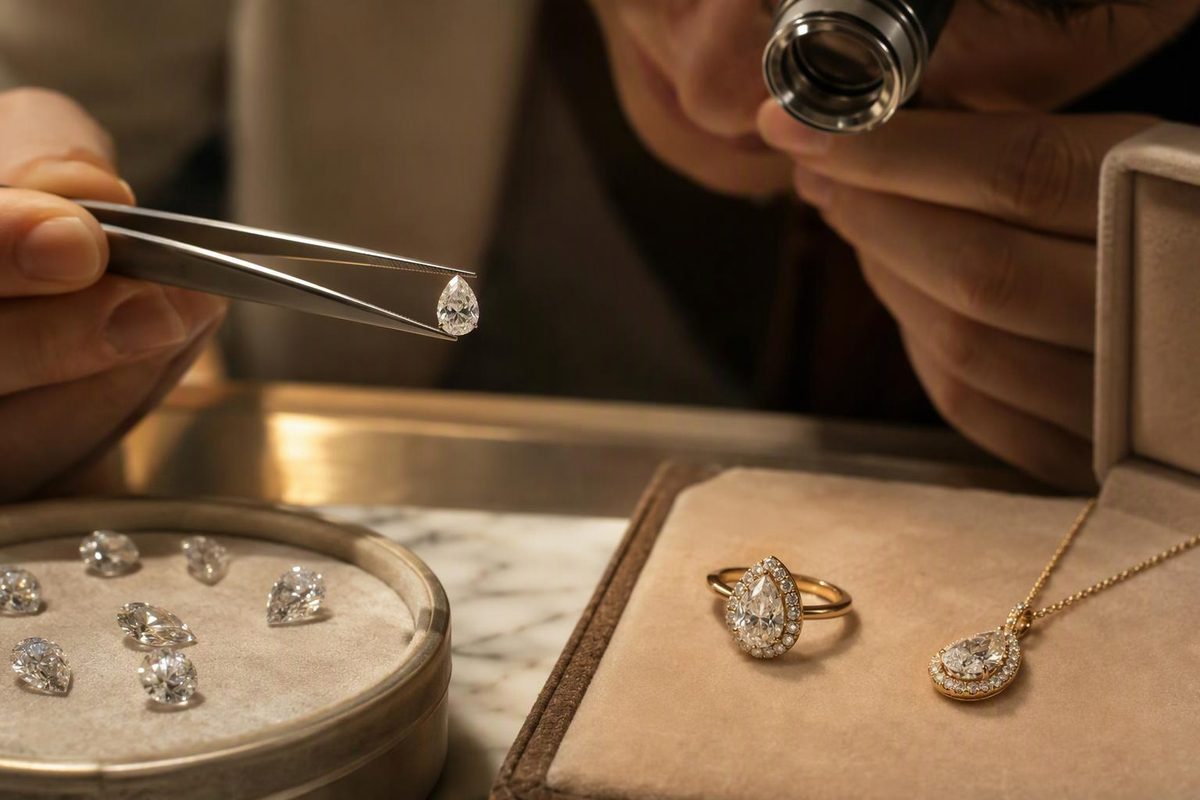
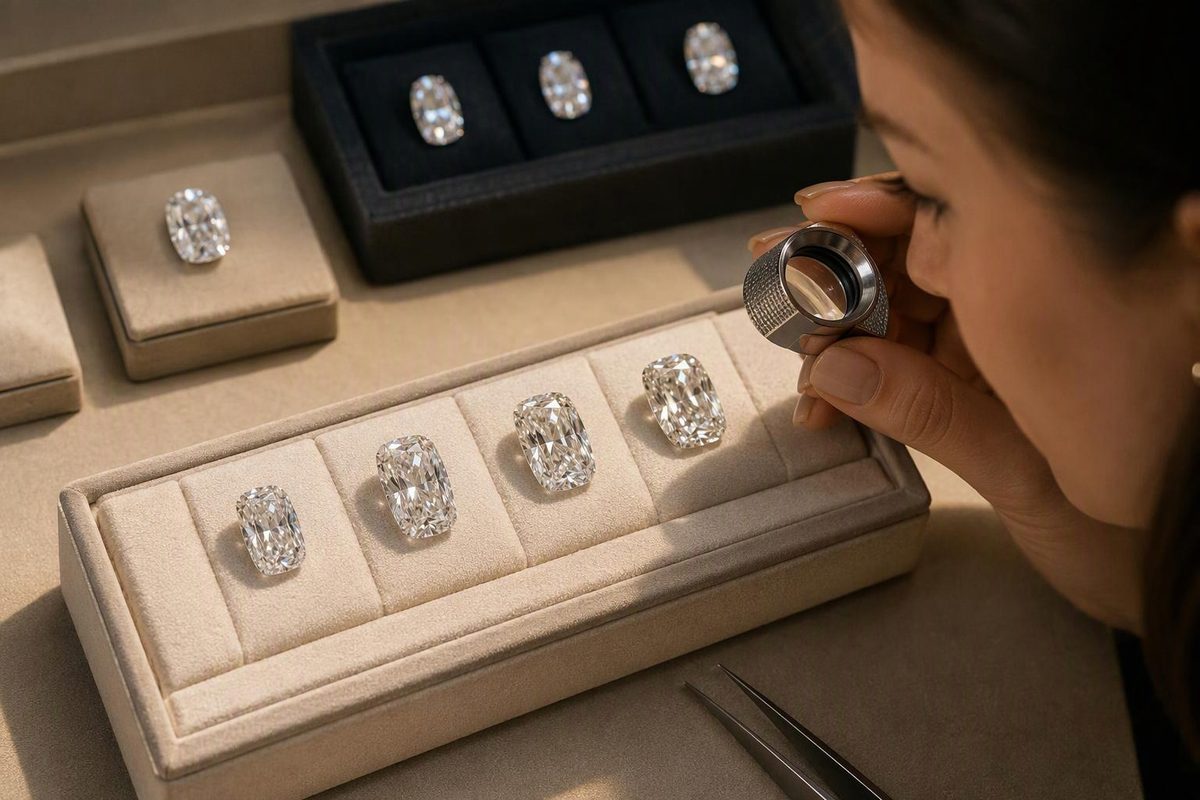
Elongated Cushion Cut Diamond: What to Check Before Buying
Compare elongated cushion cut diamonds by ratio, millimeter size, facet pattern and grading report, then check appearance before buying.
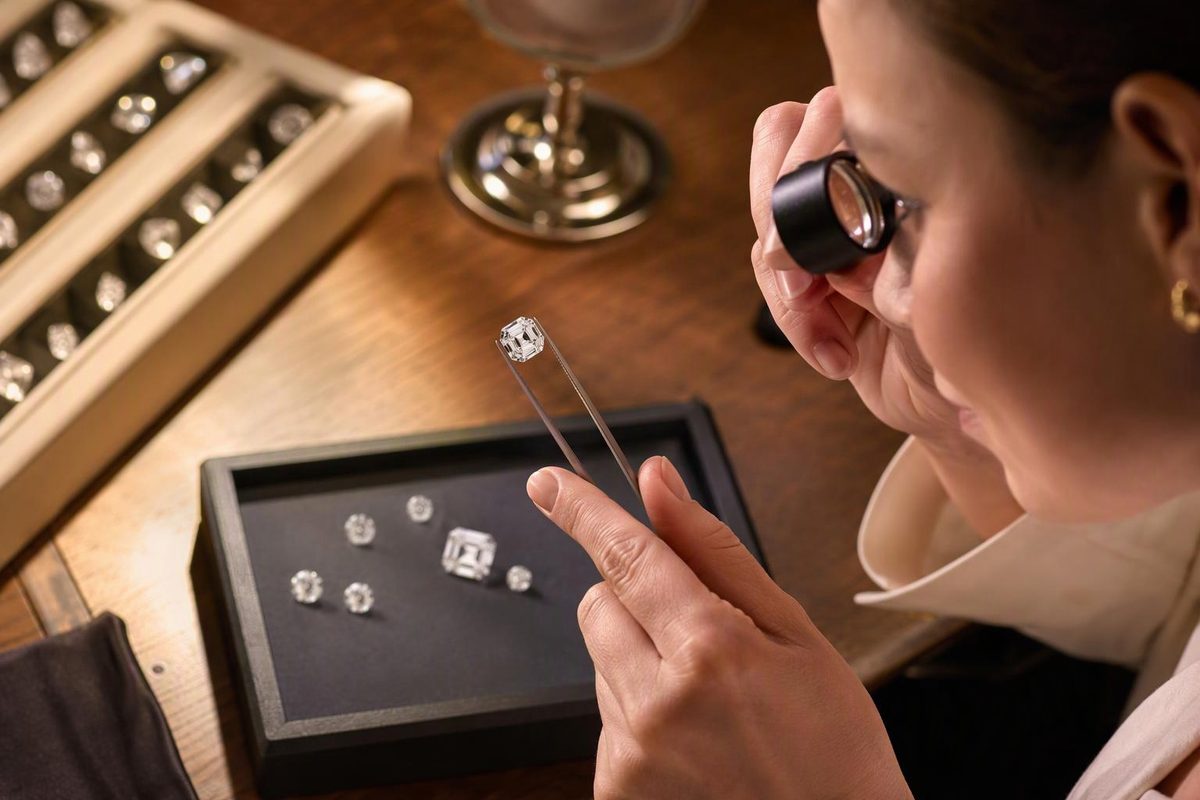
Asscher Cut Diamond: How to Judge the Cut Before You Buy
Learn how to compare an Asscher cut diamond’s light pattern, proportions, clarity, color, dimensions, grading report and setting.
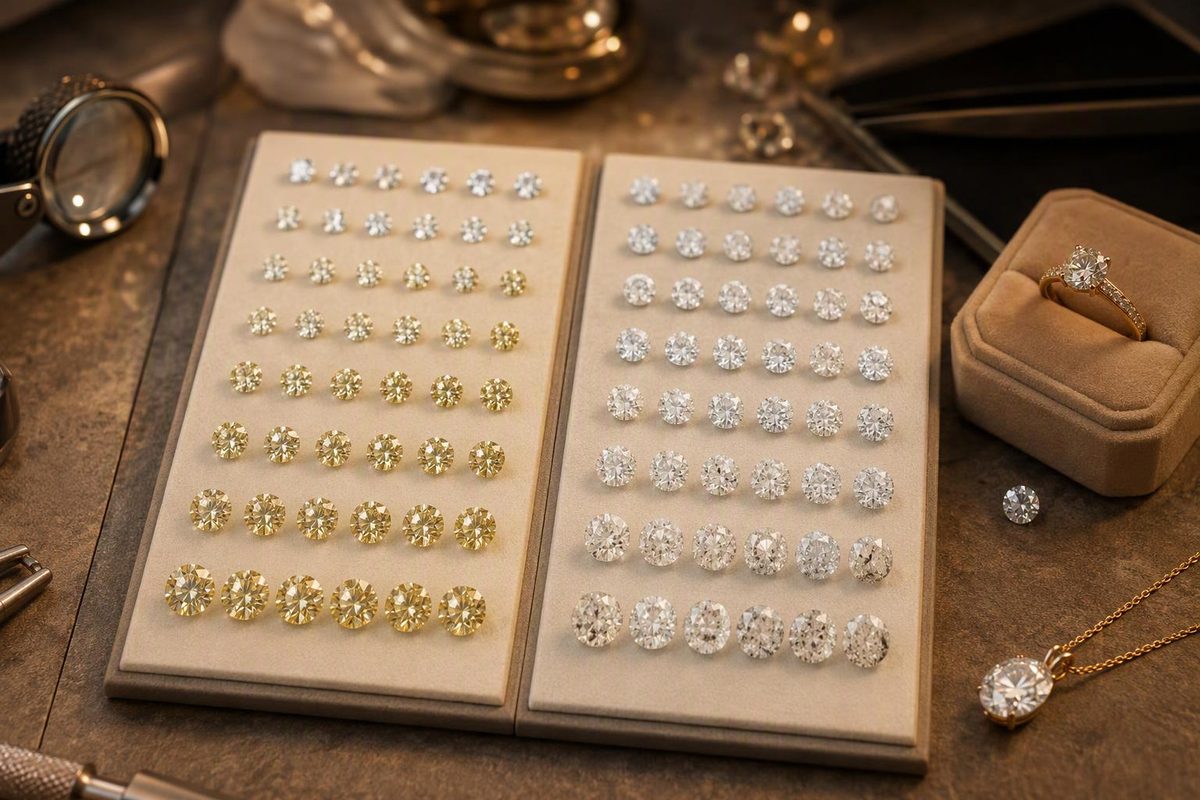
Diamond Color and Clarity Chart: D–Z and FL–I3
Use the GIA D–Z color and FL–I3 clarity scales to compare diamond grades, then see how cut, setting, inclusions, and origin affect the choice.
Diamond Clarity Scale Chart: FL to I3 Explained
Compare FL through I3, understand “eye-clean” diamonds, and learn what to inspect on a clarity plot before buying.
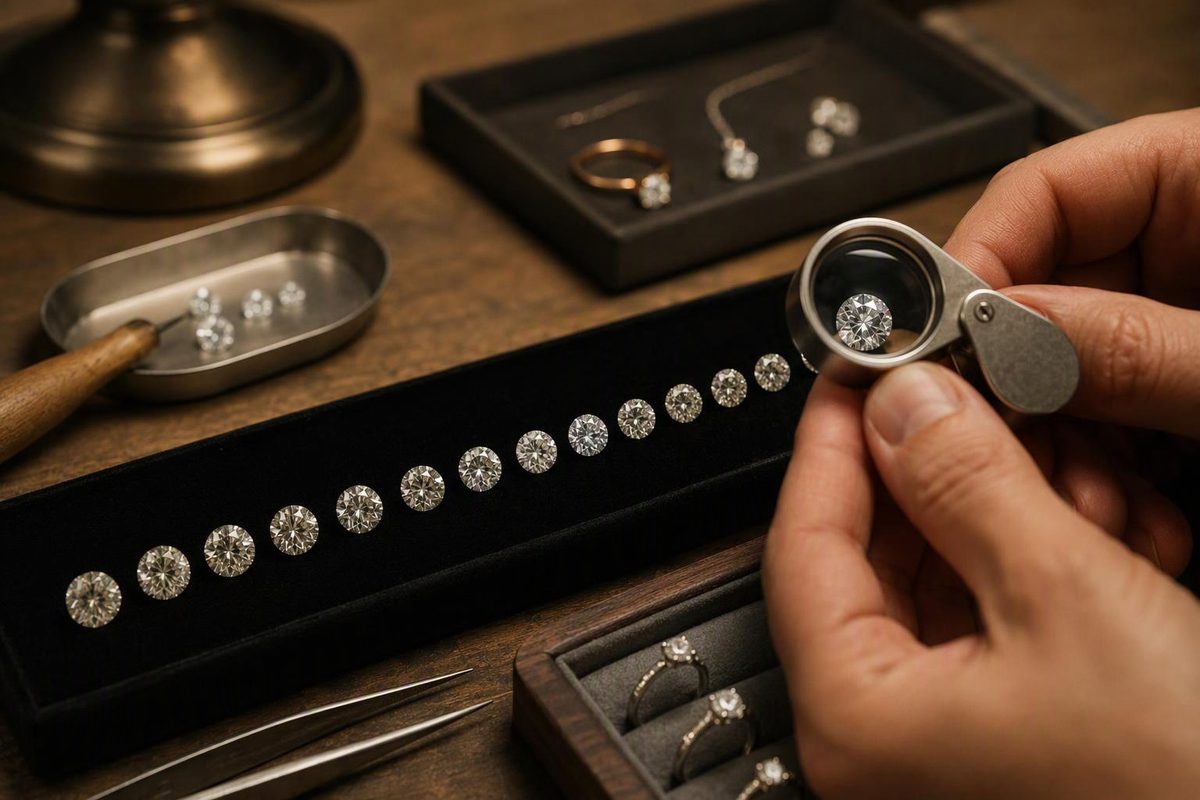
Diamond Stone Clarity Chart: FL to I3
Use this diamond stone clarity chart to compare all 11 GIA grades, understand 10× grading, and choose by shape, size, appearance, and risk.
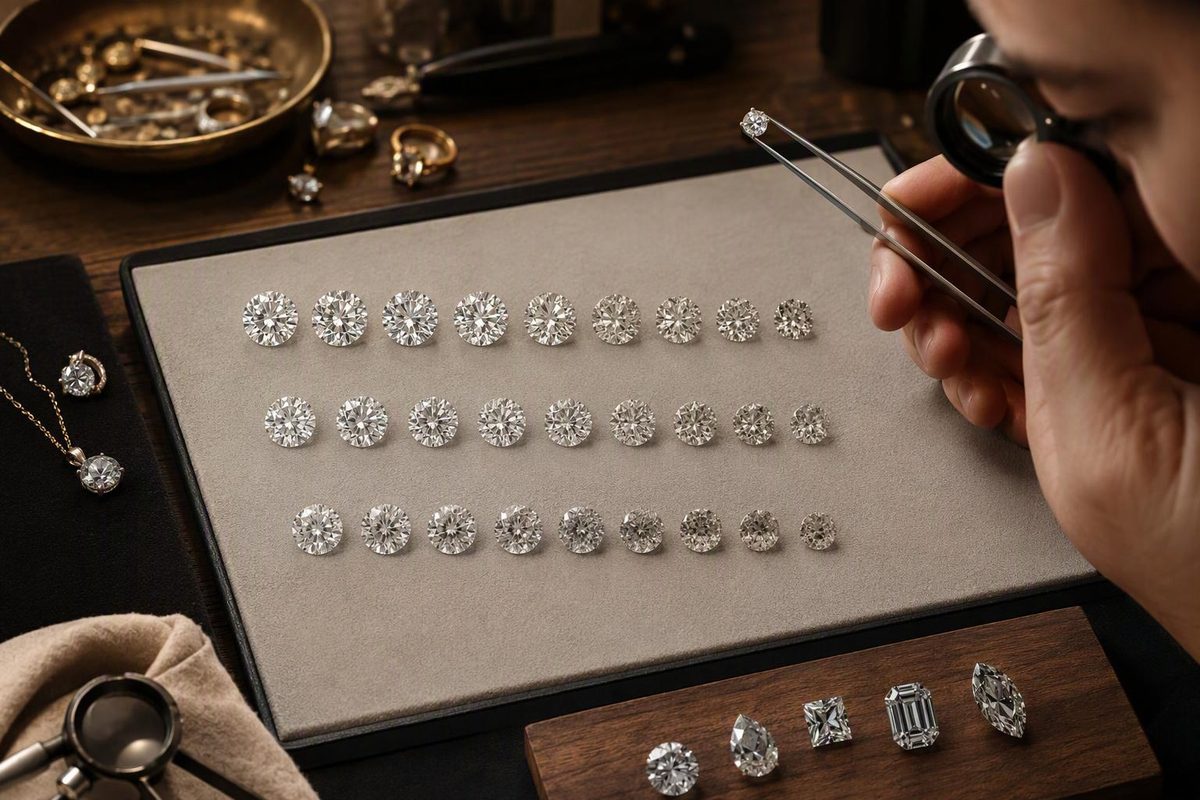
Lab-Grown Diamond Price Per Carat in 2026: $2,015
Use BriteCo appraisal data to compare a lab-grown diamond’s past estimated sales value with its 2026 replacement benchmark for today’s market.
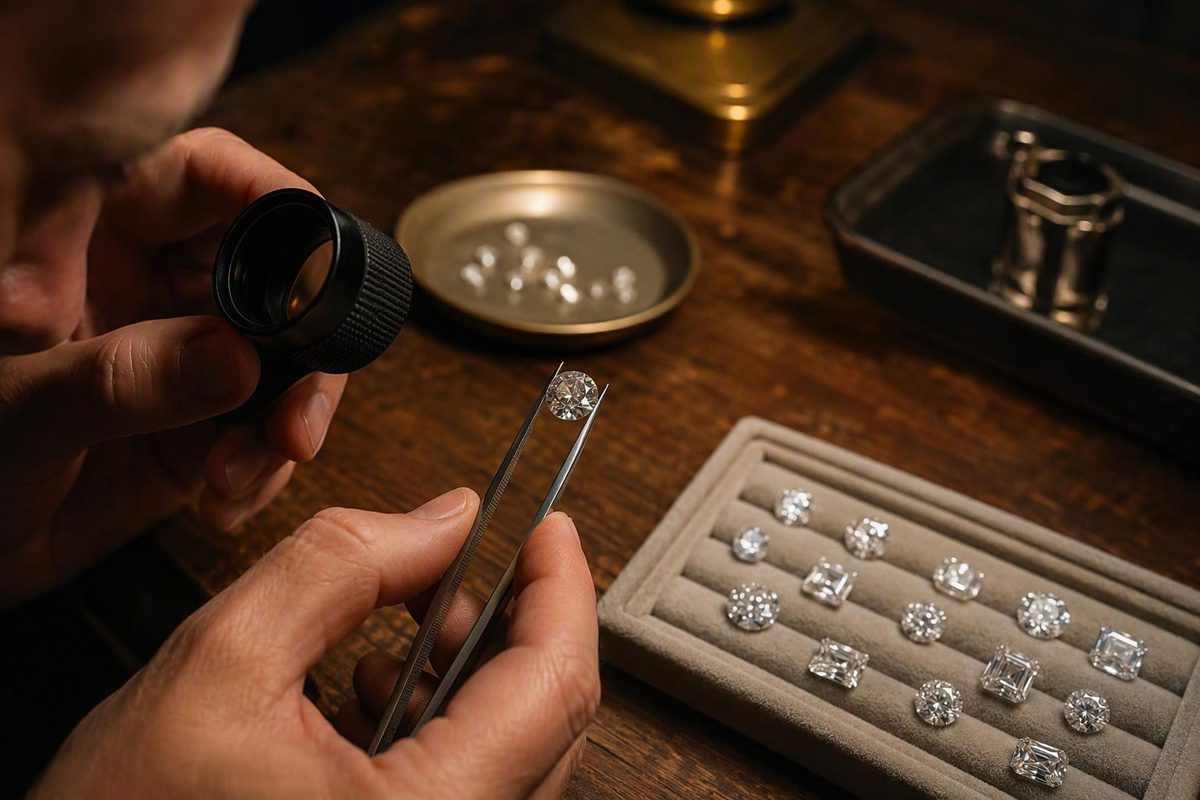
Rose-Cut Diamond in a Pavé Setting: What to Check
See how a rose-cut center and pavé accents work together, what the terms mean, and what to inspect before buying the ring.
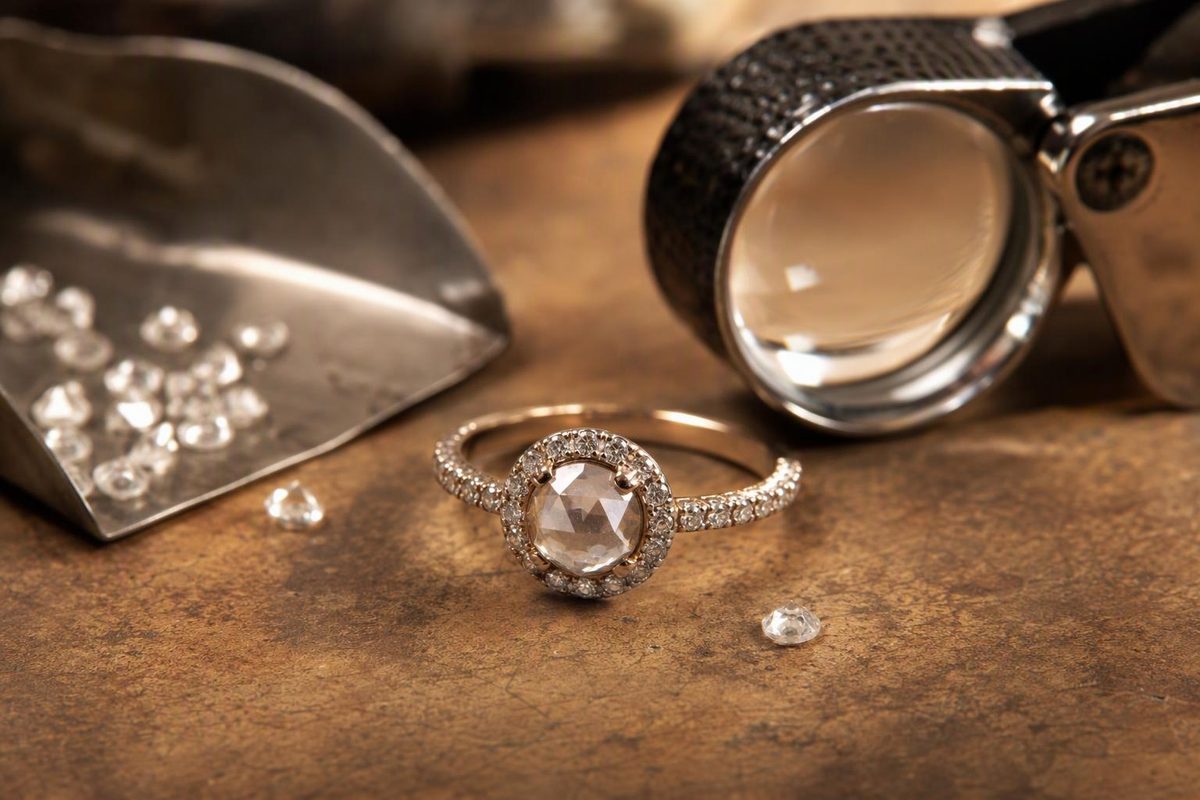
1/4 Carat Diamond Value: Natural, Lab and Resale
A 0.25 ct natural diamond may retail for hundreds, while lab-grown examples can cost less. Value the stone and mounting separately.
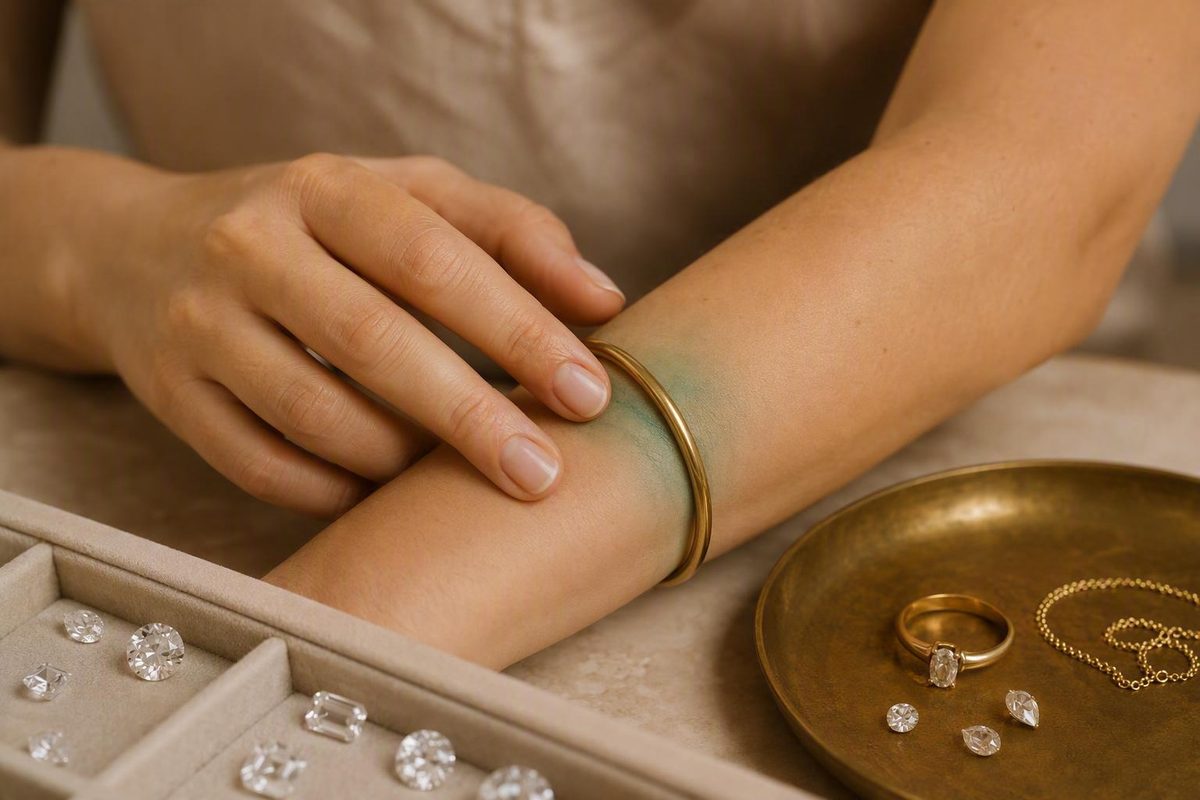
Does Brass Turn Your Skin Green? Yes—Here’s Why
Brass can leave a green mark because it contains copper. Learn why it happens, how to reduce staining and when irritation may indicate a metal allergy.
What Is 2½ Inches in Ring Size?
A 2½-inch finger circumference converts to about a US ring size 10½. Check the calculation, avoid a diameter mix-up and confirm the fit.
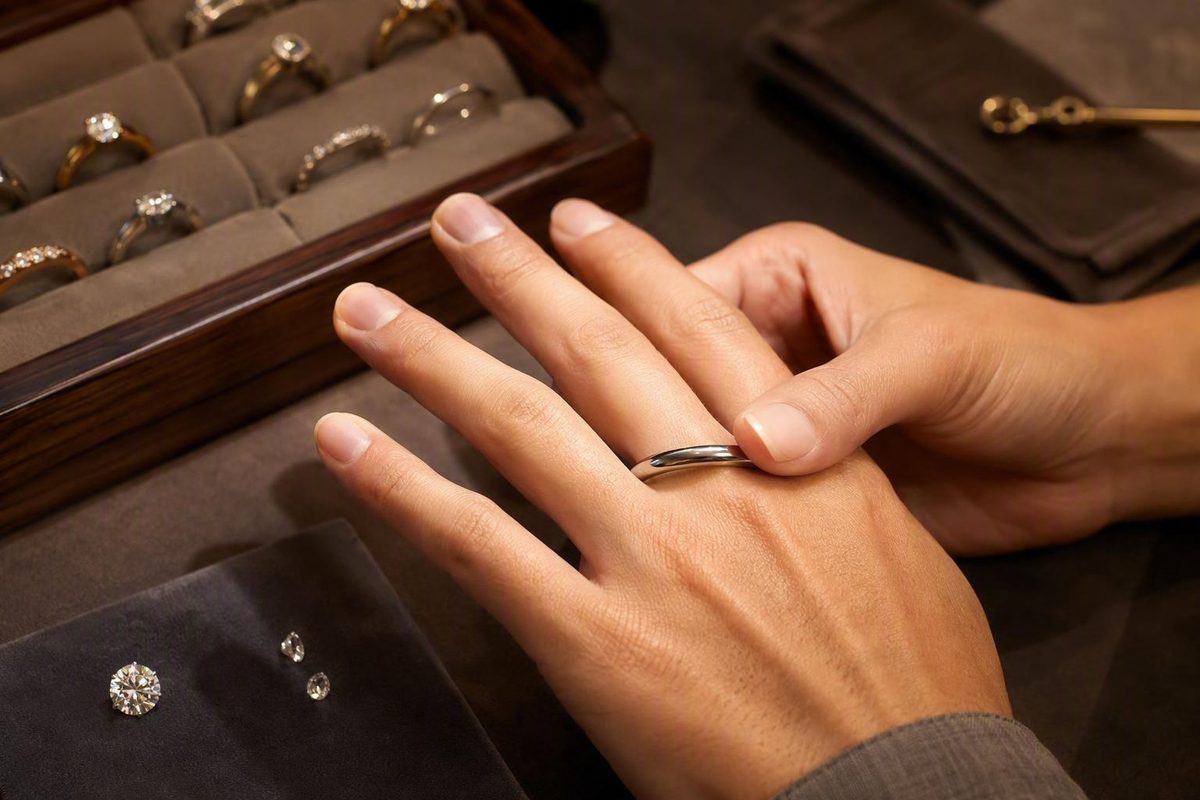
2-Carat Diamond Size in mm: How Big It Looks by Shape
Millimeter benchmarks for 2-carat rounds, ovals, cushions, emeralds, pears and princess cuts, plus how depth, girdle and setting change how big one looks.
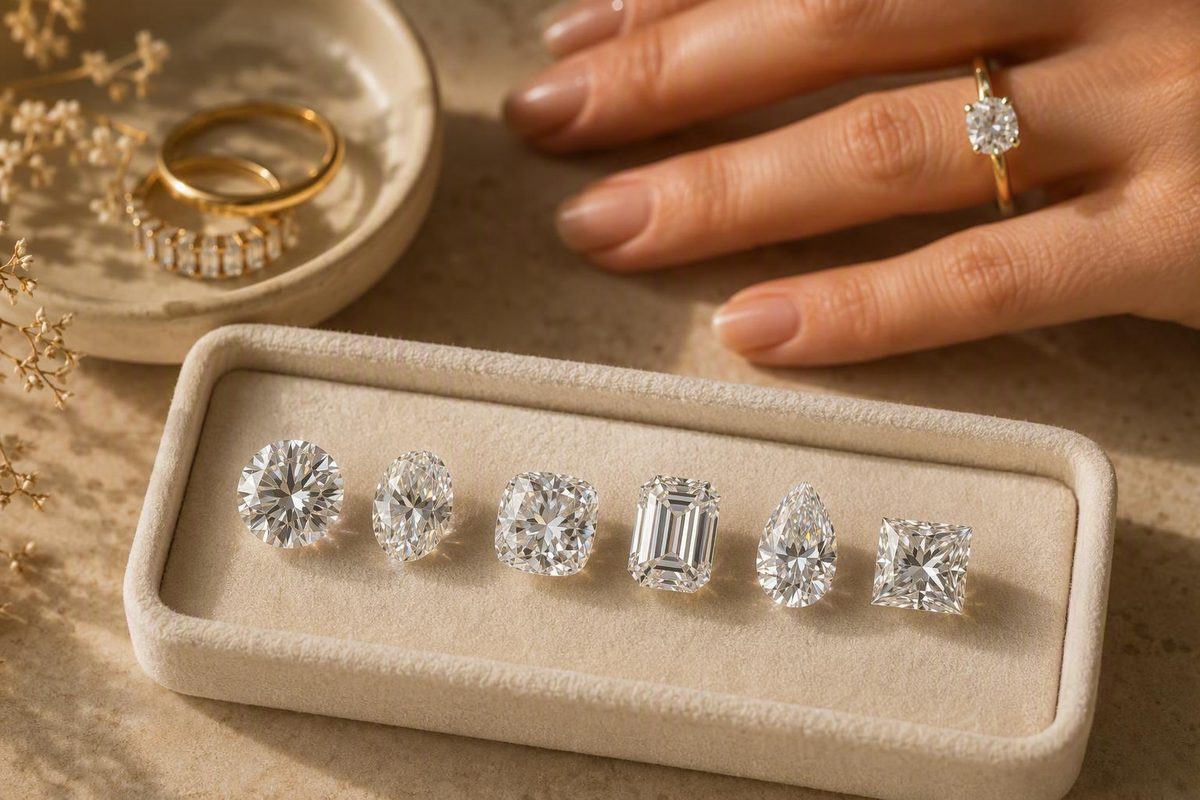
Interlocking Wedding Bands: Fit Guide
Learn what locking, nesting, bridged and soldered designs mean, then check clearance, comfort, separate wear, resizing and price inclusions.
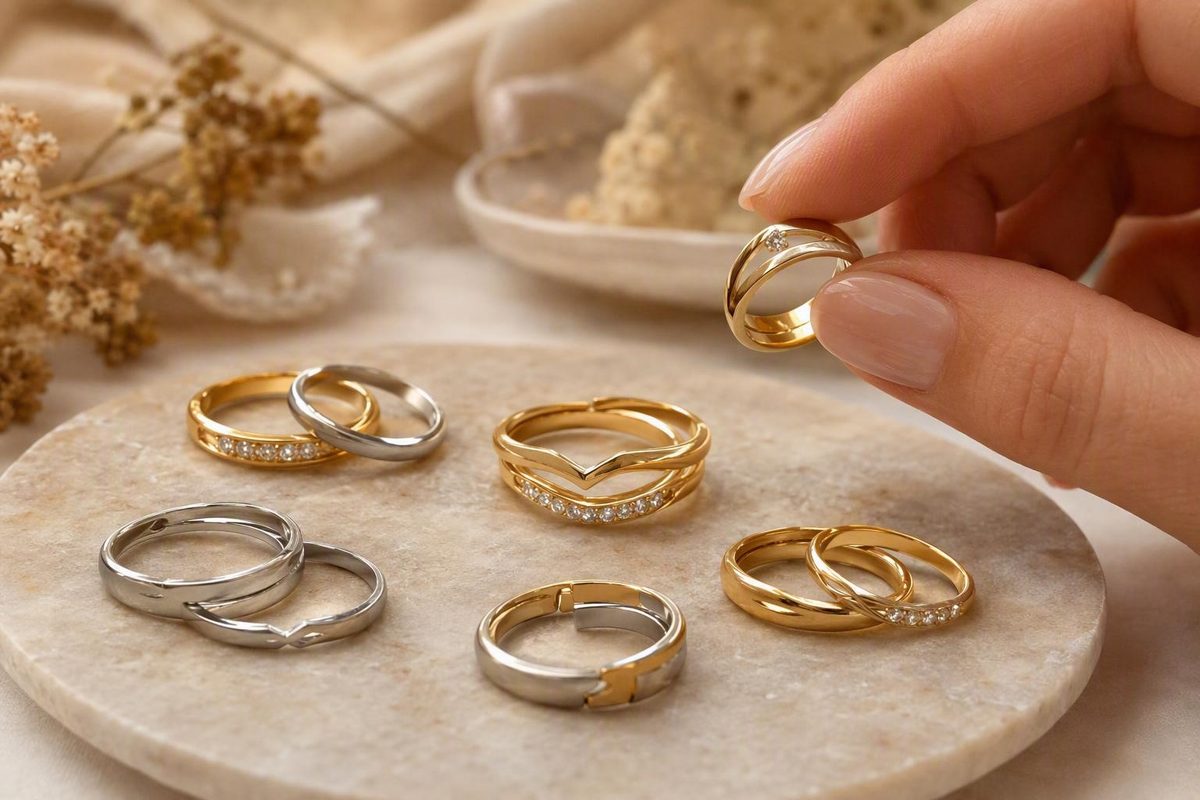
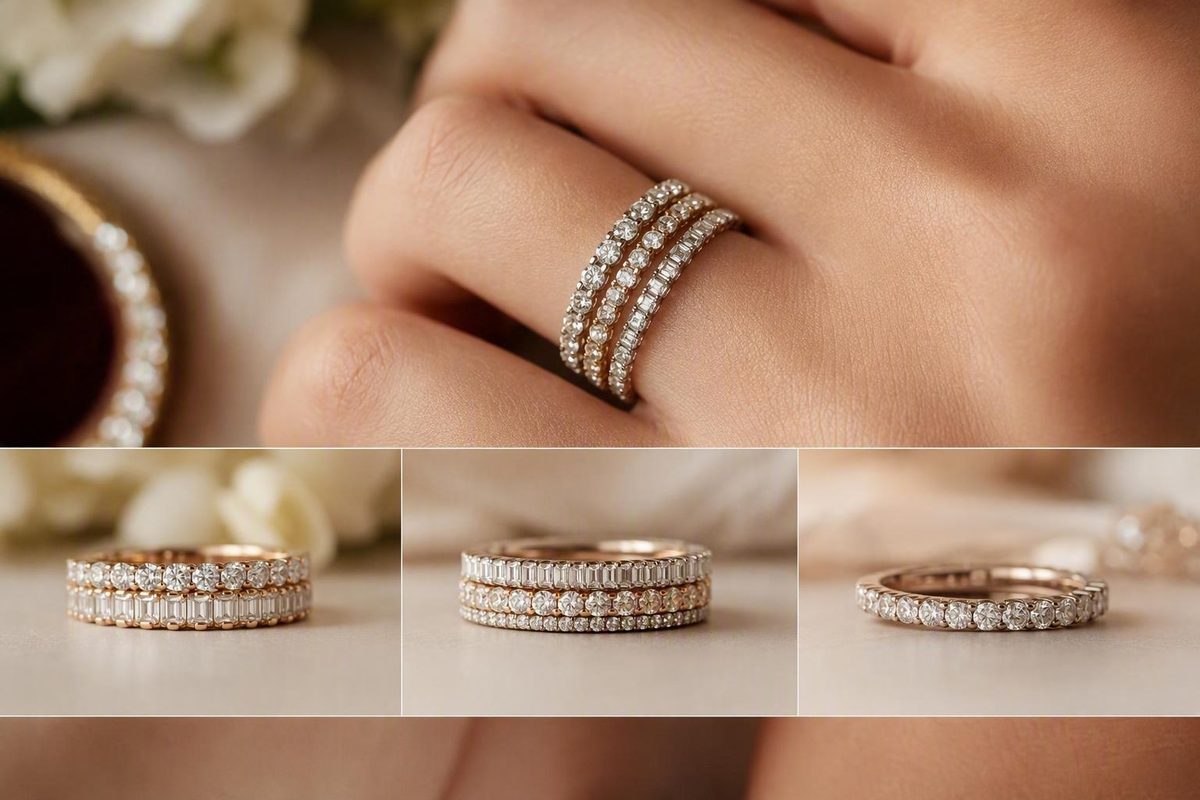
Stacked Eternity Bands: Choose by Fit & Coverage
Check full, three-quarter and half options against side-profile contact, complete-stack fit, comfort and resizing limits.
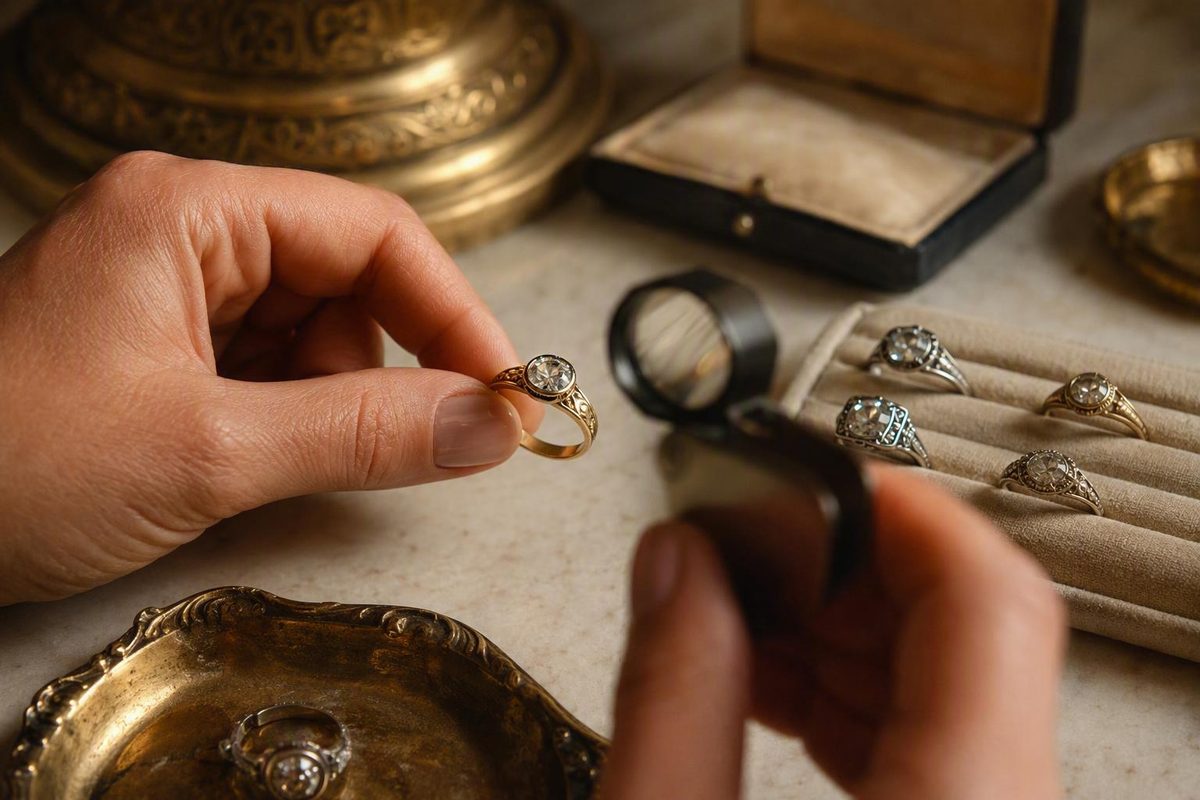
Antique Bezel Set Engagement Rings: How to Buy
Verify age claims, gemstone identity, condition, alterations, fit, price and purchase terms before choosing an antique or antique-inspired ring.
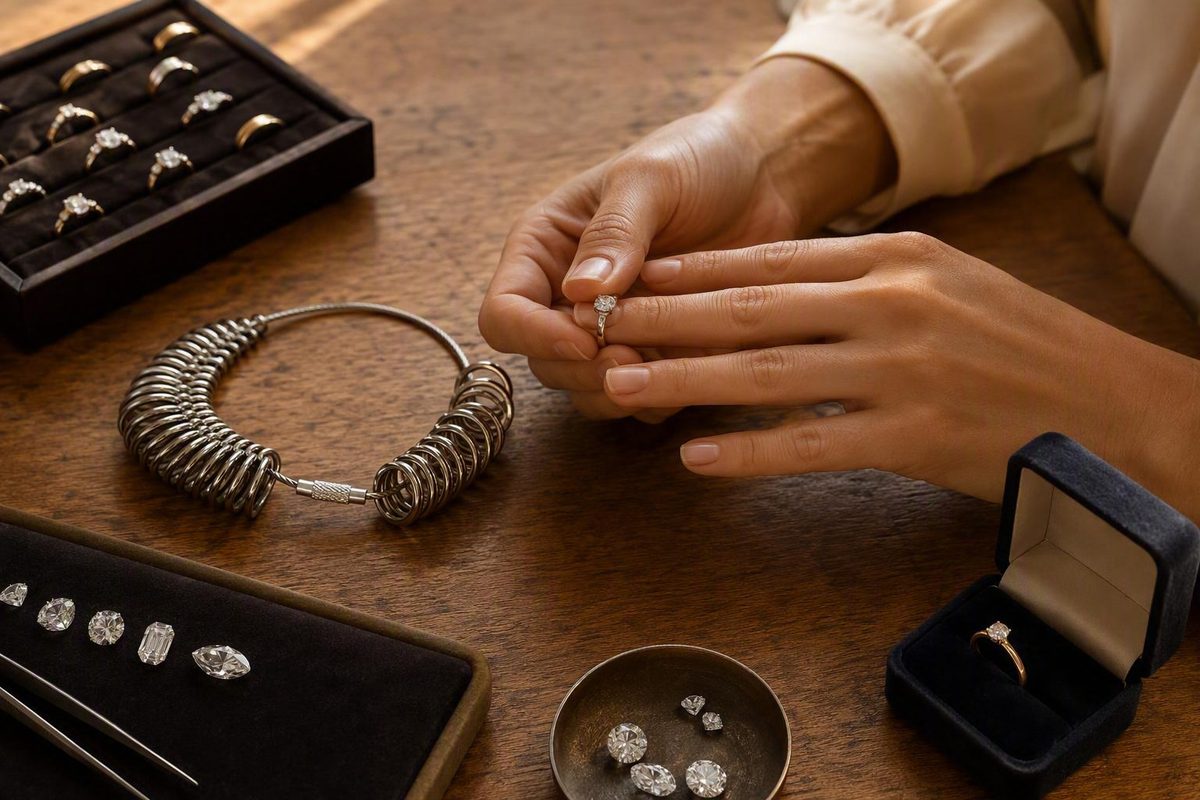
Is Your Ring Size Your Shoe Size? No—Measure It
There is no dependable conversion formula; measure the exact finger with a gauge or use a round ring that already fits that finger.
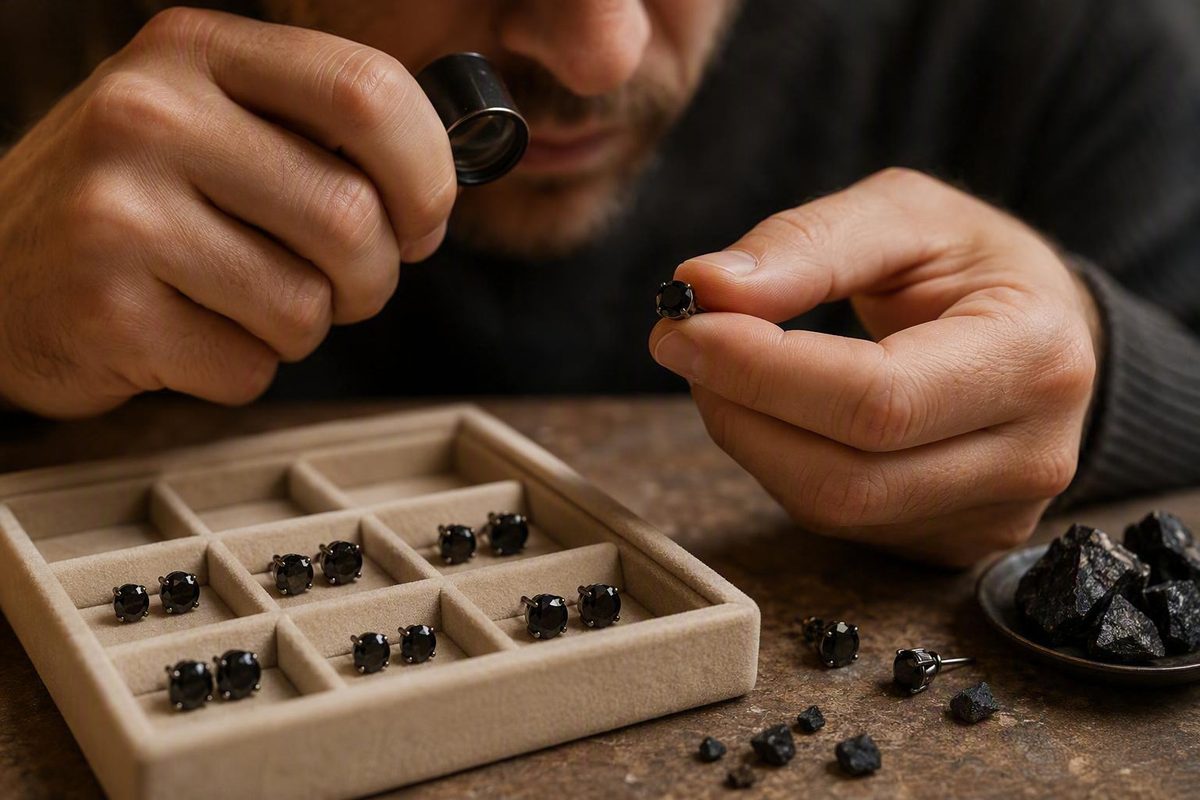
Men’s Black Diamond Studs: How to Compare
Check whether a listing is for one stud or a pair, then compare stone count, weight basis, millimeter size, color origin, setting and reports.
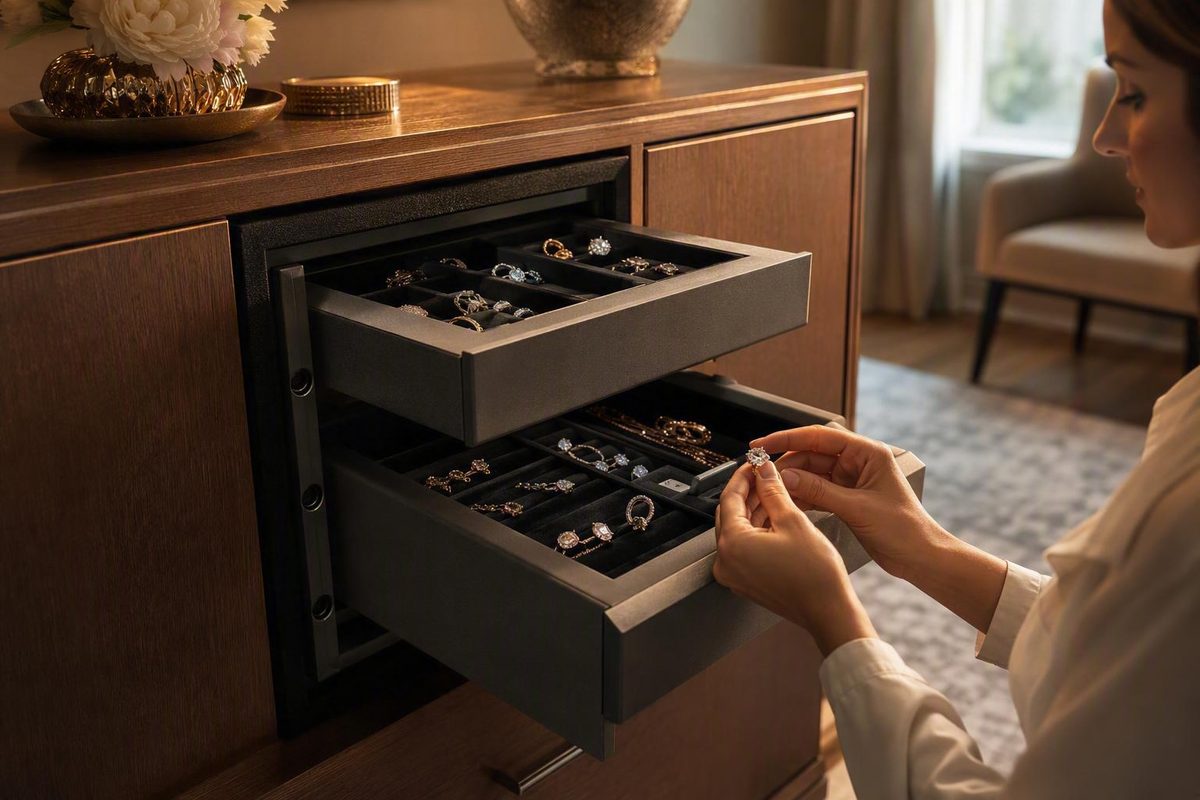
Jewelry Safe With Drawers: Buying Checklist
Compare in-drawer safes with true internal drawers, then verify dimensions, anchoring, backup access, burglary and fire ratings, and insurer requirements.
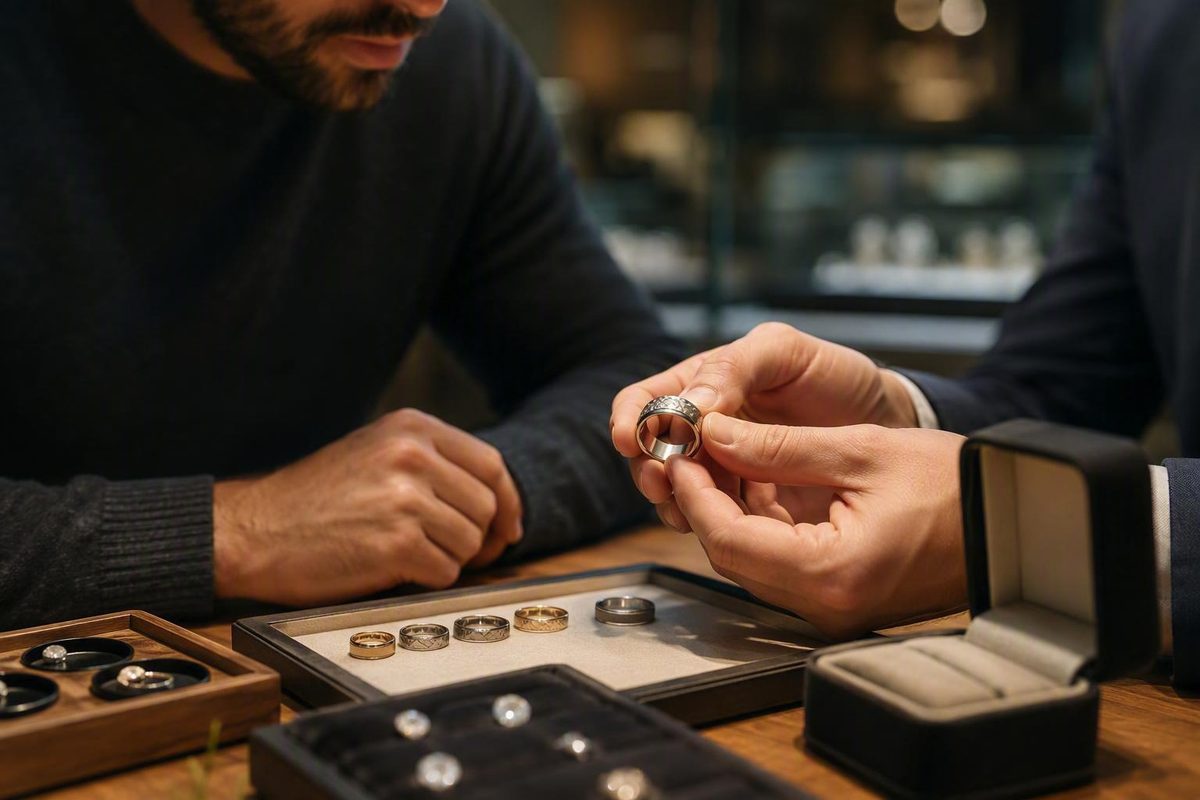
Men’s Engraved Wedding Bands: What to Check
Check size, material, width, inscription details, proofing, total cost, delivery timing, and personalized-item policies before authorizing production.
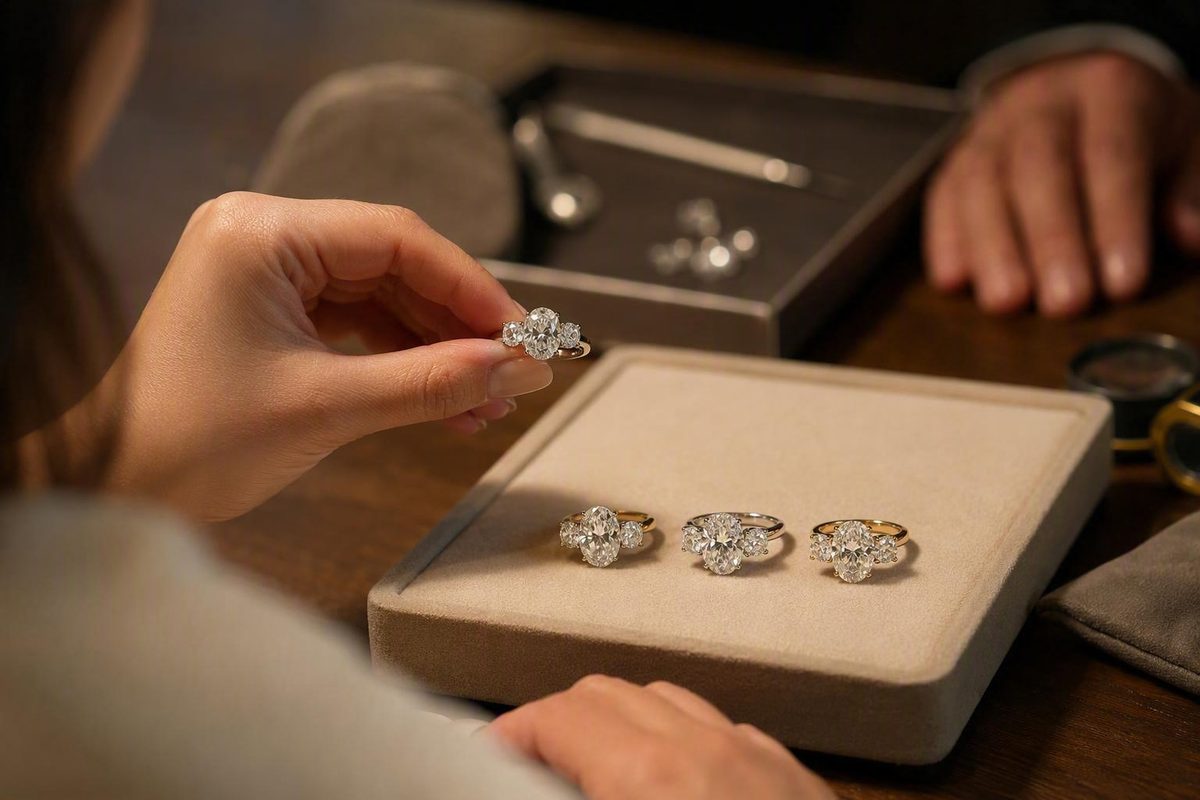
How to Choose a Three Stone Oval Engagement Ring
Inspect the center oval in motion, choose side stones for harmony or contrast, compare all three face-up, and confirm costs with an itemized quote.
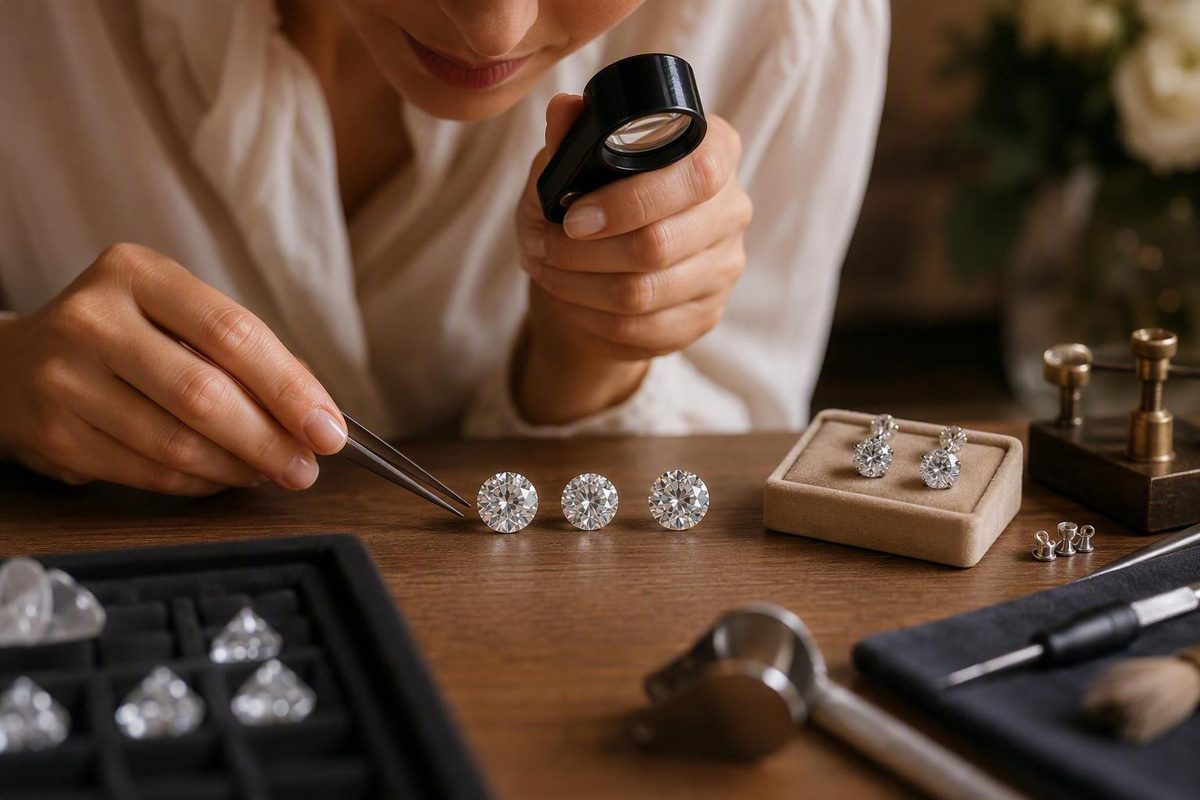
How to Compare 3 Carat Diamond Stud Earrings
Check each stone’s weight, origin, cut, dimensions, matching and reports, then verify the setting, backs, returns, delivery and warranty.
Promise Ring vs. Engagement Ring: What Each Means
A promise ring can mark many commitments; an engagement ring signals definite intent to marry. Compare timing, style, cost, and placement.
Jewelry Protectant Spray: How to Choose and Apply It
Use one only when the maker supports the complete jewelry assembly and provides current application, curing, aftercare and removal directions.
Tulip Setting Engagement Ring: Styles, Fit & Cost
See how plain, cathedral, accented and hidden-halo versions differ, what dimensions to request, and how to verify band fit and final price.
Cost of Resizing a Ring: Price Ranges and Fees
Routine resizing costs about $30–$200; metal, design and sizing direction affect the quote, while plating, stone work or shipping may cost extra.
Most Expensive Diamond Color: Why Red Leads
Natural red generally leads on a typical per-carat basis, but no color wins every comparison between individual diamonds.
Lab-Grown Diamonds Usually Pass Diamond Testers
The shared thermal response explains why, but an ordinary tester cannot reveal natural versus lab origin or always rule out moissanite.
Moissanite Resale Value: How to Estimate Your Return
Use closely matched completed sales, local offers, component details and channel-specific costs to calculate likely net proceeds—not asking prices.
How Should a Ring Fit? A One-Minute Fit Test
Check knuckle resistance, comfort at the finger base, rotation, movement and removal—plus signs the ring is too tight or loose.
Three Stone Ring Proportions: How to Size Side Stones
Start with 0.25–0.30 of center weight per side for a center-focused look, 0.30–0.50 for balance, or 0.50+ for bolder coverage.
How Long Does Rhodium Plating Last?
Expect about 6 months to 2 years overall, while daily-worn rings have a practical planning range of roughly 6–18 months.
Do Lab-Grown Diamond Grades Matter? Usually Not Much
Lab-grown grades help screen visible flaws, but a 1-carat D/VVS upgrade often buys paper prestige. See when color, clarity, and cut justify more.
Is My Diamond Ring Overinsured? Check the Premium Math
Compare your ring’s appraisal with current replacement cost, calculate the premium gap, and learn when revising the insured value makes sense.
Is Platinum Cheaper Than Gold for a Ring? 2026 Math
Compare platinum, 14K, and 18K ring metal values at 2026 spot prices, then identify whether a platinum premium comes from metal or the quote itself.
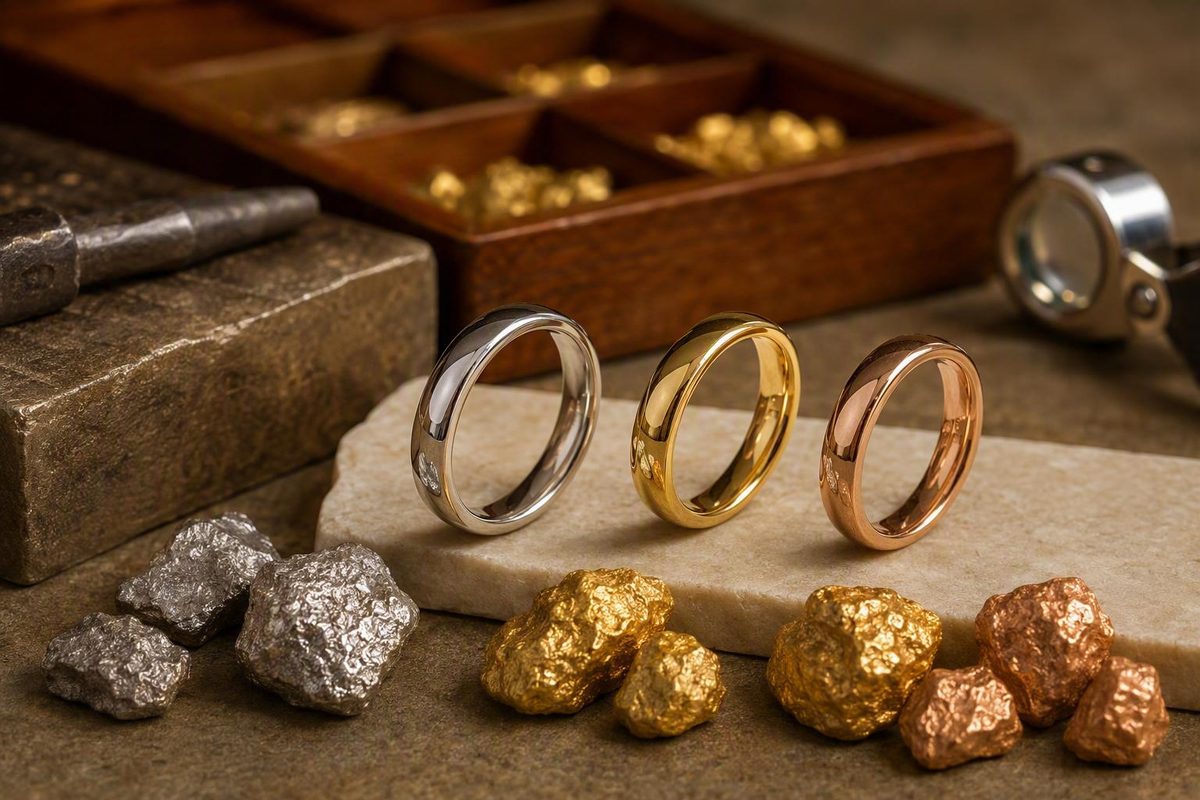
Why Wedding Rings Go on the Left Hand: Tradition
A romantic “vein of love” legend supplied the symbolism; Western wedding rituals and repeated social use made the placement customary, not anatomical.
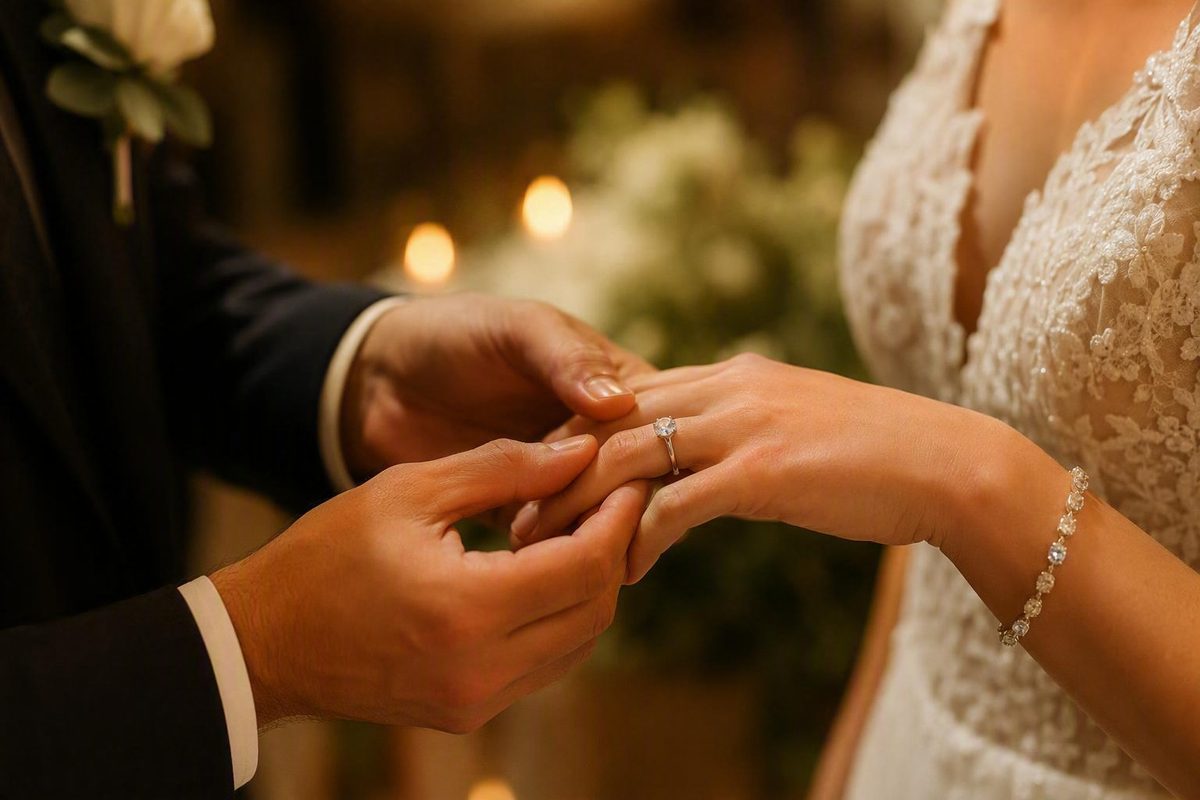
Double Prong Engagement Ring Guide: Pros, Cons & Buying Tips
A double prong engagement ring can look delicate, architectural, or distinctly antique-inspired. Paired claws may also create more points of contact around a…
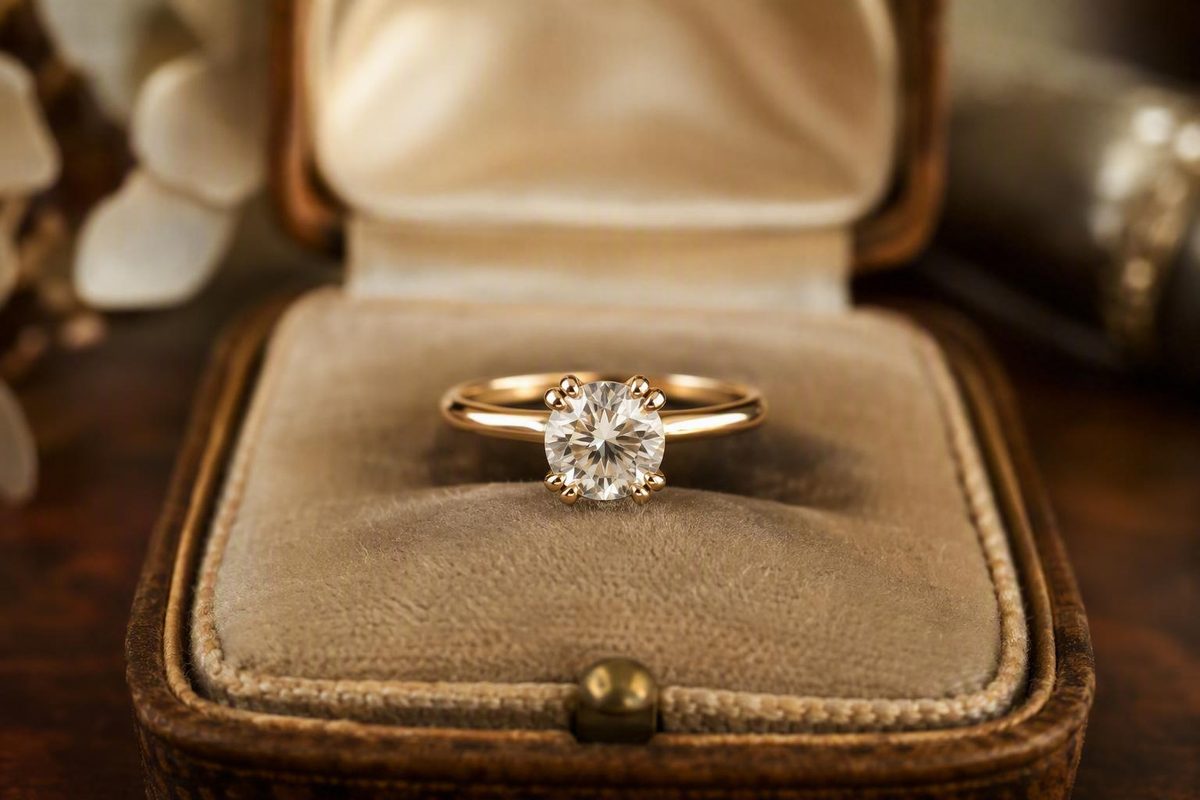
How Long Does It Take to Get an Engagement Ring? Timelines by Type
How long does it take to get an engagement ring? A suitable finished ring may be available the same day, while a complex custom project can take eight weeks or…
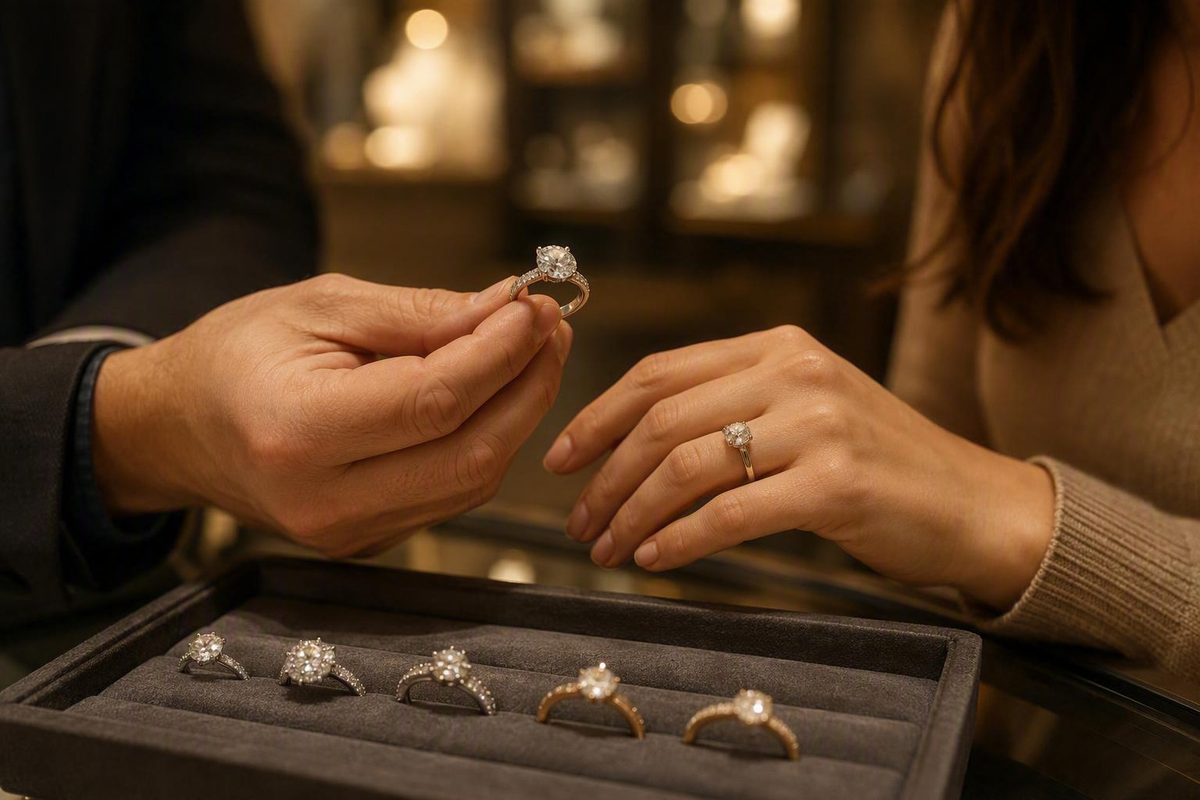
Why Are Diamonds Expensive? The Real Reasons Behind the Price
Why are diamonds expensive? For a natural diamond, the retail price reflects five broad contributors:
Does the India Tariff Affect Diamond Prices?
Estimate the 2026 U.S. tariff exposure for natural and lab-grown diamonds by polishing origin, purchase type, and quoted price.
Are Gemstone Identification Apps Accurate?
See when a gemstone app can shortlist a gem, read a stamp, or flag a fake—and when only a tester, jeweler, appraiser, or lab will do.
Should I Wait to Buy a Lab-Grown Diamond?
Wholesale lab-grown prices are falling, but retail may lag. Use your quote, deadline, and expected pass-through to see whether waiting could pay.
How Much Is a 2.5 Carat Diamond? 2026 Price Guide
Last updated: August 2026. The benchmarks below were compiled from dated retailer listings, seller pricing guides, and commercial inventory indices. They are…
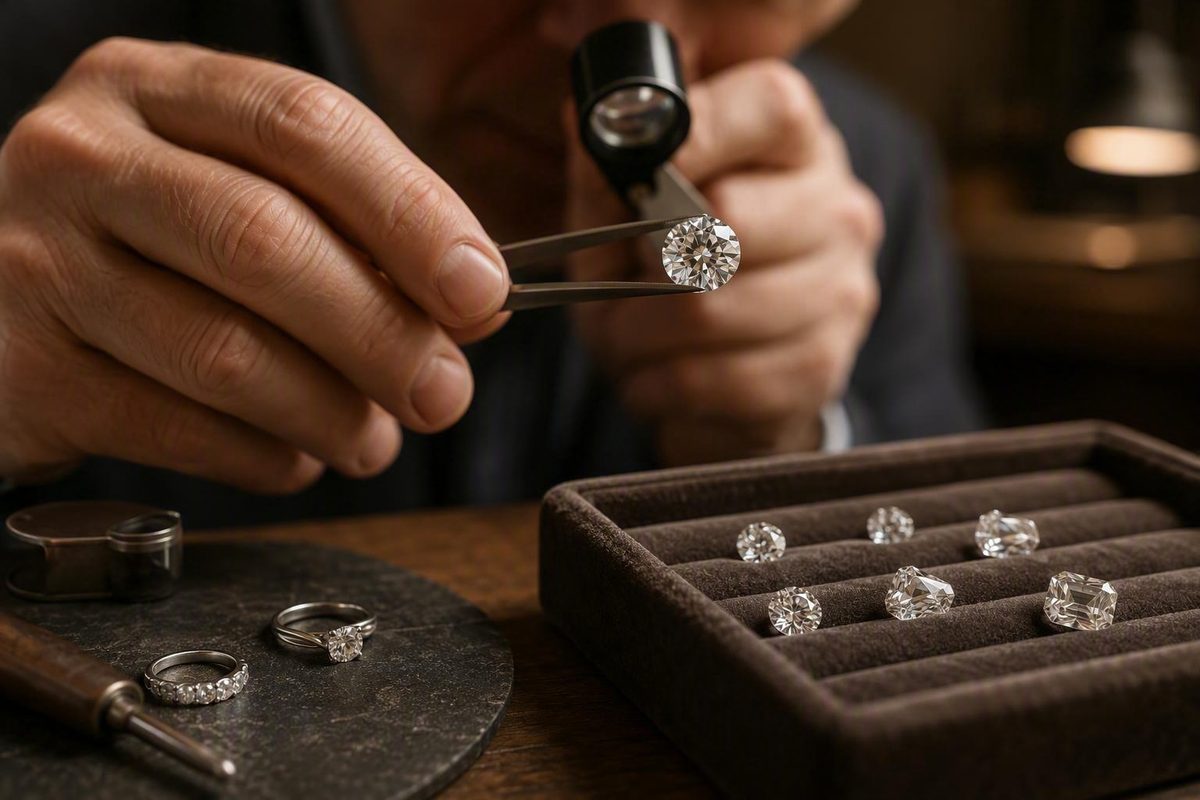
Ring Setting Types: A Practical Guide to Choosing One
Ring setting types are easier to compare once you separate several ideas that jewelry sellers often group under the word setting. The term may describe the…
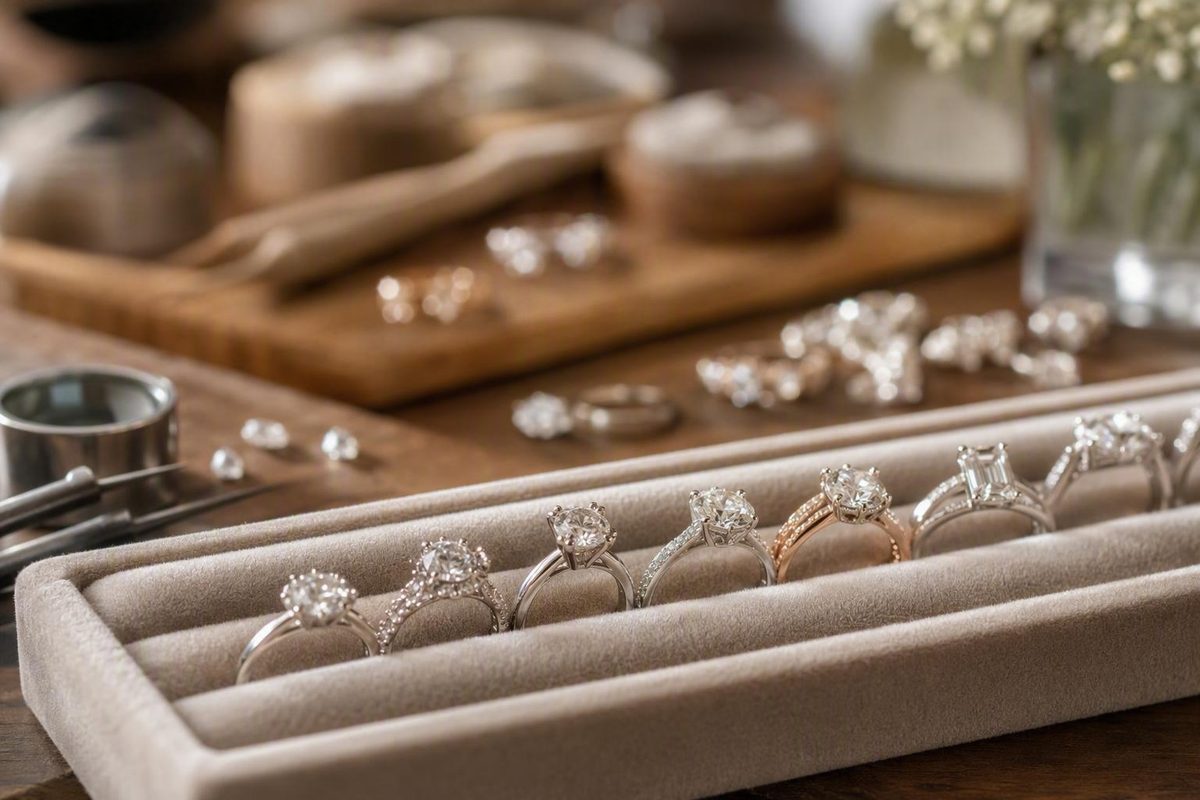
Different Types of Earring Backs: Uses, Pros and Cons
The best earring back depends on more than the earring’s value or appearance. Post construction, earring weight, rear profile, fastening effort, piercing…
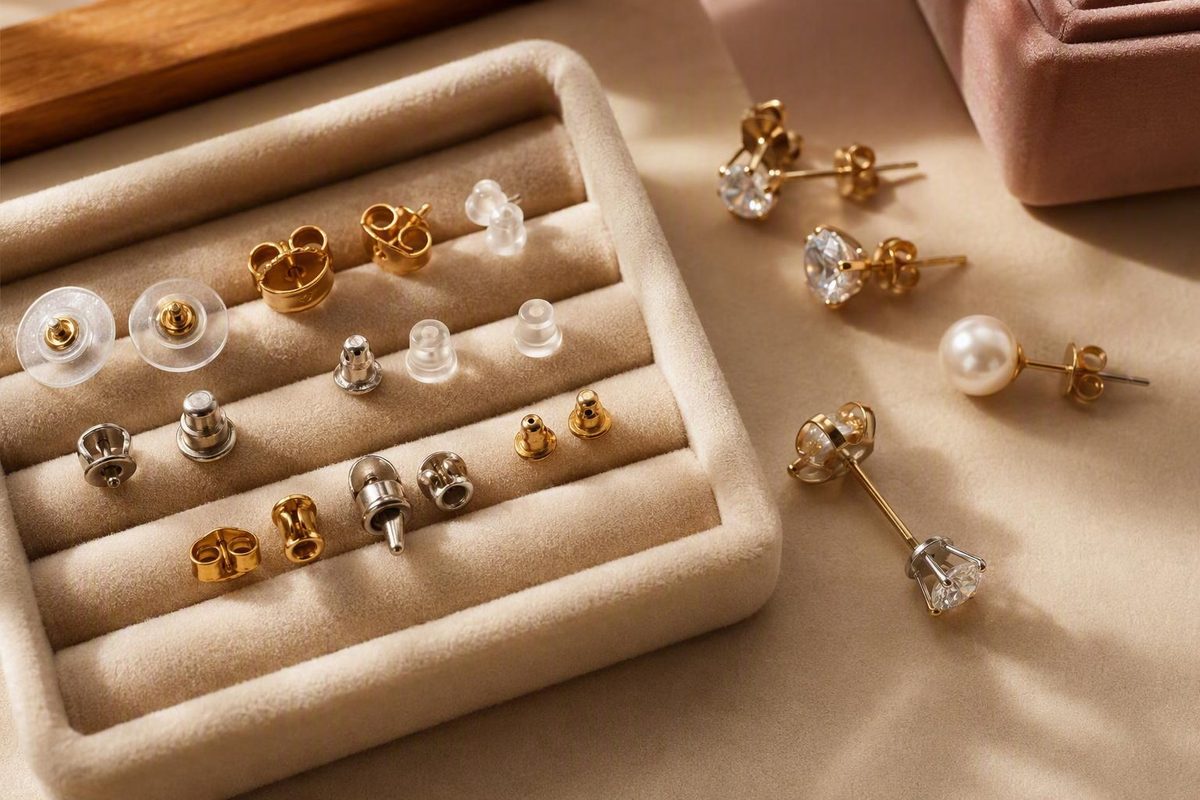
Jewelry Cleaning Cloth: How to Choose and Use One Safely
A jewelry cleaning cloth looks simple, but choosing one safely requires more than finding a package labeled “for jewelry.” The right option depends on what you…
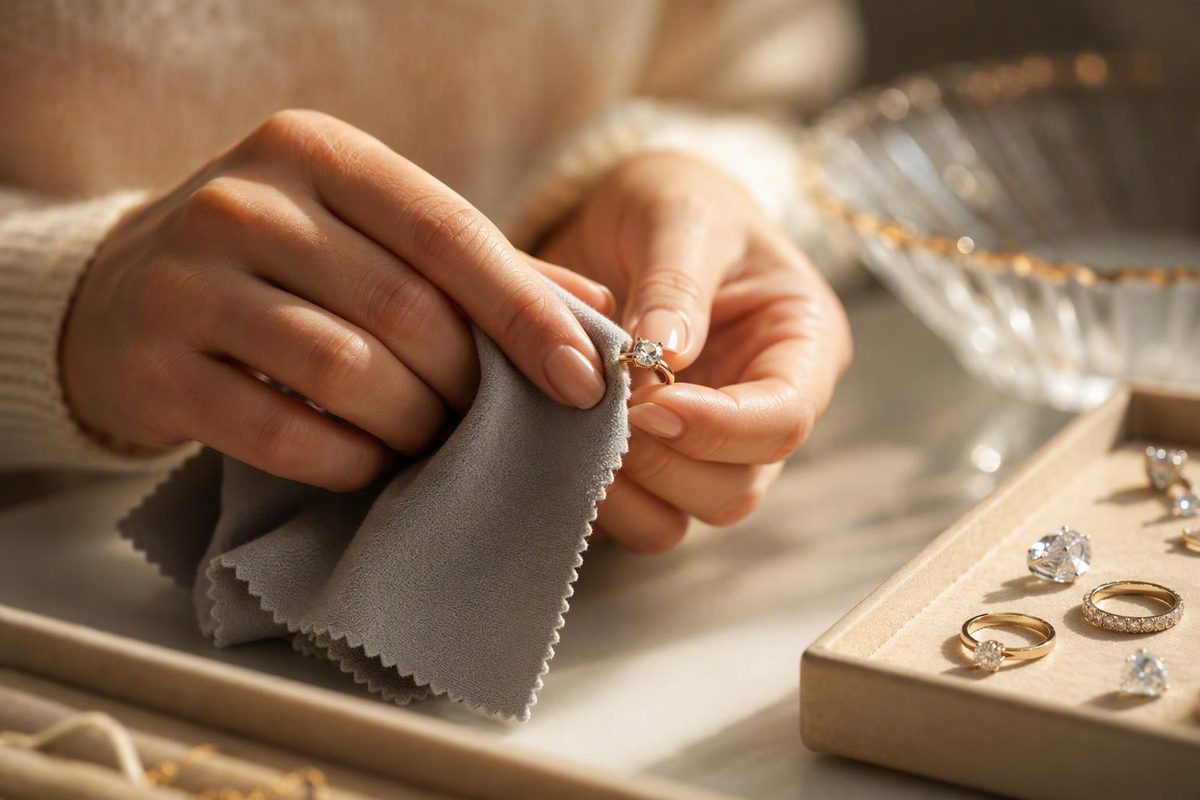
How Do You Choose a Kite Cut Engagement Ring?
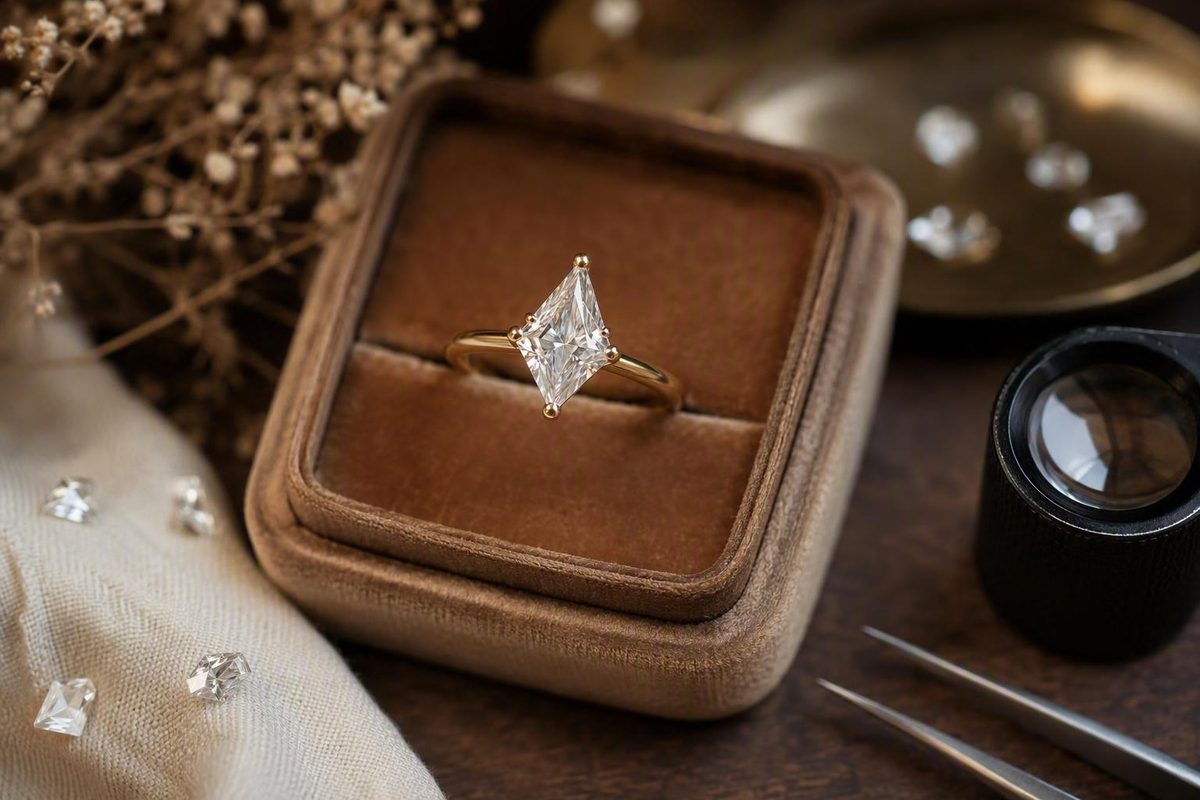
"Kite" may mean a stone's outline, a square stone's orientation, side stones or just an angular motif. Pin down the exact stone, point protection and band fit.
Average Women's Ring Size Is a Retailer Benchmark
Size 6 is useful shorthand for preliminary shopping, but it is not established as a verified national mean, median or mode.
How Do 3 Carat Princess Cut Diamond Rings Compare?
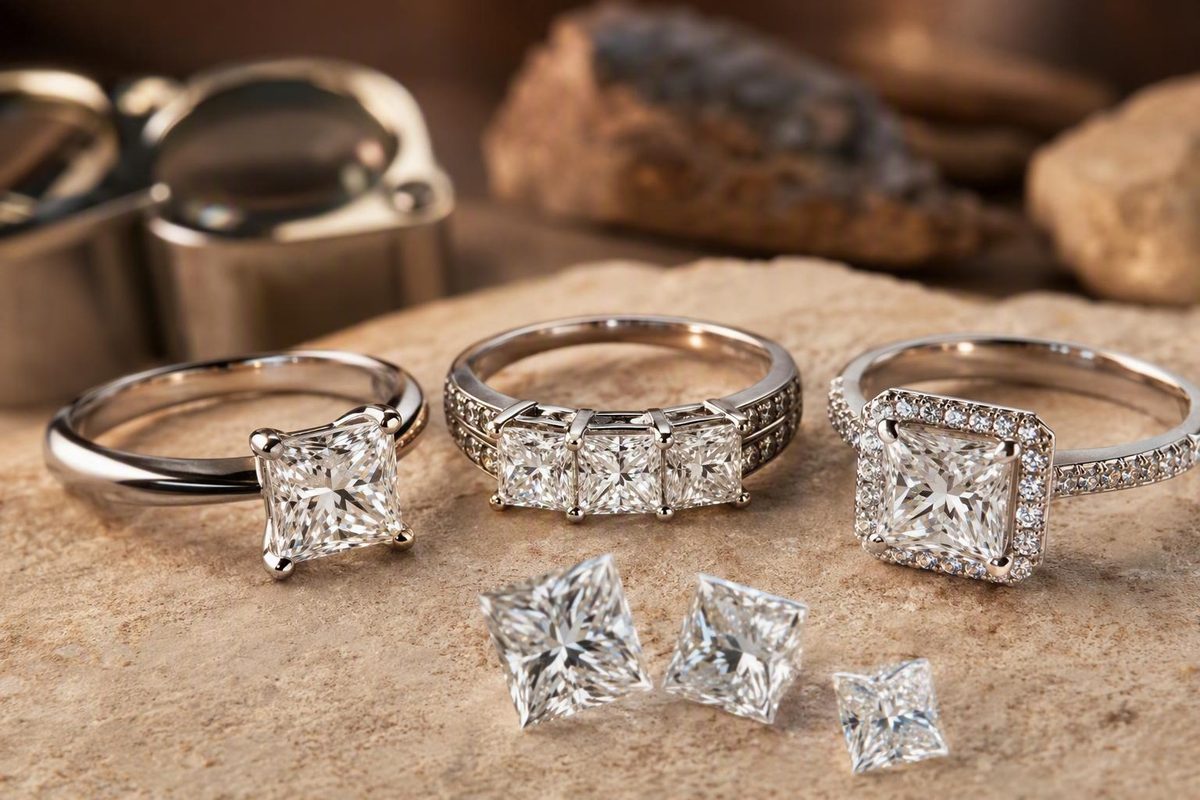
"Three carats" may mean one three-carat center or approximately three carats distributed across every diamond in the ring.
Affordable Engagement Rings Under $200: What Qualifies
A ring displayed at exactly $200 cannot meet a strict $200 final-cost ceiling unless checkout adds nothing. Some captured options are sets or promise rings.
Ring Downsizing Cost by Metal, Design and Condition
Plan on $30–$150 for many rings. Condition, settings and finish can raise the quote, while some constructions need another solution.
VVS Is a High Diamond Clarity Grade, Not Flawless
"Very Very Slightly Included" has two grades, VVS1 and VVS2. An individually verified eye-clean VS may provide the same practical clean appearance.
3-Stone Lab-Grown Diamond Rings: Preset vs Custom
Some collections establish only that the center can be lab-grown. Written confirmation should identify all three stones as lab-grown.
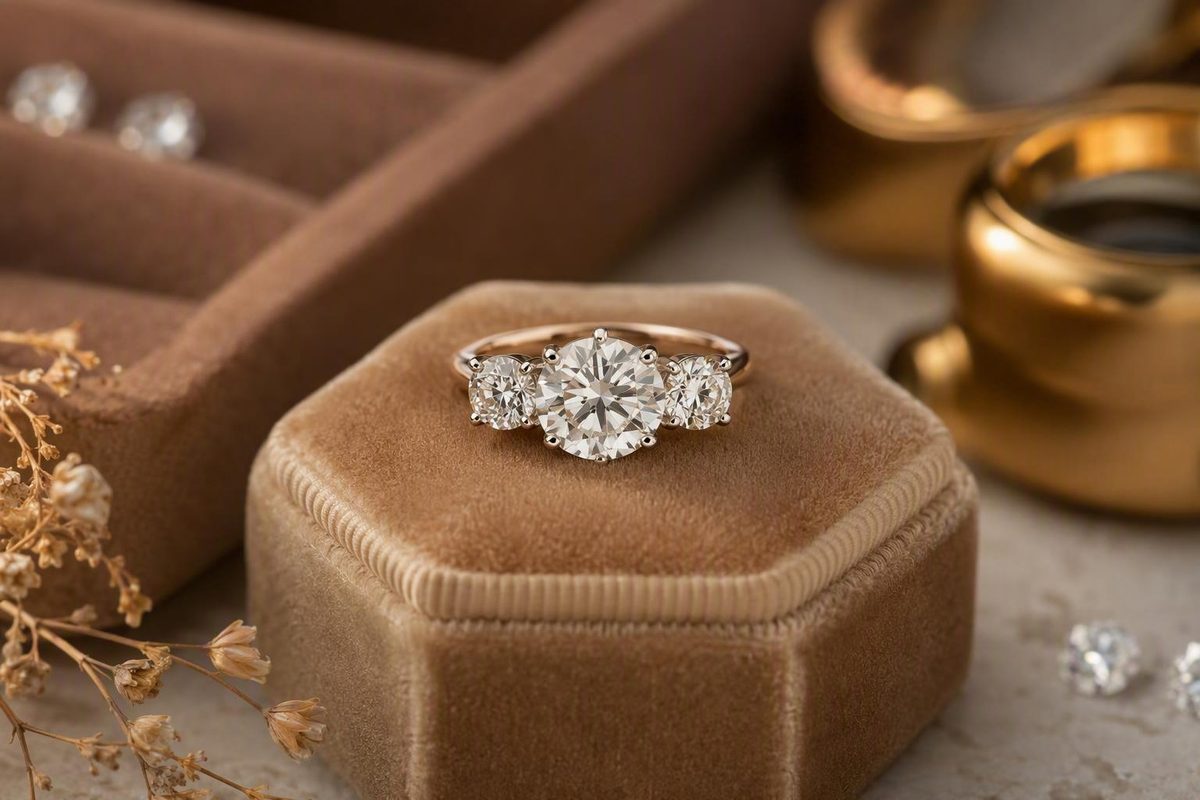
Which Mohs Hardness Test Kit Fits Your Job?
The right kit depends on what you will test, how often you will use it, which part of the Mohs scale matters, and whether a permanent mark is acceptable.
5 Carat Diamond Value: Natural vs Lab
Identified natural examples had six-figure asking prices, while lab-grown examples were priced in the four- to low-five-figure range in the retail snapshot.
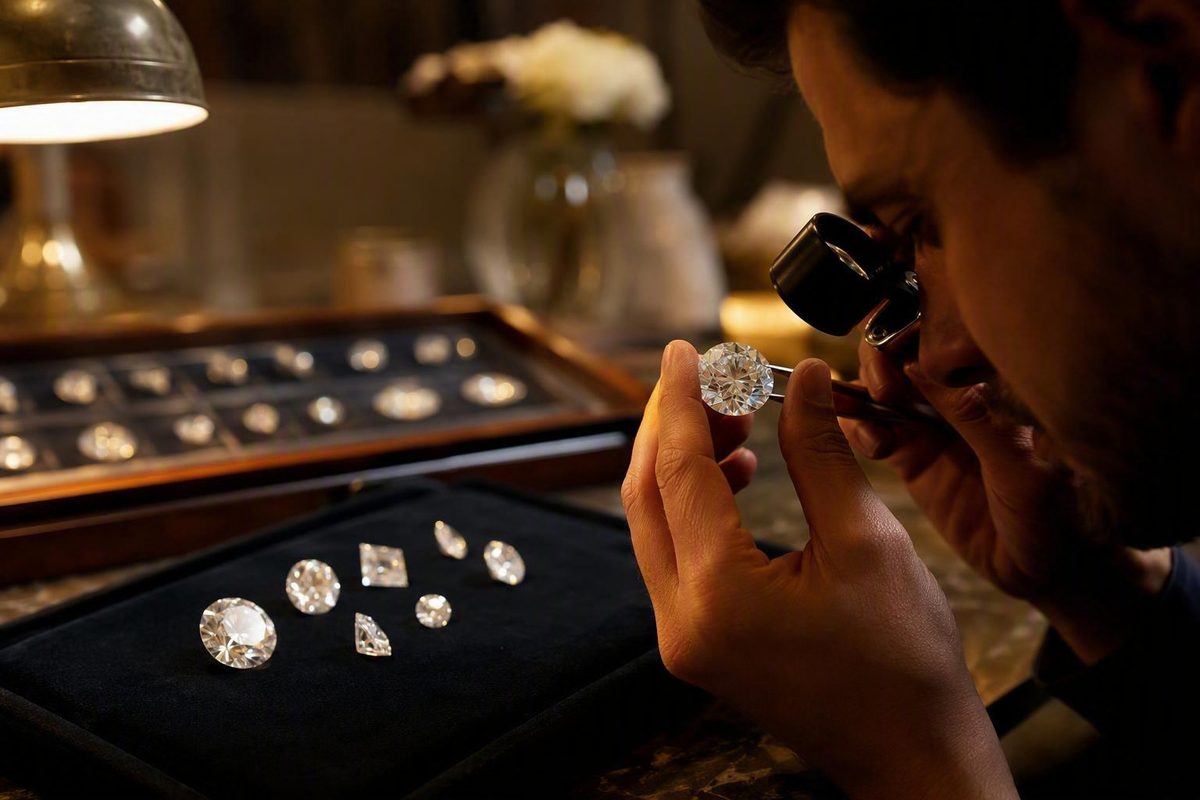
The Most Expensive Diamond Cut Has Exceptions
Retailer estimates put the round brilliant premium around 15% to 35% over many comparable fancy shapes. Rarity or branding can reverse the ranking.
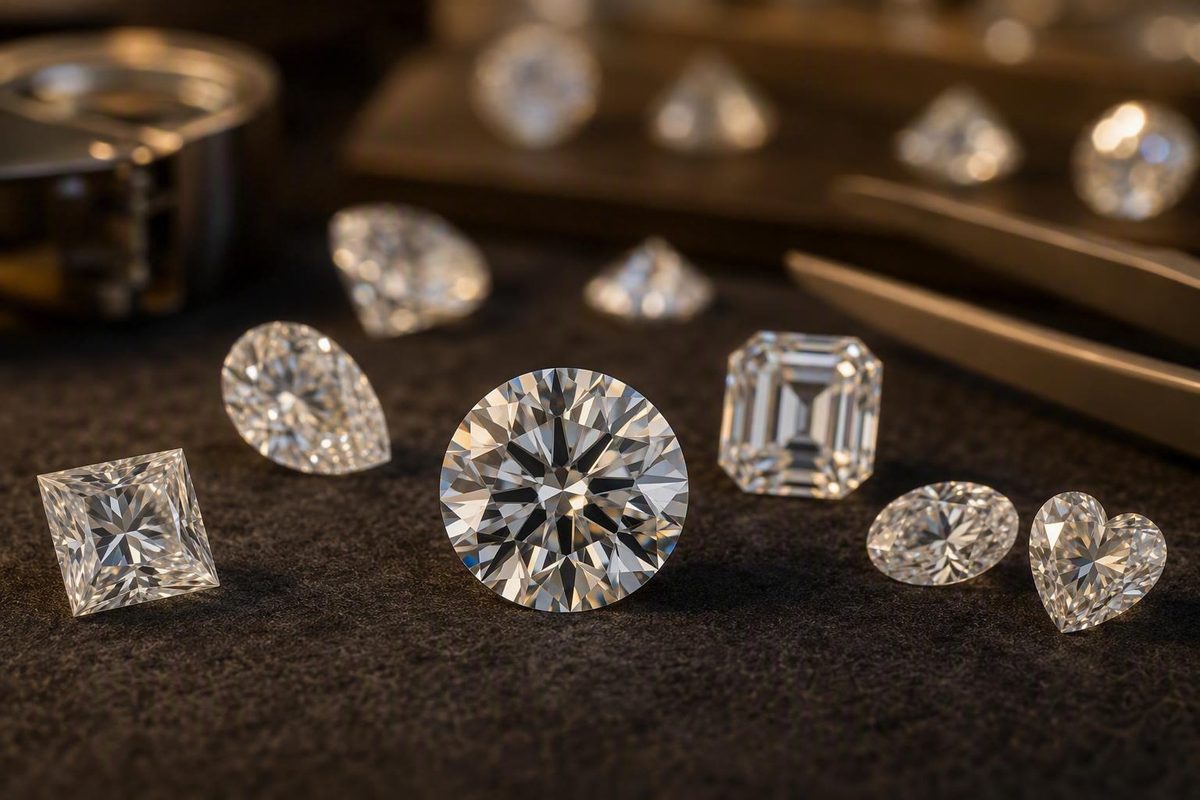
The 750 Jewelry Stamp Is a Gold Purity Claim, Not Proof
It represents 75% gold, or 18K. But a false item can carry a convincing 750 stamp, so testing may still be needed to confirm the metal matches it.
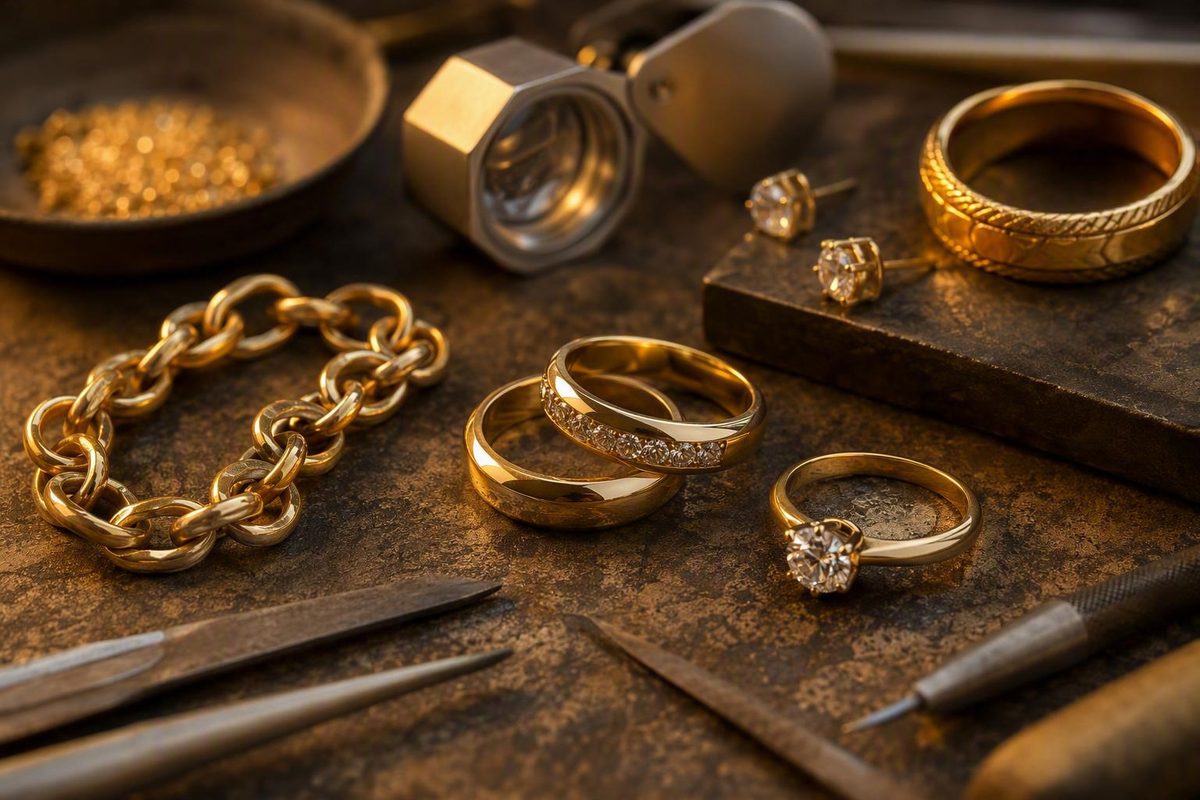
Lab-Grown Diamond Prices by Shape
One useful exact-weight reference: a 4.00-carat oval with G color, VS1 clarity and an Excellent grade was listed at $2,368.
What the Types of Bezel Settings Mean
Full and partial are the two most consistently recognized structural categories. Other labels may instead describe rim width, decoration, geometry or arrangement.
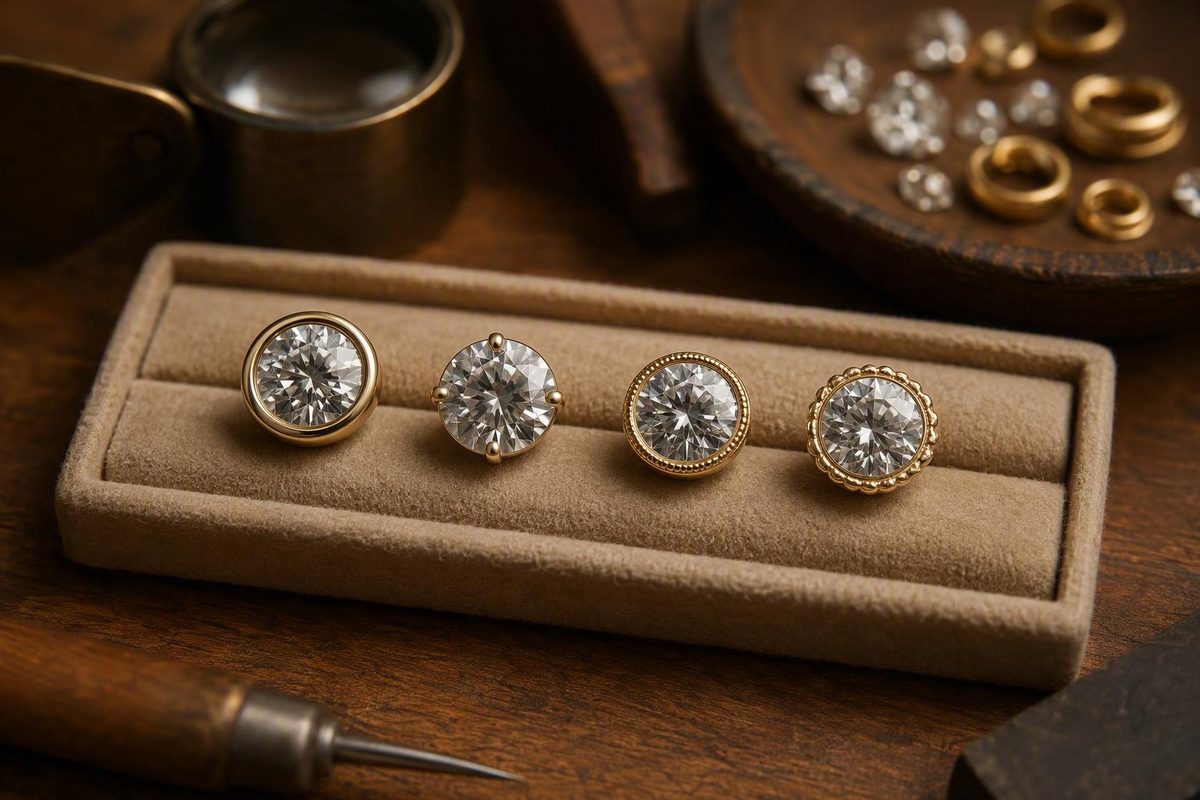
2 Carat Lab Grown Diamond Cost by Shape
$1,000 can be enough for a loose 2-carat lab-grown diamond. Price the finished ring separately to account for the setting and other applicable costs.
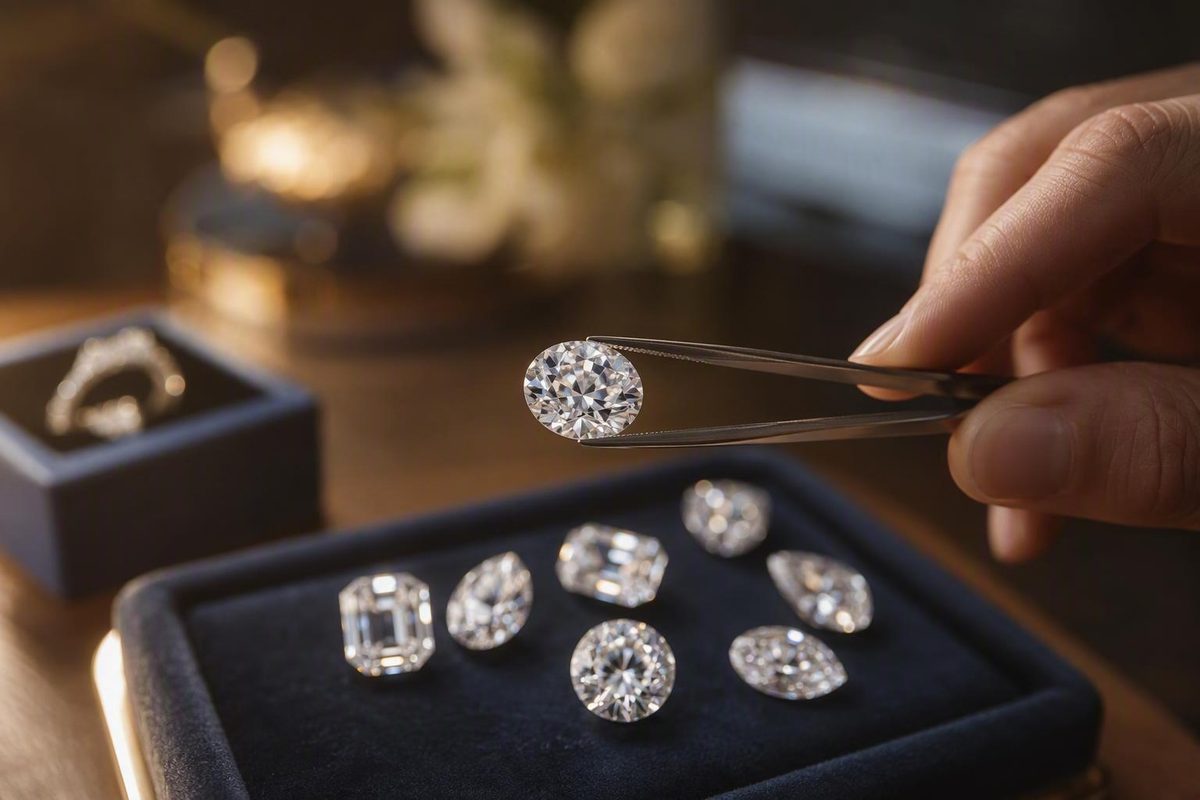
Lab-Grown Diamond Resale Value Is Buyer-Specific
A hypothetical $400 offer can be 20% of the original price and 50% of current retail. Net proceeds show what remains after every selling cost.
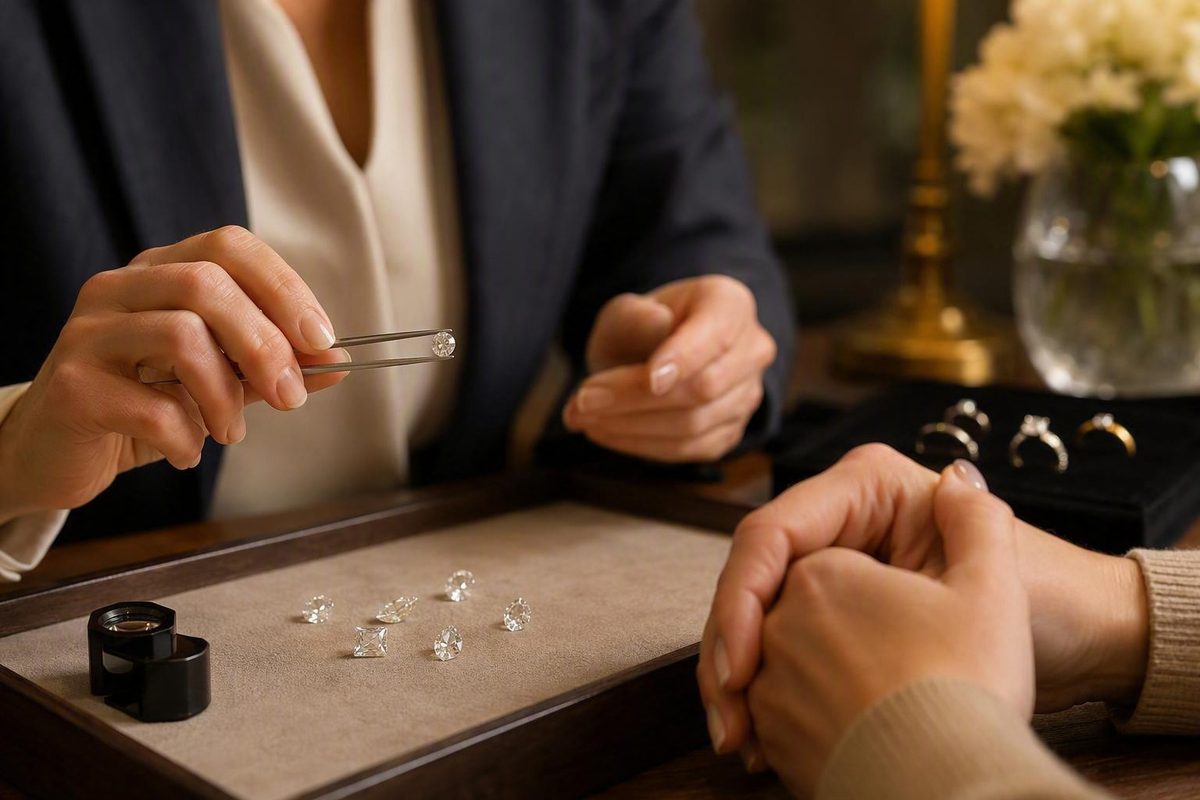
Marquise Diamond Size Chart Gives MM Benchmarks
At 1 ct, 10 × 5 mm is a useful face-up reference, though individual dimensions vary. The grading report shows how a specific stone compares.
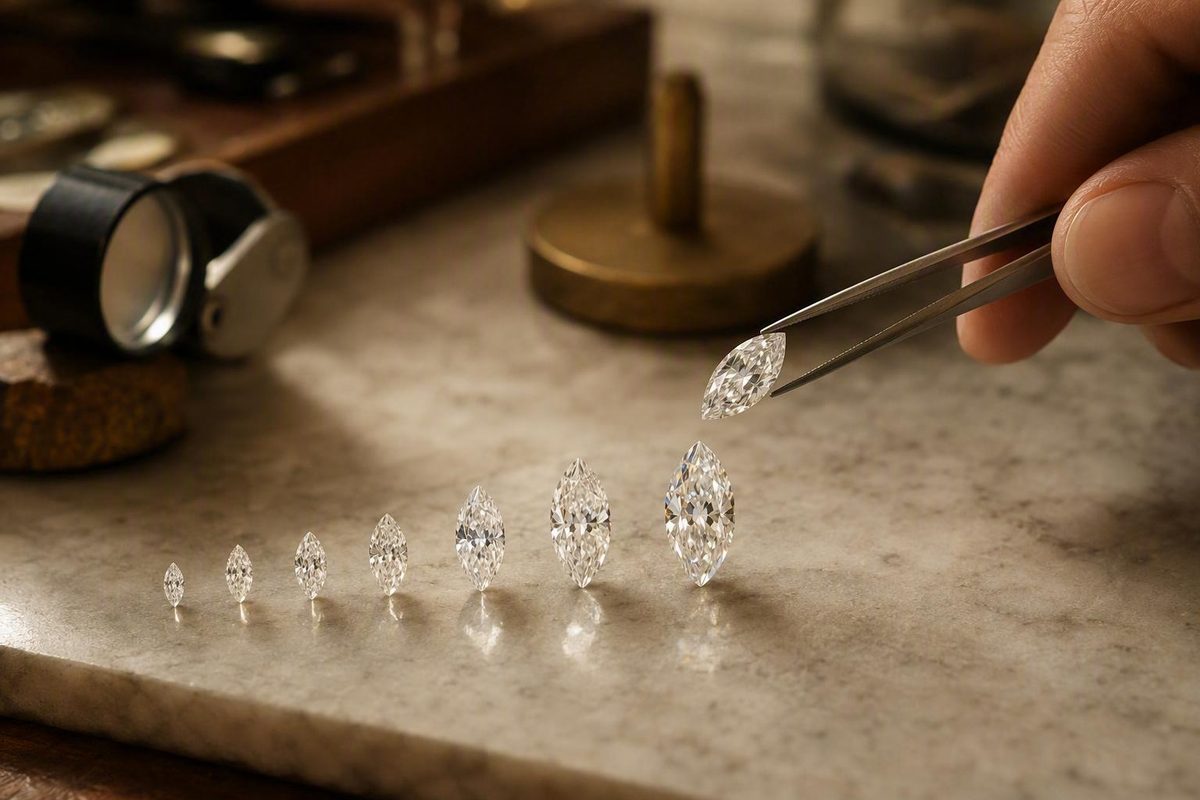
What Is an Antique Cushion Cut?
Genuine old mine cuts typically run 10-30% below modern cushions of equal weight, but exceptional or documented stones can erase that discount.
Engagement Ring Hand Placement Has a Default
The left ring finger is customary, not mandatory. Right-hand wear may reflect culture, family practice, comfort or preference.
No Guides Found.
Try a broader search or clear the topic.