
How Long Does Rhodium Plating Last?
Expect about 6 months to 2 years overall, while daily-worn rings have a practical planning range of roughly 6–18 months.
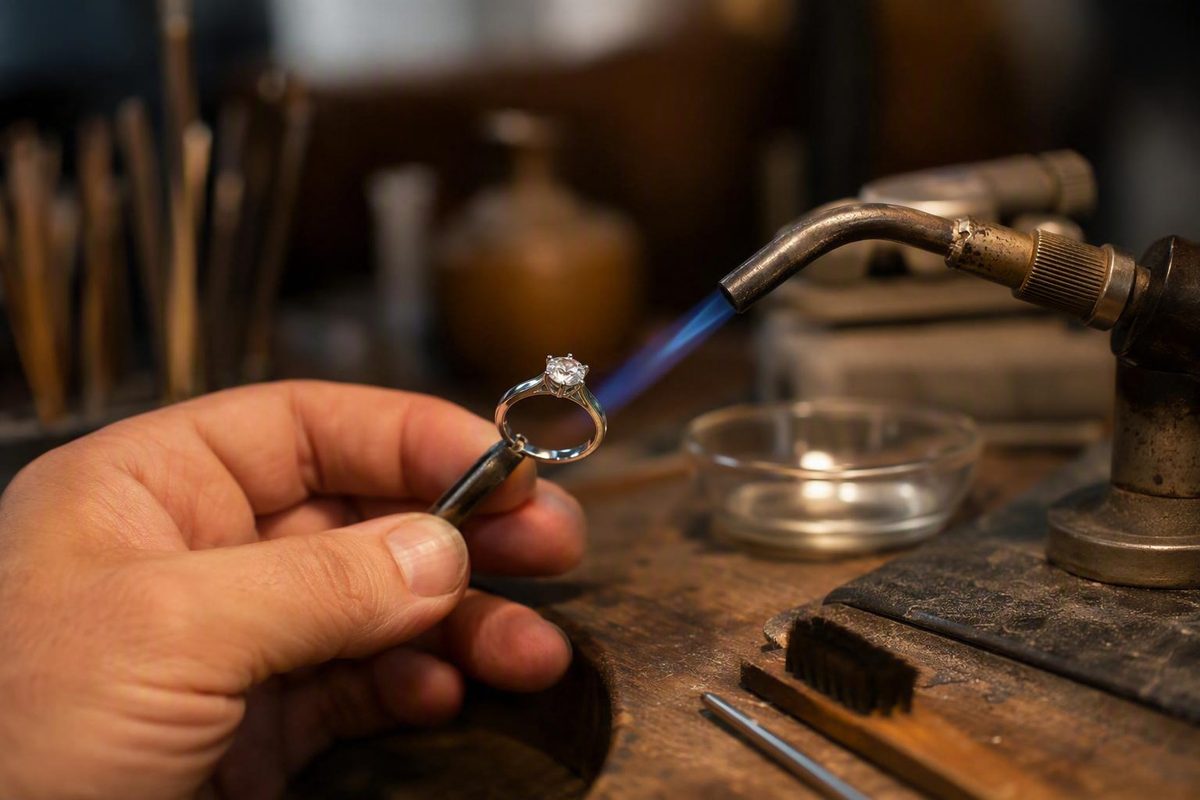
The Short Answer: Usually 6 Months to 2 Years, but There Is No Fixed Lifespan
Rhodium plating commonly keeps its useful appearance for about 6 months to 2 years, according to estimates published by commercial jewelers. For an engagement ring, wedding band, or stacked ring worn every day, roughly 6–18 months is a practical planning range—not a guarantee. One jeweler gives a broad average of 6 months to 2 years and notes that daily-worn rings may fade within a year, while lower-contact pieces can last longer (Little Treasury Jewelers’ lifespan guide).
That range is deliberately broad because jewelry owners do not subject every piece to the same conditions. A wedding band worn through handwashing, workouts, cleaning, and manual tasks faces a different wear pattern from earrings worn to dinner twice a month. Even apparently identical rings can age differently because of fit, stacking, surface preparation, coating quality, and the wearer’s routine.
Published recommendations also reflect different assumptions. Gabriel & Co. says the underlying color of white gold may begin to appear after one or two years and recommends considering replating around 18–24 months (its white-gold rhodium-plating guide). Other jewelers describe maintenance cycles of one to three years for white-gold rings (Quantum Qarat’s white-metal comparison).
Low-contact or occasionally worn jewelry may retain its finish for several years. An earring kept in a jewelry box and a wedding band worn on a working hand are not comparable durability tests.
It helps to separate three milestones:
- First visible wear: The earliest persistent fading, patchiness, or underlying color at a high-contact point.
- Suggested maintenance interval: A jeweler’s general recommendation for inspection or replating.
- Your preferred time to replate: The point at which the changing finish bothers you enough to restore it.
These dates may be months apart. Slight wear can be visible before you consider the piece unattractive, and a scheduled inspection does not automatically mean replating is necessary.
Most importantly, the numerical estimates available here come from jewelry retailers and plating-service providers. They are commercial rules of thumb, not results from cited, controlled, independent durability studies. Treat the commonly quoted range as a planning aid, not an expiration date.
Why a Thin Rhodium Finish Eventually Wears Away
Rhodium plating is a surface coating, not the structural body of a ring, necklace, bracelet, or earring. During electroplating, an electrical process deposits a very thin layer of rhodium over another metal.
Jewelers commonly apply it over:
- White gold, to produce a cooler and brighter white
- Sterling silver, to create a reflective white surface and separate the silver from direct exposure
Diamondrensu reports a typical replating layer of approximately 0.75–1.0 microns (its overview of rhodium-plating durability). The practical point is more important than the exact decimal: the finish is extremely thin.
A hard surface can still wear away when it exists only as a thin film. Each individual contact may remove little or nothing noticeable, but repeated rubbing against skin, another ring, a desk, tools, fabric, or objects handled throughout the day gradually changes the exposed surface.
Thickness alone cannot predict when replating will be needed. A thicker application may sound preferable, but the available evidence does not establish how many additional months a particular thickness will provide under otherwise identical conditions. Surface preparation, adhesion, design, base metal, finishing, and use all matter.
Nor should rhodium be treated as a scratch-proof shield. It creates a bright, reflective surface, but the coating itself can become scratched, abraded, and eventually worn through.
Expected Lifespan by Jewelry Type and Wear Pattern
The following table is a planning tool, not a tested performance specification. Except where a specific retailer-derived range is shown, the estimates are comparative: more contact generally means faster visible wear.
Estimated rhodium-plating lifespan by use
| Jewelry type and use | Typical contact level | Commercial rule of thumb | Where wear may appear first |
|---|---|---|---|
| Engagement ring or wedding band worn daily | Very high | Roughly 6–18 months is a practical expectation; sooner or later is possible (retailer guidance) | Underside, sides, edges, palm-facing surfaces, and points touching another ring |
| Ring worn regularly but not every day | Moderate to high | Usually longer than continuous daily wear, but no fixed interval | Underside, sidewalls, edges, and raised details |
| Bracelet worn daily or regularly | High | Often closer to ring-like wear than earring-like wear | Clasp, underside, links, and areas striking desks or counters |
| Necklace or chain worn regularly | Low to moderate | Often longer than a daily ring; no specific multi-year result is assured | Clasp, adjoining links, pendant-contact point, and back-of-neck area |
| Pendant worn regularly | Usually low | Often longer than rings and bracelets | Bail, chain-contact points, and surfaces rubbing clothing or skin |
| Earrings worn regularly | Low | Often longer than rings because abrasion is limited | Posts, backs, hinges, and clasp surfaces |
| Any piece worn occasionally | Low | Several years may be possible | Closures and isolated contact points |
| Display-only or carefully stored jewelry | Minimal | Abrasive wear may be minimal, though handling and storage marks remain possible | Points touching packaging or other jewelry |
Daily-worn engagement rings and wedding bands tend to lose plating relatively quickly because hands expose them to repeated contact. Rings touch skin, other rings, door handles, tools, exercise equipment, countertops, desks, and everything the wearer picks up. Their undersides and sides often change before the top.
Bracelets also occupy a high-contact location. A bracelet can strike a desk while typing, drag across a counter, catch against clothing, or rub adjacent bracelets. Wear may be concentrated on the underside, clasp, or individual links rather than spread evenly across the piece.
Necklaces, pendants, and earrings usually encounter less hard-surface abrasion, so they often retain plating longer. That does not justify promising a particular lifespan. A chain that moves continuously against skin or carries a heavy pendant may wear differently from earrings that rarely touch anything.
Wear frequency must therefore remain part of any estimate:
- Daily wear: Exposure accumulates quickly, even when the wearer is careful.
- Regular wear: The piece is used often but has rest days and may avoid the harshest activities.
- Occasional wear: Contact is limited, so several years may be plausible.
- Display-only use: Abrasive wear is minimal, although improper storage can still cause contact marks.
When comparing your experience with someone else’s, compare the item type and use pattern—not merely the age of the plating.
What Makes Rhodium Plating Wear Off Faster
Mechanical friction
Repeated surface contact is one of the clearest explanations for wear. Common examples include:
- Rubbing hands together
- Gripping tools, weights, handles, or equipment
- Sliding a ring against hard objects
- Resting a bracelet on a desk
- Wearing multiple rings that touch
- Allowing a chain clasp or pendant bail to rub continuously
Stacked rings deserve particular attention.
Fit matters too. A loose ring that spins may repeatedly rub the inside of the band and bring different outer surfaces into contact. Xennox Diamonds identifies hand rubbing, metal-on-metal contact, and loose spinning rings as potential causes of accelerated wear (its care guidance for rhodium-plated rings). Localized wear inside the band is therefore a reason to check fit rather than immediately blaming the plating solution or skin chemistry.
Chemicals and personal-care products
Commercial jewelers frequently caution against repeated exposure to:
- Chlorinated swimming pools and hot tubs
- Household cleaners
- Hand sanitizer
- Harsh soaps
- Perfume
- Lotions and creams
These products differ chemically, and the available commercial evidence does not quantify how much each exposure shortens plating life. The practical lesson is narrower: avoid repeated contact with strong chemicals and product residue when removal is reasonable.
This is one reason to clean the jewelry gently before deciding that it needs service.
Occupation and lifestyle
A ring worn by someone who washes or sanitizes their hands throughout the day faces a different environment from one removed at work. Cleaning jobs, food preparation, healthcare routines, workshop tasks, gardening, weight training, and other manual activities can combine friction, moisture, soap, chemicals, and impact.
Swimming adds chemical exposure. Exercise adds sweat, repeated gripping, and contact with equipment. None of these activities guarantees rapid wear, but each increases exposure compared with careful occasional use.
Sweat, oils, and body chemistry
Sweat, natural oils, skin pH, and individual body chemistry are frequently mentioned by jewelers as possible contributors. They may help explain why similar pieces behave differently on different wearers, but skin chemistry should not become the default explanation for every early failure.
If wear appears in a precise stripe where two rings touch, friction is a more direct explanation. If it appears only inside a spinning band, fit deserves attention. Body chemistry is one variable among many, not a proven universal primary cause.
Workmanship, design, and substrate
Other plausible variables include:
- Coating thickness
- Cleaning and surface preparation before plating
- Adhesion and plating quality
- Polishing before or after repair
- Base metal
- Sharp edges or raised details
- Articulated links and clasps
- The item’s overall design
The available sources do not quantify each variable’s individual effect.
Premature-wear troubleshooting checklist
Before assigning a cause, ask:
- Where is the wear? Is it on the underside, inner band, stacked edge, clasp, or the entire piece?
- Does the ring fit? Does it spin or slide excessively?
- Do adjacent rings touch? Are there matching worn lines?
- Which products contact it? Sanitizer, cleaner, chlorine, perfume, lotion, or harsh soap?
- What happens during work and exercise? Repeated gripping, rubbing, washing, impact, or sweating?
- Was the item recently repaired? Resizing, soldering, polishing, or setting work may have disturbed the finish.
- Could the change be residue? Clean gently before concluding that the coating is gone.
- Does it resemble abrasion or poor adhesion? A jeweler should assess abrupt, irregular, or unusually fast failure.
Clean First, Then Check for Signs the Plating Is Worn
Dull jewelry does not always need replating. Start with the least aggressive intervention.
Use lukewarm water, a small amount of mild non-abrasive soap, and a very soft cloth. Rinse carefully if the piece and its stones can safely be exposed to water, then pat it dry instead of rubbing hard. Avoid abrasive pastes, scouring powders, stiff brushes, and aggressive polishing compounds: a method designed to remove surface material can also remove more of an extremely thin coating.
After cleaning, inspect the piece in neutral light. Look for:
- Dullness that remains after residue is gone
- Patchy or uneven color
- Reduced reflectivity in isolated areas
- Scratches that appear to pass through the finish
- Gray, warmer, creamier, or yellowish base metal
- A visible boundary between bright plating and a worn area
On white gold, a persistent creamier or yellowish patch commonly indicates that the underlying alloy is becoming visible. For a ring, inspect the underside first, followed by the sides, edges, and any surfaces touching another band. On a chain, check the clasp, adjoining links, and pendant-contact point.
Stop home inspection and consult a jeweler if discoloration is irregular or accompanied by:
- A loose or rattling stone
- A bent or snagging prong
- A crack or opening seam
- Deep gouges
- Significant thinning
- A clasp that no longer closes securely
Cosmetic coating wear and physical damage can occur at the same time, but they are not the same problem. A professional can distinguish between a finish that needs refreshing and a setting or structure that requires repair.
Is Replating Necessary or Mainly Cosmetic?
Replating is usually appearance- and condition-based, not mandatory at a fixed age. Loss of a surface coating does not by itself prove that the underlying jewelry is structurally damaged.
On white gold, the most obvious change is usually color. As the bright rhodium wears away, the alloy underneath can look warmer, creamier, pale yellow, or less uniform. Replating restores a bright, consistent white surface. If you do not mind the warmer tone or mild variation, you may choose to wait.
Sterling silver behaves differently from white gold. Where the coating wears through, exposed silver may tarnish, so delayed replating can affect appearance and maintenance differently. Platinum has another underlying color and wear pattern. The substrate therefore matters.
Exposure of the underlying alloy may also be relevant to someone who experiences skin irritation. If irritation develops or returns, stop wearing the piece and seek appropriate professional advice; retailer guidance also identifies renewed skin reactions as a reason to have worn plating assessed (GOLDZENN’s rhodium-plating guide).
The key distinction is between cosmetic service and structural repair:
- Replating addresses surface color and uniformity.
- Polishing addresses some surface marks but removes material and should not be assumed necessary every time.
- Retipping or rebuilding prongs addresses stone security.
- Soldering addresses cracks or open seams.
- Reshanking or related repair addresses structural thinning.
A warm patch on the underside of a white-gold band may be only cosmetic. A color change beside a cracked seam or badly worn prong requires inspection for reasons beyond appearance.
How to Help the Finish Last Longer
No care routine can make rhodium plating permanent. Good habits can, however, reduce avoidable abrasion, chemical exposure, and residue buildup.
Reduce friction first
Remove plated rings and bracelets for manual work, weight training, gardening, repairs, and activities that repeatedly press the jewelry against hard surfaces. If removal is unsafe or impractical, reconsider whether that piece is appropriate for the task rather than relying on the plating as protection.
Evaluate ring stacks as a system. If two bands scrape each other, careful cleaning will not solve the mechanical cause. A jeweler may be able to assess fit, alignment, spacers, or whether the designs are suitable for continuous stacking.
Have a spinning ring checked. Correct fit may reduce concentrated contact, although sizing decisions should account for finger changes, ring width, climate, and personal comfort.
Limit avoidable chemical exposure
Remove rhodium-plated jewelry before swimming and before handling household cleaners, especially products involving chlorine or strong chemicals. Apply perfume, lotion, sunscreen, and other personal-care products first; when practical, let them dry before putting the jewelry on.
This does not promise a specific increase in lifespan. It simply removes exposures commonly associated with residue buildup and early wear.
Clean gently
A basic routine is usually enough:
- Use mild, non-abrasive soap and lukewarm water.
- Wipe with a soft cloth rather than scrubbing.
- Rinse carefully.
- Dry fully with gentle patting.
- Avoid polishing compounds unless a jeweler recommends them for the specific piece.
Ask a jeweler before immersing a piece if you are uncertain about its construction or stones.
Store pieces separately
Separate storage reduces metal-on-metal scratching. Use individual compartments, soft pouches, or enough spacing to prevent chains, clasps, rings, and earrings from rubbing. Fasten chains before storage to reduce tangling and concentrated friction.
Saveable care checklist
Daily
- Remove rings and bracelets before abrasive manual tasks or exercise.
- Avoid household cleaners and chlorinated water.
- Let lotions and perfume dry before putting jewelry on.
- Notice spinning rings or bands rubbing against one another.
Weekly or as needed
- Wipe away residue with a soft cloth.
- If appropriate for the piece, clean it with mild soap and water.
- Dry thoroughly without aggressive rubbing.
- Check clasps, prongs, and settings while handling the item.
Occasionally
- Inspect ring undersides, edges, stacked contact points, and chain clasps.
- Store each piece separately.
- Have persistent color changes or unusual wear assessed.
- Request a setting inspection before combining replating with polishing or repair.
Replating Cost, Service Questions, and When to See a Jeweler
A reasonable planning estimate for replating a ring is approximately $50–$150, based on retailer-quoted prices rather than a universal fee. Little Treasury Jewelers publishes that range for a typical ring and notes that larger pieces may cost more (its rhodium-replating price guidance).
Your actual quote may depend on:
- Item size and surface area
- Design complexity
- Local labor rates
- Cleaning and surface preparation
- Whether polishing is included
- Stone and setting inspection
- Repairs required before plating
- Current rhodium and supply costs
- Shipping, insurance, or rush service
- Warranty or follow-up coverage
Trails Jewelry reports that its process can take around 90 minutes, but this should not be treated as a standard turnaround time (its explanation of rhodium-plating service).
Before authorizing service, ask:
- What preparation is included? Will the piece be cleaned, stripped, masked, or otherwise prepared?
- Will it be polished? If so, why is polishing needed, and how will fine details be protected?
- What plating thickness is applied? Ask for the provider’s specification without assuming it guarantees a particular lifespan.
- Will the stones, prongs, channels, and settings be inspected?
- Are necessary repairs included or quoted separately?
- Is there a workmanship warranty? What does it cover, and for how long?
- What wear should I expect for this item and my use pattern?
- Is the work performed on-site or sent elsewhere?
- What is the expected turnaround for this item?
- How should I care for it afterward?
If the piece was resized, soldered, polished, or had setting work, ask whether the procedure disturbed the finish and whether post-repair replating is included. Do not assume that repair and finish restoration are one bundled service.
The available evidence does not establish that repeated replating is either harmless indefinitely or necessarily damaging. The answer may depend on the preparation and polishing accompanying each service, the delicacy of the design, and the condition of the settings. Ask what material-removing steps are proposed rather than treating every replating service as identical.
Seek professional evaluation when:
- The finish fails unusually quickly
- Wear looks blistered, peeling, sharply irregular, or poorly adhered
- Skin irritation develops or returns
- The ring spins excessively
- Stones move or prongs catch
- A crack, open seam, or thinning band is visible
- Repeated wear appears in the same unexpected location
- You cannot tell whether the problem is dirt, coating loss, or damage
A Practical Decision Rule
Expect the finish on a daily-worn ring to last for months or perhaps a few years—not permanently. Clean the piece gently before judging the coating, then inspect high-contact areas for persistent patchiness or color change.
Replate when the appearance bothers you or when a jeweler identifies a related reason to service the piece. Commercial lifespan estimates are planning ranges, not expiration dates. Wear pattern, fit, chemical exposure, care, design, and workmanship matter more than a rigid calendar.
Frequently Asked Questions
How long does rhodium plating last on a ring worn every day?
One commercial jeweler gives 12–18 months as a normal general estimate, while noting that low-abrasion pieces may last longer than rings and bracelets (Trails Jewelry’s lifespan guidance). Other daily-ring estimates are shorter or longer. Engagement rings, wedding bands, and stacks tend to wear quickly because their undersides, sides, and edges encounter frequent friction.
Why did my rhodium plating wear off in less than a year?
Possible causes include frequent abrasion, stacked bands, a loose ring that spins, manual work, repeated handwashing or sanitizer use, swimming, cleaners, exercise, sweat, product residue, surface preparation, and plating workmanship.
Inspect the location first. A narrow line beside another band suggests metal-on-metal contact, while wear inside a spinning ring points toward fit. If failure is abrupt, irregular, or widespread, ask a jeweler to assess the coating, adhesion, and any prior repair work.
How do I know whether my white-gold ring needs replating?
Clean it with mild soap, water, and a soft cloth, then inspect the underside and sides. Persistent cream, pale-yellow, or warmer patches, uneven color, fading, or visible base metal suggest that the rhodium has worn through.
Replate if you want the bright-white, uniform finish restored. If you see loose stones, damaged prongs, cracks, or deep wear, request a repair inspection rather than cosmetic replating alone.
Is it safe to keep wearing jewelry after the rhodium wears off?
Visible plating loss alone does not establish structural damage, so the change may be mainly cosmetic. However, exposed silver may tarnish, and an exposed alloy may be relevant if irritation develops. Stop wearing the piece and seek professional advice if a skin reaction occurs; recurring reactions are also a reason to have the plating and underlying metal assessed (GOLDZENN’s service guidance).
Have the jewelry inspected promptly if the color change appears alongside loose stones, worn prongs, cracks, an insecure clasp, or thinning metal.
How much does rhodium replating cost?
Retailer-quoted prices provide a starting point, not a guaranteed fee. Item size, design, preparation, polishing, repairs, labor, location, and rhodium costs can all affect the quote. Ask what preparation, inspection, plating specification, polishing, warranty, and post-repair work are included before comparing prices.