
Crushed Ice Diamond: What It Means and How to Choose
Learn what crushed ice diamond sparkle looks like, how it differs from bolder facet patterns, and what to inspect beyond the grading report.
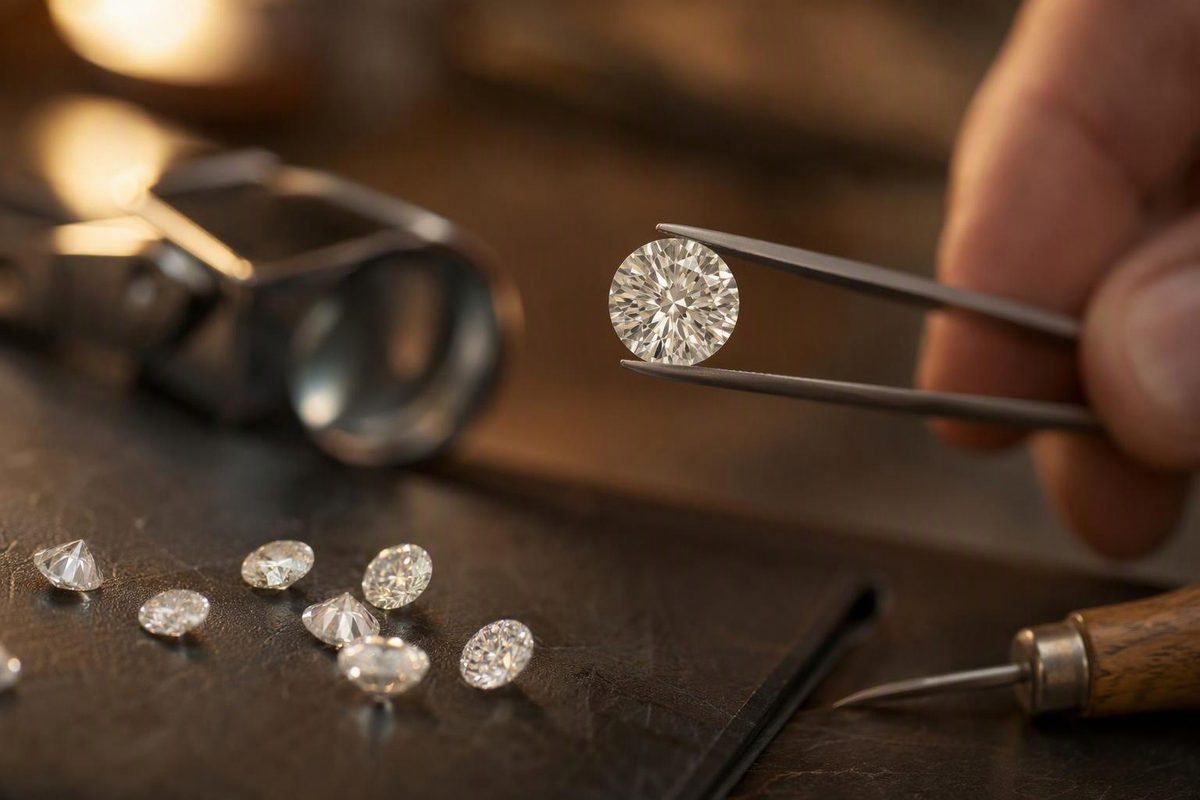
A crushed ice diamond has a dense pattern of tiny, broken-looking reflections rather than large, clearly defined flashes. The term describes its face-up appearance—not a separate diamond shape or a quality grade. You will most often encounter it in cushions and radiants, though other fancy shapes, including ovals, can show the effect. Diamond retailer Whiteflash’s explanation describes it as a twinkling style of light performance.
The buying question is not whether crushed ice is universally better or worse. It is whether you like that fine sparkle and whether the particular stone looks lively rather than persistently dull.
Crushed ice versus larger flashes
The reflections you see are not simply a count of the diamond’s polished facets. Light reflecting within the stone creates virtual facets: visible reflections that can be much more numerous than the physical facets. In a crushed ice pattern, these are very small and numerous, producing many tiny sparkle events as the stone moves. Whiteflash explains this distinction.
That gives you three useful appearances to compare:
- Crushed ice: fine, closely packed twinkling, with less obvious large-scale patterning.
- Larger-facet brilliant patterns: more distinct bright and dark shapes, with more readily identifiable flashes.
- Hybrid cushions: a mixture of larger reflections and crushed ice areas.
Antique-style cushions offer another comparison, with fewer, larger facets and slower, bolder flashes. These are appearance preferences, not a ranking from inferior to superior.
Also, “crushed ice versus brilliant” is shopping shorthand. It does not mean a crushed ice diamond cannot have a brilliant-style cutting description.
What the grading report can—and cannot—tell you
A cushion’s report may describe it as a cushion brilliant or cushion modified brilliant. Modified designs include changes such as additional crown or pavilion facets, but the name alone is not a reliable picture of the finished diamond. Different facet arrangements produce different appearances, and even diamonds with the same design and similar proportions can have different reflection patterns. See Whiteflash’s cushion-cut guide and virtual-facet explanation.
Read the report, but do not buy the pattern from the wording alone.
For GIA-graded natural cushions and radiants, Excellent polish and symmetry are not an overall cut-performance verdict. GIA assesses those finish features under 10× magnification; its fancy-shape FAQ says an internationally accepted visual evaluation system for fancy cuts does not currently exist. Its polish and symmetry guide explains what those grades actually assess.
If a listing says “Excellent cut,” ask who assigned that rating and where it appears on the report.
How to inspect a candidate
Ask to compare two or three stones with similar shape, dimensions and reported quality, but different sparkle patterns. Then use this checklist:
- View the actual diamond in motion. Request a face-up video with slow rocking, not just a still photograph or a side-on rotation. Watch whether different areas light up as the angle changes.
- Compare under the same lighting. Include diffuse daylight and ordinary indoor light, rather than relying entirely on jewelry-store spotlights. GIA specifically recommends viewing fancy cuts in daylight.
- Look for persistent weak areas. Some dark reflections are part of a changing pattern. A broad area that stays dull through gentle movement deserves closer inspection. Do not accept “that’s just crushed ice” as a complete explanation.
- Check visible color. Crushed ice cutting styles can concentrate body color face-up. Compare any warmth directly before paying for a higher color grade; there is no universal upgrade that every buyer needs. Whiteflash discusses this color effect.
- Confirm dimensions, origin and returns. Record length and width in millimeters, verify whether the stone is natural or laboratory-grown, and obtain the return terms in writing. For cushions, our elongated cushion buying guide covers silhouette and proportion checks.
Is it a good buy?
Do not assume the crushed ice label proves either a bargain or poor cutting. Compare the actual asking price with stones of similar origin, shape, cutting style, carat weight, grades and dimensions.
Choose crushed ice if its fine twinkling appeals to you in everyday lighting. Choose a larger-facet pattern if you prefer more distinct flashes. In either case, pass on a stone whose appearance disappoints you—the seller’s label and grading paperwork cannot make that trade-off worthwhile.